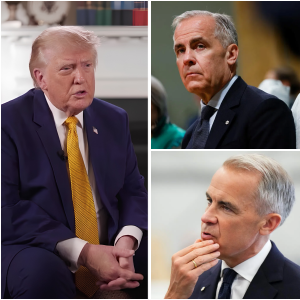
OTTAWA — In the hyper-kinetic theater of global diplomacy, power is often measured by the volume of a leader’s rhetoric. Yet, while President Donald J. Trump issued apocalyptic warnings about the “death of civilization” via social media, Canadian Prime Minister Mark Carney was quietly orchestrating a geopolitical masterstroke.
Beneath the radar of the 24-hour news cycle, Ottawa has emerged as the principal architect of a formidable 20-nation coalition. This alliance, designed to secure the Strait of Hormuz, represents the most significant shift in Canadian foreign policy in a generation, signaling an end to the era of reactive diplomacy.
The coalition includes heavyweights like France, Germany, Japan, and the United Kingdom. By coordinating independently of Washington, these nations have sent a definitive message: middle powers no longer require American permission to manage global crises. This “G7 minus the U.S.” alignment has fundamentally altered the power dynamics of the West.
At the heart of this maneuver is the Strait of Hormuz, a narrow waterway carrying twenty percent of the world’s oil supply. When military strikes in February triggered the strait’s closure, global energy markets spiraled into chaos. Oil surged past $100 per barrel, threatening the stability of every major economy.
For Prime Minister Carney, the crisis provided unexpected leverage. As Middle Eastern supply chains buckled under the weight of conflict, the world turned its gaze toward North America. Canadian crude, once a subject of domestic environmental debate, was suddenly transformed into a vital pillar of global energy security.

The Trans Mountain pipeline has become the strategic spine of this new reality. As tankers depart Burnaby for energy-hungry Asian markets, Canada is proving it can be a reliable alternative to the volatile Persian Gulf. This economic shift provided the material foundation for Carney’s bold diplomatic offensive in April.
On April 8, the coalition released a joint statement that effectively bypassed the White House. While Trump focused on brinkmanship with Tehran, Canada and its partners committed to defending freedom of navigation. This was not mere symbolism; it was a strategic declaration of independence by America’s most traditional allies.
The geopolitical timing is particularly biting for the Trump administration. Washington has spent months utilizing tariff threats and trade pressure to extract concessions from Ottawa. The underlying American assumption was that Canada lacked alternatives. This 20-nation coalition, however, demonstrates that Canada possesses a vast network of sovereign options.
Foreign Affairs Minister Anita Anand has been instrumental in these back-channel negotiations. Reports suggest that Canada is helping organize long-term plans for maritime security that could persist even after active hostilities cease. Ottawa is no longer waiting for a script from the State Department; it is writing its own.
Carney’s doctrine, first hinted at during the World Economic Forum in Davos, emphasizes “diversified interdependence.” He argues that overreliance on a single superpower is a strategic liability in a multipolar world. The Hormuz coalition is the first tangible evidence that this theory is being put into practice.
The contrast between the two North American leaders is stark. Trump relies on volatility and personal pressure to achieve his goals. Carney, conversely, is building institutional structures designed to survive political turbulence. This preference for predictability is drawing other nations toward Ottawa’s sphere of influence during these uncertain times.
Domestically, the Prime Minister is framing this high-level diplomacy as “kitchen-table economics.” He has successfully linked the stability of distant shipping lanes to the price of gasoline and groceries at home. This narrative presents international leadership not as an abstract luxury, but as a domestic necessity for affordability.
Conservative leader Pierre Poilievre continues to focus on anti-bureaucracy messaging, but Carney is utilizing the world stage to project an image of statesmanship. The visual of Canada leading a global security coalition provides a powerful counter-narrative to the mockery often directed at the country by Trump.
The coalition’s resilience is being tested by a fragile ceasefire brokered by Pakistan. Despite renewed threats from Iran and continued strikes by Israel, the 20-nation alignment remains intact. This persistence suggests that the partnership is built on shared strategic interests rather than temporary convenience or fleeting political optics.
For Washington, the emergence of an independent bloc of democratic middle powers is a concerning development. It suggests that the “America First” policy may be resulting in an “America Alone” reality. If traditional allies begin coordinating their security and trade outside U.S. orbits, American leverage diminishes significantly.
The upcoming COSMA trade negotiations will be the ultimate proving ground for this newfound leverage. Armed with deeper strategic ties to Europe and Asia, Canada enters these talks not as a desperate neighbor, but as a central player in a global network. Leverage, after all, is often about perception.
Energy remains the defining factor of the 2026 landscape. The Hormuz crisis exposed the extreme vulnerability of global supply chains. Even if the current ceasefire holds, Asian importers are unlikely to forget how quickly their energy access nearly collapsed. This ensures a long-term demand for stable Canadian exports.
Critics of the government warn that higher oil prices are a double-edged sword. While they strengthen the Canadian dollar and export revenues, they also fuel domestic inflation. Carney must balance his role as a global energy provider with the very real economic pressures facing Canadian households in Ontario and Quebec.

The coalition’s specific military contributions to the strait remain classified. However, the diplomatic coordination itself has already achieved its primary goal: it has established a secondary center of gravity in the West. This provides a necessary buffer against the unpredictability of the current administration in Washington.
Historians may look back at April 2026 as the moment Canada outgrew its “middle power” label. By organizing a massive international response to a global emergency, Ottawa has demonstrated a capacity for leadership that few expected. The country is no longer a spectator in the theater of great powers.
The “Quiet Power Move” described by observers is essentially a masterclass in soft power backed by hard energy assets. It proves that in the modern era, influence is not just about military might, but about the ability to build and sustain complex international coalitions under extreme pressure.
As the situation in the Persian Gulf remains fluid, Canada’s role continues to expand. The government is signaling that it is prepared for a prolonged period of global instability. By anchoring itself to like-minded allies, Canada is creating a “stability zone” that stands in contrast to regional chaos.
The relationship with the European Union has reached a new zenith of cooperation. Leaders like Emmanuel Macron and Keir Starmer find in Carney a partner who shares their commitment to multilateralism. This alignment creates a powerful democratic front that can resist pressure from both autocratic regimes and volatile allies.
In the Indo-Pacific, Canada’s standing is also on the rise. Japan and Australia, both vital coalition members, see Ottawa as a crucial link in a new security architecture. This Pacific-facing strategy ensures that Canada is relevant in the world’s most economically dynamic region, far beyond its North American borders.
Trump’s reaction to this independent coordination has been characteristically dismissive, yet the underlying shift is impossible to ignore. If the U.S. can no longer dictate the terms of international security responses, the “unipolar moment” is truly over. Canada has helped usher in this new, more complex era.
The long-term implications for the Canadian economy are profound. By positioning itself as a strategic energy and security partner, Canada is attracting high-level investment that goes beyond raw resources. It is being integrated into the “trust networks” that will define the global economy for the next decade.

As May 2026 progresses, the world continues to watch the Strait of Hormuz with bated breath. Yet, the real story may be the shift in the diplomatic tectonic plates. The “Canada Move” has redefined what is possible for a sovereign nation navigating the shadow of a superpower.
Ultimately, this coalition is about more than oil or shipping lanes. It is about the right of nations to collaborate for the common good without being constrained by the whims of a single leader. Canada’s initiative has provided a blueprint for other nations seeking a stable path forward.
The Prime Minister’s gamble on internationalism seems to be paying off, at least on the global stage. Whether this translates into a lasting electoral advantage remains to be seen, but Carney has undeniably changed the way the world perceives the “Great White North” in 2026.
Ottawa is no longer just a capital city; it is a hub for global strategic coordination. The sound of Canadian diplomacy is no longer a whisper; it is a clear, resonant voice that the entire world—and especially Washington—is now forced to hear.