Something unusual happened in Ottawa tonight.
At a moment when political tensions inside Canada are rising faster than they have in years, Prime Minister Mark Carney stood before Parliament and delivered a speech that many analysts are already calling one of the most important moments of his leadership so far.
Not because he attacked Alberta.
Not because he warned separatists.

But because he did the exact opposite.
Instead of treating Alberta as a political problem, Carney openly described the province as one of the central pillars of Canada’s future — economically, politically, and strategically.
And that may have changed the national conversation overnight.
For months, Canada has been watching the growth of separation rhetoric inside Alberta with increasing concern. Frustration over pipelines, federal energy regulations, equalization payments, inflation, housing costs, and distrust toward Ottawa has fueled a political movement many once dismissed as impossible.
Now it is no longer impossible.
More than 300,000 signatures supporting a referendum tied to Alberta’s future inside Canada have intensified pressure on both provincial and federal leaders. Across social media, radio shows, political podcasts, and town halls, the discussion about Alberta’s place in Confederation has become louder than at any point in decades.
And until tonight, many Canadians believed the country was slowly drifting toward an unavoidable constitutional crisis.
That is why Carney’s speech mattered.
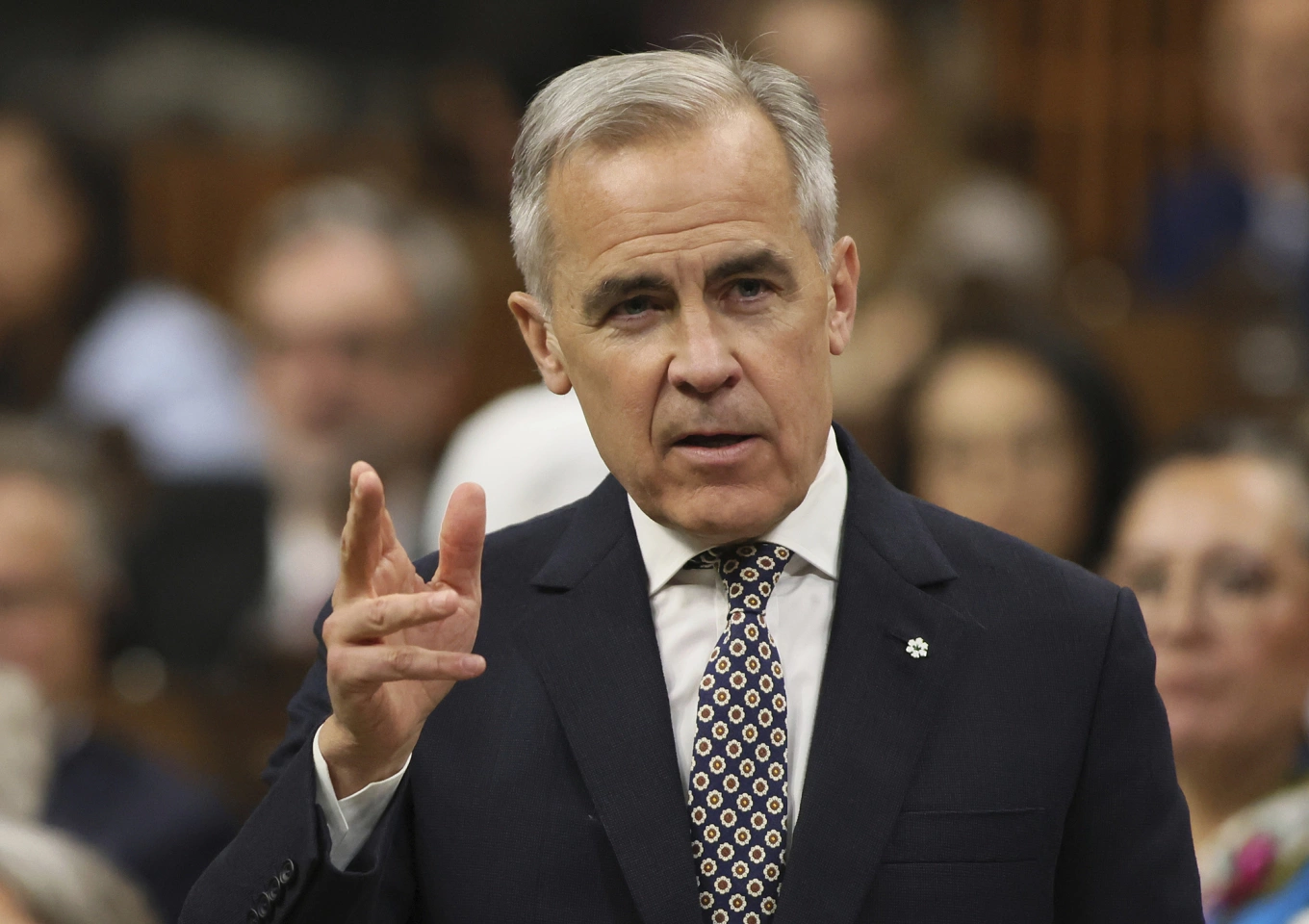
The tone surprised almost everyone.
There was no anger.
No insults.
No attempt to shame Albertans for their frustrations.

Instead, Carney delivered a calm but carefully constructed argument built around one core idea: Alberta is not separate from Canada’s success story — Alberta helped create it.
Inside Parliament, he reminded Canadians that Alberta has long been one of the engines of the national economy. He praised the province’s energy sector, entrepreneurs, workers, innovators, and exporters. He spoke about pipelines, infrastructure, Arctic security, interprovincial trade, and Canada’s role in supplying global energy markets during an increasingly unstable world economy.
Most importantly, he openly committed to cooperation with Alberta on major nation-building projects.
That single decision may prove politically critical.
For years, many Alberta leaders argued Ottawa was hostile toward the province’s energy industry. Pipeline cancellations became symbolic political wounds. Federal environmental policies were viewed by critics as attacks on Alberta’s economic foundation. Meanwhile, many Albertans felt Canada benefited enormously from Alberta’s wealth while simultaneously criticizing the industry responsible for generating it.
Even Canadians outside Alberta increasingly acknowledged that some of those frustrations were real.
Carney appeared to understand this.
Rather than dismissing Alberta’s concerns as extremism, he framed them as issues requiring partnership and practical solutions.
And in doing so, he may have exposed the biggest contradiction inside the growing separation movement itself.
Because if Ottawa is now actively supporting pipelines, energy expansion, export infrastructure, and economic cooperation with Alberta, then what exactly becomes the argument for separation?
That question now sits at the center of Canada’s political debate.
Several political commentators immediately noted that Carney’s strategy differed dramatically from the approach many expected. Instead of escalating tensions, he lowered the emotional temperature. Instead of creating enemies, he attempted to rebuild trust.
Some observers described it as one of the most disciplined political performances of the year.
Others called it a direct attempt to politically isolate the most hardline separatist voices by offering Alberta tangible victories instead of symbolic promises.
And the timing was impossible to ignore.
The speech came during a period of enormous uncertainty for Canada’s economy and national identity. The country faces pressure from rising housing costs, slowing productivity growth, trade tensions, energy debates, and increasing geopolitical instability around the world.
At the same time, global demand for reliable energy suppliers is growing rapidly.
That reality has changed Canada’s political calculations.
For years, energy debates inside Canada often felt trapped between two sides that treated economic growth and environmental policy as mutually exclusive. Carney attempted to present a different vision entirely — one where Canada could expand energy production, invest in emissions reductions, strengthen national unity, and modernize infrastructure simultaneously.
Whether Canadians believe that vision is realistic remains unclear.
But politically, the message was powerful.
Especially in Alberta.
Some provincial leaders have spent years arguing that Ottawa ignored Alberta unless elections required votes from the province. Carney appeared determined to challenge that perception directly.
He repeatedly described Alberta not as a temporary political issue but as essential to Canada’s long-term future.
That language matters.
In politics, tone often shapes perception as much as policy itself.
And tonight’s tone was unmistakable: confidence, stability, and national unity.
The speech also carried broader implications beyond Alberta alone.
Across many Western democracies, regional frustration and anti-establishment movements are growing stronger. Economic inequality, distrust toward institutions, and cultural polarization have weakened national cohesion in multiple countries.
Canada is not immune to those pressures.
Carney’s speech seemed designed not only to calm tensions in Alberta but also to present a broader argument about how Canada should function moving forward.
Not as competing provinces fighting for influence.
But as a federation attempting to modernize together.
He described Canada as a country “under renovation” — a phrase that quickly spread across political media after the speech ended.
The symbolism behind that language was important.
Renovation implies something is being repaired and improved, not destroyed.
For supporters, that framing offered optimism during a period dominated by political division.
For critics, however, skepticism remains strong.
Many conservatives and separatist voices argue speeches alone will not solve years of accumulated distrust. They point out that major pipeline projects still face environmental opposition, regulatory uncertainty, financing questions, and legal challenges. Some believe Ottawa’s promises toward Alberta have historically changed depending on political pressure.
Others argue the federal government is only becoming more supportive now because separatist sentiment has become politically dangerous.
Environmental groups also remain deeply skeptical of aggressive energy expansion. They warn that Canada risks undermining its climate commitments if pipeline construction accelerates too aggressively.
British Columbia remains another major obstacle.
Even if Ottawa and Alberta cooperate closely, major infrastructure projects crossing provincial boundaries often become politically explosive. Indigenous negotiations, environmental reviews, legal disputes, and regional opposition could still slow or block future projects.
Carney knows this.
Which is why tonight’s speech focused less on specific project details and more on rebuilding political momentum around national cooperation itself.
The goal appeared larger than any single pipeline.
It was about convincing Canadians that the country can still function as a unified project despite rising regional frustration.
Whether that effort succeeds may determine the future of Canadian politics over the next decade.
And perhaps even the future of Canada itself.
Because underneath all the speeches, strategies, and headlines lies a deeper emotional question many Albertans are now asking:
Does Canada still see Alberta as part of its future?
Tonight, Mark Carney attempted to answer that question directly.
And for the first time in a long time, many Canadians across the political spectrum are debating whether the separation crisis everyone feared might still be avoidable after all.