TRUMP LOSES IT AFTER JIMMY KIMMEL AND HOWARD STERN EXPOSE HIM LIVE — FREE SPEECH SHOWDOWN ERUPTS ON U.S. AIRWAVES
Donald Trump ignited a fresh political firestorm after Jimmy Kimmel and Howard Stern publicly exposed what they described as a coordinated assault on free speech, triggering one of Trump’s most volatile reactions yet. What began as a late-night comedy controversy quickly escalated into a national debate about censorship, media intimidation, and the limits of presidential power. As clips spread across social media, Trump’s anger only amplified the story, pushing it far beyond entertainment news.
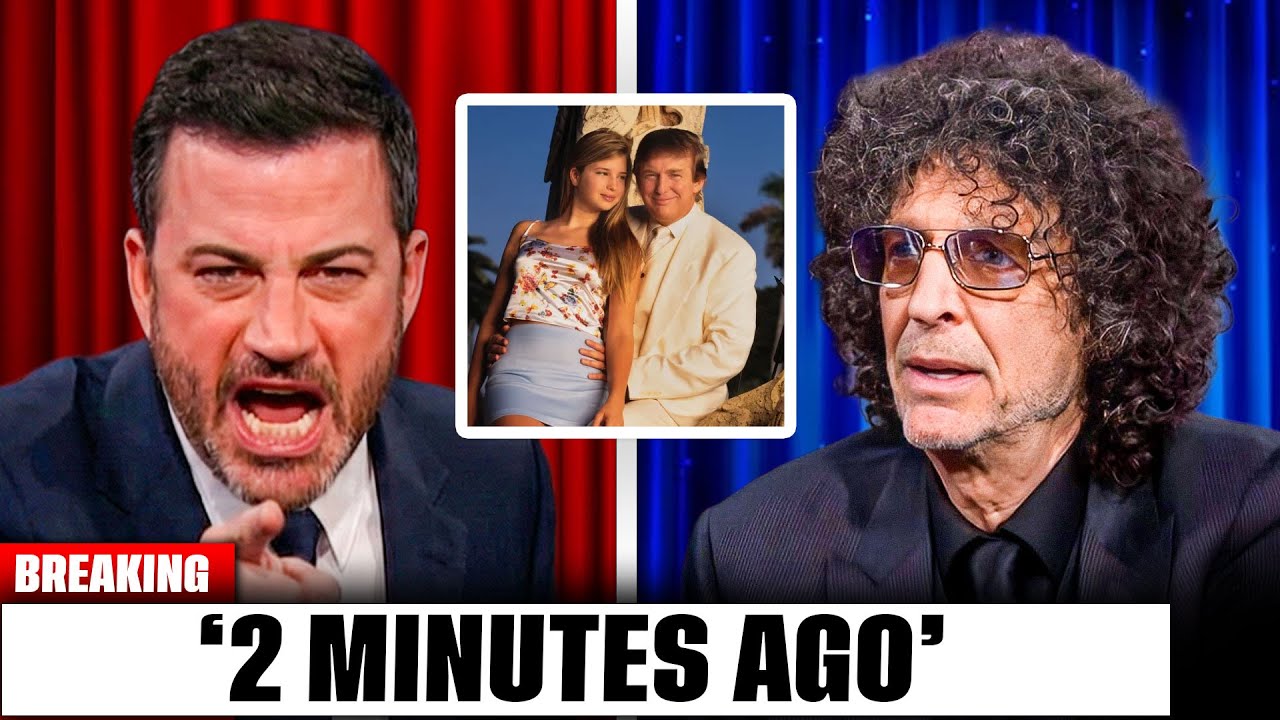
The flashpoint came after ABC abruptly suspended Jimmy Kimmel Live in September 2025, following public threats from Trump-aligned FCC officials over Kimmel’s on-air criticism. Trump wasted no time celebrating, openly mocking Kimmel and hinting that other late-night hosts would be “next.” Rather than backing down, Kimmel addressed the suspension head-on, framing it as an unprecedented political intervention into broadcast television. His calm, direct response stood in stark contrast to Trump’s celebratory attacks.
Howard Stern then entered the battle, and the stakes changed instantly. Returning to his SiriusXM show, Stern delivered a blistering monologue condemning government pressure on media companies, drawing direct parallels to his own decades-long war with the FCC. Stern warned that when politicians start silencing comedians, democracy itself is under threat. Coming from a broadcaster who famously fled terrestrial radio to escape federal censorship, the message carried enormous weight.
:max_bytes(150000):strip_icc()/Howard-Stern-and-Jimmy-Kimmel-092225-2-2349c5c20190439180a7ef6f812879d2.jpg)
Stern escalated the moment further by announcing he was canceling his Disney+ subscription in protest, a symbolic act that quickly turned into a mass consumer backlash. Viewers followed his lead, triggering a wave of cancellations that reportedly caused Disney’s stock to dip and overwhelmed its customer service systems. What began as a single comedian’s suspension suddenly became a corporate and political crisis with real financial consequences.
Trump responded in typical fashion: fury without rebuttal. He lashed out on social media, called the hosts “talentless,” and framed the backlash as proof of media bias—yet never addressed the core accusation of censorship. That absence spoke louder than his insults. Critics noted that Trump attacked messengers instead of confronting the evidence, reinforcing the very narrative Kimmel and Stern had exposed.

What made this moment resonate wasn’t humiliation through mockery, but exposure through clarity. Kimmel showed restraint. Stern brought history. Together, they revealed a pattern that viewers could no longer ignore. Trump didn’t lose control because of jokes—he lost control because the spotlight stopped moving. And once the noise faded, the question remained: if power needs silence to survive, what happens when people refuse to be quiet?






