The meeting lasted less than 40 minutes. When it ended, Prime Minister Mark Carney walked out of the room, ignored the waiting cameras, and flew straight back to Ottawa. There was no handshake, no joint statement, and no smiling photo opportunity for the press. Within 24 hours, sources inside the trade framework confirmed what the heavy silence already suggested: Canada had been offered a comprehensive deal — tariff relief, energy alignment, defense cooperation, and digital trade access — and Mark Carney said no.

But the rejection itself was never the real story. The real story was what happened in the next 72 hours. A sovereign capital deployment memo quietly surfaced. An infrastructure financing agreement appeared in federal filings. A new energy framework with European partners moved forward at an accelerated pace. Suddenly, the pattern became impossible to ignore. Canada wasn’t improvising under pressure. It was executing a long-term plan that had been in motion for nearly a year.
Because countries do not reject comprehensive American trade offers unless they believe the future outside the deal is worth more than the future inside it.
The offer from Washington looked massive on paper. Partial tariff rollback, preferential LNG access through U.S. distribution systems, revised NATO timelines, and a digital trade framework covering AI and cross-border data flows. Most governments facing economic uncertainty would have taken the deal immediately. Carney walked away after one meeting. The decision was deliberate, calculated, and backed by months of quiet preparation.
Why? Because Canada had already spent nearly a year building something bigger.
\
In the previous 11 months, Canada had signed 23 bilateral economic and security agreements with countries far beyond North America — including major deals with Europe, Japan, South Korea, India, Australia, the UAE, Brazil, and others. Many of these agreements included strategic energy and critical minerals access clauses. Locking Canadian LNG into a U.S.-controlled export structure for 15 years would have capped the upside of agreements Canada had already spent months constructing. The math simply didn’t add up for Ottawa.
At the center of this strategy is energy. Global LNG markets are tightening rapidly. Supply disruptions, geopolitical instability in traditional exporting regions, and shifting European demand have created a structural gap that major economies are scrambling to fill. There are only a handful of politically stable countries capable of scaling exports fast enough to matter on the global stage. Canada is one of them.
That’s why Carney’s pipeline conditions mattered so much. Carbon capture requirements, provincial revenue guarantees, and Indigenous consultation frameworks were not just domestic political compromises. They were deliberate signals to sovereign wealth funds, pension managers, and global credit markets that Canada intended to build investment-grade infrastructure capable of attracting long-term international capital on its own terms.
Then came the sovereign wealth fund announcement. The $25 billion fund was structured not as a simple rainy-day reserve, but as a strategic co-investment vehicle designed to partner with global capital giants in infrastructure and energy transition projects. In plain terms, Canada was preparing to sit at the same financial table as the largest sovereign investment institutions in the world. And once a country reaches that level, its leverage changes dramatically.
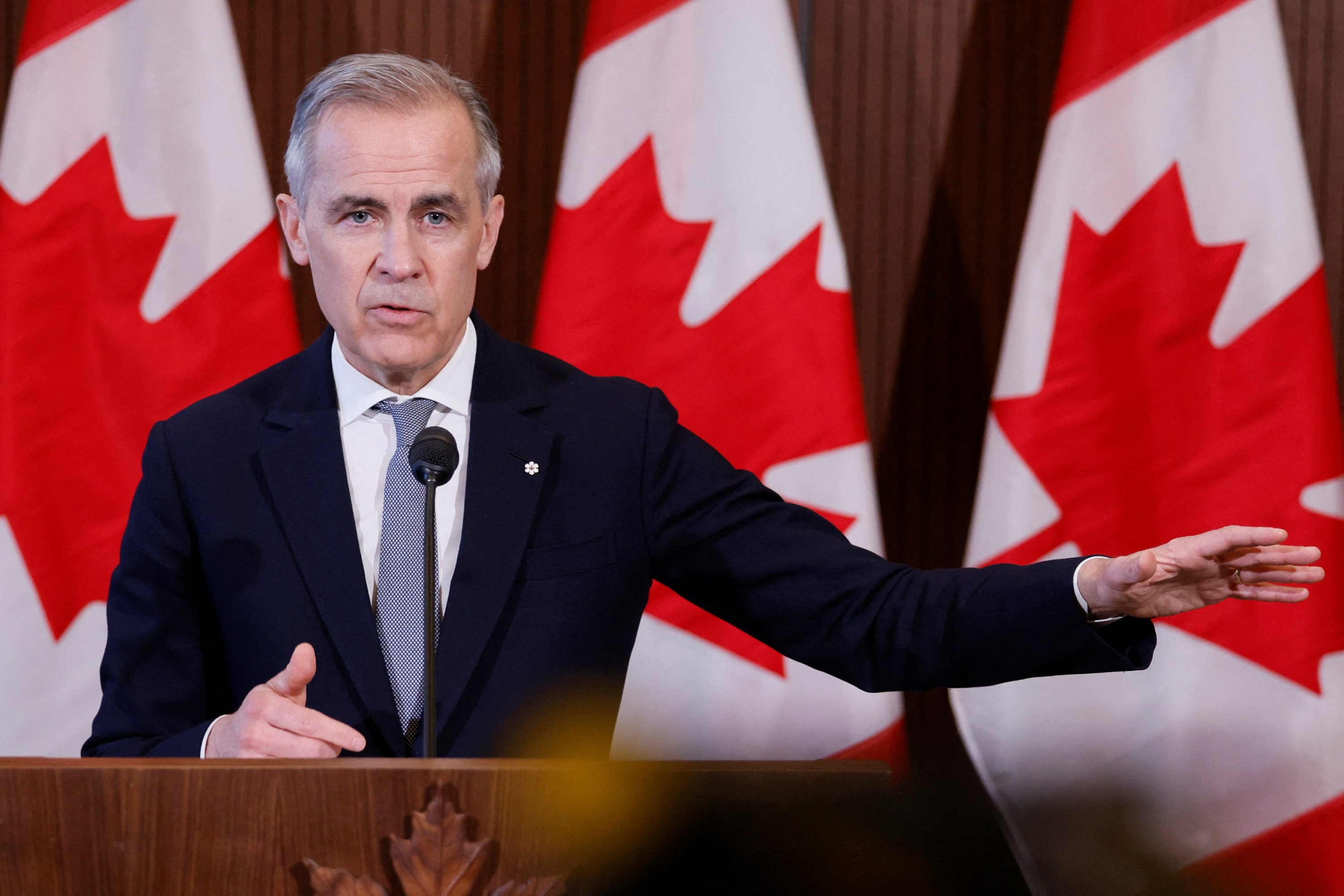
Carney’s most important words during this period were brief but telling: “We do not match. We invert.” Instead of responding to American tariffs with equal tariffs, Canada shifted the confrontation to the financial and sovereign credit layer — the place where market confidence, treasury stability, and long-term financing costs become vulnerable. According to sources familiar with the strategy, the response was prepared across multiple institutions over many months, designed not to mirror pressure, but to expose where the pressure itself became unsustainable for the other side.
Whether every detail of the internal narrative is accurate or partly dramatized, the underlying idea is powerful: modern economic conflicts are no longer fought only through tariffs and trade barriers. They are fought through supply chains, investment flows, energy security, sovereign credit ratings, and financial architecture. And that is the larger point behind the Vancouver meeting.
Carney may not have attended to make a deal. He may have attended to measure exactly how far Washington was willing to go — and whether Canada’s diversification strategy was already strong enough to survive the answer. Because once a country believes it has credible alternatives, negotiations stop looking like survival. They start looking like leverage.
This moment represents a profound evolution in Canadian foreign and economic policy. For decades, Canada’s relationship with the United States has been defined by deep integration and asymmetry. Roughly three-quarters of Canadian exports have flowed south, creating both enormous opportunity and significant vulnerability. Recent years of tariff threats, political unpredictability, and shifting American priorities have convinced Ottawa that reducing this single-point dependency is no longer optional — it is essential for long-term national resilience.
The strategy is multifaceted. Energy diversification includes new LNG terminals on the West Coast targeting Asian markets. Critical minerals partnerships with Europe and the Indo-Pacific aim to build secure supply chains outside U.S. control. Infrastructure investments, backed by the sovereign wealth vehicle, are designed to attract capital from multiple sources rather than depending on any single partner. This is not anti-American policy. It is smart risk management in an era of great power competition and domestic political volatility in the United States.
International reaction to Carney’s approach has been largely positive in European capitals. Leaders who have faced their own challenges with American unpredictability see Canada as a reliable partner willing to build alternatives while maintaining core alliances. The standing ovation Carney received in Brussels earlier this year was not just polite applause — it reflected genuine appreciation for a leader willing to assert middle-power autonomy without burning bridges.
Domestically, the strategy is more complex. Resource-producing provinces like Alberta and Saskatchewan want maximum market access to the United States, their largest customer. At the same time, they understand the value of diversification. Carney’s government has walked a careful line, reassuring traditional partners while building new ones. The success of this balancing act will ultimately determine whether the strategy delivers tangible benefits or creates new vulnerabilities.
The rejection of the American offer also sends a powerful signal about Canada’s evolving self-perception. No longer content to be defined primarily as America’s neighbor, Canada is positioning itself as a confident, resource-rich, stable democracy capable of playing a significant role in global supply chains and strategic partnerships. This shift has been years in the making, but Carney’s leadership has accelerated and crystallized it.
As the dust settles from the Vancouver meeting, the real question is not whether Canada made the right decision in the moment. The real question is whether the long-term strategy of diversification will prove stronger than the immediate comfort of a traditional deal. Early indicators suggest Canada is betting on the former — and the world is watching closely to see if that bet pays off.
In the end, countries do not walk away from major American offers lightly. When they do, it usually means they believe the future they are building is worth more than the deal on the table. Canada’s actions in recent months suggest that belief is now firmly in place.
The next chapter in Canada-U.S. relations — and Canada’s place in the world — is being written right now. And it looks very different from the one written in previous decades.