Britain’s 22,000-Page Tax Maze Under Fire as Rupert Lowe Challenges HMRC Over Burden on Enterprise
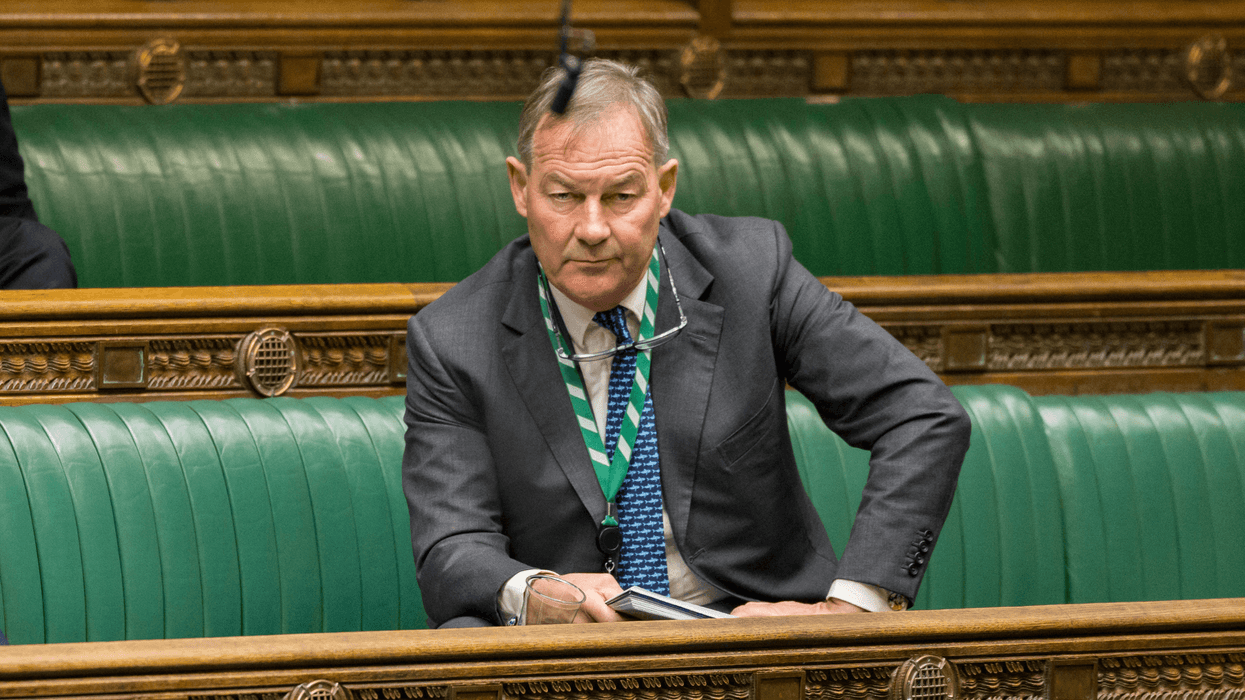
Westminster witnessed a tense and highly charged committee exchange this week as Reform UK MP Rupert Lowe launched a forceful critique of HM Revenue and Customs, accusing the department of presiding over a tax system so complex that it is undermining British enterprise and damaging economic growth.
The confrontation unfolded during a parliamentary hearing examining the growing scale and complexity of the United Kingdom’s tax framework. Lowe directed a series of sharp questions at senior HMRC officials, arguing that businesses and ordinary taxpayers are being trapped inside an administrative structure that even tax authorities themselves struggle to navigate.

In my experience of dealing with HMRC, Lowe stated that officials frequently appear unfamiliar with their own regulations. He argued that high staff turnover and the overwhelming scale of the tax code have created an environment where consistent interpretation of rules is increasingly difficult.
According to Lowe, the UK tax code now stretches across roughly 22,000 pages, spread over multiple legislative volumes, alongside hundreds of additional manuals and guidance documents. He described the system as an extraordinary burden on honest taxpayers attempting to comply with their obligations.
The Reform UK MP argued that most people are willing to pay tax fairly and transparently, but the complexity of the rules creates constant uncertainty. Businesses, he suggested, often attempt to follow the law in good faith only to later discover that HMRC interprets regulations differently.
Most people want to comply with the system, Lowe told the committee, but the sheer scale of legislation has made certainty almost impossible. He warned that entrepreneurs and small business owners increasingly feel exposed to arbitrary enforcement and unpredictable outcomes.
Lowe used international comparisons to strengthen his argument, contrasting Britain’s extensive tax code with jurisdictions such as Hong Kong, where tax legislation is significantly shorter and widely regarded as easier to understand. He implied that simplicity itself can become a competitive economic advantage.
The hearing also turned toward the wider issue of economic productivity in Britain. Lowe argued that excessive bureaucracy and administrative complexity discourage investment, slow down business expansion, and consume enormous amounts of time and financial resources.
HMRC officials defended the current structure by insisting that the expanding tax code reflects the increasingly sophisticated nature of the modern economy. They maintained that new industries, technologies, and financial instruments require new rules and updated guidance.
HMRC officials insisted that lawmakers, rather than civil servants, are primarily responsible for the growth in legislation. The department, they explained, is tasked only with implementing laws approved by Parliament and ensuring that emerging sectors are appropriately regulated.
One senior official pointed specifically to the rise of cryptocurrency markets as an example of how modern finance has forced governments to develop entirely new tax frameworks. Digital assets, officials argued, barely existed in mainstream economic discussions only a decade ago.
The committee also discussed how changing working practices have complicated tax administration. Officials acknowledged that remote and hybrid work arrangements have created significant legal ambiguities, particularly because older legislation was drafted long before these models became common.
HMRC representatives argued that while simplification remains a long-term objective, shorter legislation does not automatically produce clearer legislation. They suggested that removing detail can sometimes create even greater uncertainty for taxpayers.
The debate quickly evolved into a broader political argument about the size and role of the British state. For Reform UK, criticism of administrative expansion and regulatory complexity has become a central part of its economic message ahead of future elections.
Lowe’s intervention reflects a wider frustration increasingly voiced by sections of the business community. Entrepreneurs, accountants, and investors have repeatedly argued that Britain’s regulatory environment has become excessively difficult to navigate, particularly for smaller firms without large compliance departments.
The hearing also exposed the growing tension between political ambitions and administrative reality. Successive governments have introduced targeted taxes, relief schemes, exemptions, and incentives, each adding new layers to the overall structure of the tax system.
Officials noted that upcoming measures, including vaping duties and carbon-related border taxation mechanisms, will require additional legislation and guidance. Each policy initiative, they argued, inevitably expands the complexity of the framework further.
Business leaders across Britain continue to warn that regulatory uncertainty weakens competitiveness at a time when the country is already struggling with sluggish growth and weak productivity. Critics increasingly argue that simplification may be essential if Britain hopes to attract greater investment.
The exchange highlighted a striking disconnect between lawmakers creating increasingly detailed fiscal policies, civil servants tasked with enforcing them, and businesses expected to comply with constantly evolving rules. The hearing offered no immediate solution to that divide.
While HMRC defended its role as an executor of parliamentary decisions, Lowe’s intervention succeeded in drawing national attention to a debate that has long simmered beneath the surface of British politics. Questions surrounding tax complexity, economic competitiveness, and state bureaucracy now appear likely to remain central issues in Westminster for months ahead.






