A catastrophic new poll has sent shockwaves through the halls of Parliament House, suggesting an unprecedented political earthquake is brewing in Australia. With One Nation projected to seize a jaw-dropping number of seats, the traditional political order faces total annihilation.
The Numbers That Left Politicians Speechless
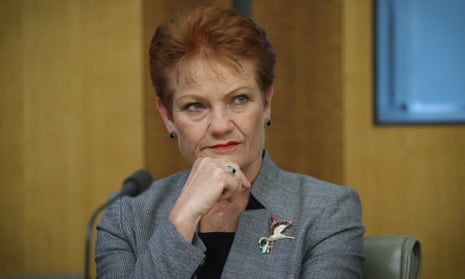
It is the nightmare scenario that political strategists in Canberra hoped they would never have to confront. A devastating new poll conducted by the Redbridge Group and Accent Research has painted a picture of absolute devastation for Australia’s major political parties. If an election were held today, the traditional two-party system would not just fracture—it would completely collapse in several states.
The data reveals a terrifying reality for the Coalition, suggesting they could be completely wiped out at the ballot box in Queensland, Western Australia, South Australia, and Tasmania. Not a single seat would remain in those regions for the opposition. Meanwhile, the ruling Labor Party would find itself desperately clinging to power, reduced to a razor-thin majority of just 76 seats in the House of Representatives.
For decades, Australian politics has been a predictable game of musical chairs between Labor and the Liberals. This new data tears up the rulebook entirely, signaling that voters are no longer just frustrated—they are actively looking to burn the old house down.
The Rise of One Nation: 59 Seats Within Reach?
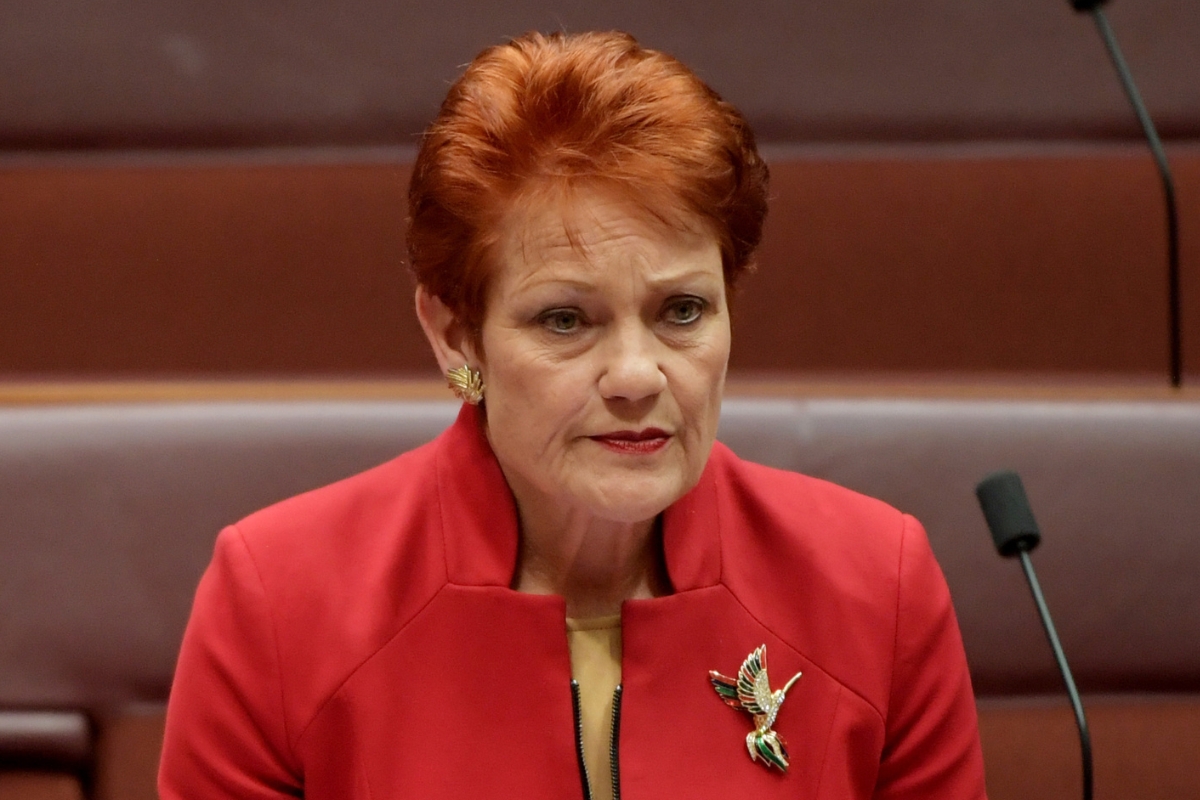
“The real poll is on election day. But, it does tell me we’ve still got a little bit to do.”
With those measured words, One Nation leader Senator Pauline Hanson downplayed what could be the most explosive polling result in her political career. The data suggests that her right-wing populist party could capture up to 59 seats, a number that would instantly transform her from a minor party disruptor into a massive political kingmaker.
Speaking on Sunday, Senator Hanson remained outwardly cautious, reminding voters that polls are merely snapshots in time rather than definitive outcomes. Yet, the underlying momentum is impossible for her to deny. She described the feedback she has been receiving directly from everyday Australians on the street, many of whom are expressing a deep sense of abandonment by the political elite.
According to Hanson, the message from the public has become increasingly desperate. “We need you, you’re our last hope,” she recalled voters telling her. It is a sentiment born out of economic despair, and it is driving a massive surge toward her party’s populist platform.
“They’re Destitute”: The True Cost of the Living Crisis
The driving force behind this massive political shift is not hidden in complex ideology; it is sitting on the kitchen tables of millions of Australian families. Senator Hanson pointed directly to the worsening cost of living crisis as the primary catalyst for the public’s immense anger toward the major parties.
“They’re destitute, they really are,” Hanson stated bluntly, describing the financial reality facing ordinary citizens. She argued that the latest federal budget handed down by the Albanese Labor government has failed to provide real relief, instead compounding the misery felt by key sectors of the Australian economy.
From her perspective, the damage is widespread. It is not just struggling suburban families feeling the squeeze, but also small businesses, the vital agricultural sector, and the mining industry. Hanson laid the blame squarely at the feet of the current administration, branding them a “hopeless Labor Albanese government” that has lost touch with the working class.
A Momentum Built on Conviction and By-Election Shocks
| Political Indicator | Recent Data Point / Result |
| Projected One Nation Seats | Up to 59 seats nationwide |
| Labor Projected Standings | Reduced to a slim 76-seat majority |
| Farrer By-Election Result | 40% primary vote for One Nation’s David Farley |
| Coalition State Status | Projected total wipeout in QLD, WA, SA, and TAS |
For critics who dismiss the new polling as a temporary anomaly, Senator Hanson points to hard electoral data to prove her momentum is real. She highlighted the recent Farrer by-election, where One Nation candidate David Farley secured a massive 40 percent of the primary vote, a result that sent shockwaves through the conservative establishment.
Hanson attributes this success to her unwavering consistency over her long and controversial career. She argued that while other politicians flip-flop on key issues based on focus groups, she has remained entirely true to her core values and convictions regarding what needs to change in Australia.
“If the policy is any real indication, it is an indication people want change, and I’m going to keep pushing forward,” she vowed. When pressed on whether she would consider a future governing alliance with the Coalition to form government, Hanson left the door wide open, stating simply: “Whoever gets the numbers, let’s work together.”
The Coalition’s Identity Crisis: Confessions of a “Uni-Party”
The fallout from the poll has triggered an immediate and bitter round of soul-searching within the Liberal Party. Reacting to the catastrophic projections, opposition housing spokesperson Andrew Bragg did not attempt to sugarcoat the disaster. Instead, he delivered a brutally honest assessment of his own party’s failures over the past decade.
Senator Bragg admitted there is an overwhelming “amount of grievance” within the Australian community, and confessed that the Coalition had deeply failed the public on economic policy during its recent time in government. His main takeaway was a damning indictment of his party’s political strategy: they had become virtually indistinguishable from their bitter rivals.
“Our main takeaway is that we’ve had too much similarity with the Labor Party,” Bragg confessed during an interview. He argued that the Coalition had spent years failing to draw clear battle lines on fundamental issues, essentially acting as a “uni-party” alongside Labor instead of offering a genuine conservative alternative.
The Demand for an “Economic Revolution”
According to Senator Bragg, the political chickens are finally coming home to roost for a Liberal Party that failed to differentiate itself on tax, industrial relations, superannuation, and structural budget management. He warned that apart from the Stage Three tax cuts, the Coalition had offered very little to inspire voters.
“If we don’t massively differentiate like we’re starting to do on bracket creep, then we’re going to be dead,” Bragg warned bluntly. He insisted that the Australian public is no longer interested in minor policy tweaks; instead, they “want an economic revolution” to pull them out of the current crisis.
However, when pressed on what specific economic changes the Coalition would actually implement, the policy lines became blurred. Bragg suggested he would look to increase the Capital Gains Tax (CGT) discount to heavily incentivize investment and cut overall taxes, but struggled to name exactly which popular government programs would need to be axed to fund those cuts.
Labor’s Defense: “Battlers vs. Billionaires”
On the other side of the political aisle, the Albanese government is watching the rise of One Nation with growing alarm, even as they attempt to downplay the threat. Assistant Technology Minister Andrew Charlton acknowledged that there was absolutely “no denying” the significant rise of Pauline Hanson’s party in recent surveys.
However, Charlton quickly launched a counter-offensive, arguing that while populist parties are highly skilled at identifying public grievances, they are completely incapable of delivering functional solutions for working families. He accused One Nation of playing a double game in parliament.
“Every opportunity they get, they vote against things that will benefit Australian families and workers,” Charlton claimed. He pointed to One Nation’s legislative voting record, alleging that they had voted against ‘Same Job, Same Pay’ laws and key wage increases. In a scathing closing remark, Charlton declared: “One Nation, every single time they face a choice between battlers and billionaires, they choose the billionaires.”
An Unpredictable Path to the Ballot Box
As the major parties scramble to adjust their messaging, One Nation is busy expanding its ground game across the country. Senator Hanson was recently spotted in South Australia, aggressively promoting her party’s new national gas policy to energy-weary voters. Furthermore, she recently shepherded her party’s second-ever lower house MP into federal parliament—the very first to win an election directly on a One Nation ticket.
Whether these dramatic polling numbers translate into a permanent restructuring of Australian democracy remains to be seen. What is entirely undeniable, however, is that the quiet complacency of the major parties has been shattered. The Australian electorate is sending a clear, loud, and angry message to Canberra: change is coming, and no politician’s seat is safe.






