BREAKING: When a Comedian, a Senator, and a President Collided — How Trump’s Meltdown Exposed the Machinery of Modern Censorship
What happened in September 2025 was not a media feud.
It was not late-night comedy gone too far.
And it was certainly not “cancel culture.”
It was something far more serious.
It was a real-time demonstration of how government pressure, corporate fear, and presidential power can converge to silence dissent in the United States — and how that system briefly succeeded before public resistance forced it into the open.
THE SPARK: A PRESIDENT WHO COULDN’T HANDLE HUMILIATION
Donald Trump arrived at Davos projecting confidence.
He left it humiliated.
Witnesses described a president visibly rattled — confusing Greenland with Iceland, boasting about vague “concepts of deals” no one could verify, and openly threatening allies in Europe, Denmark, and beyond.
Late-night comedians noticed.
So did senators.
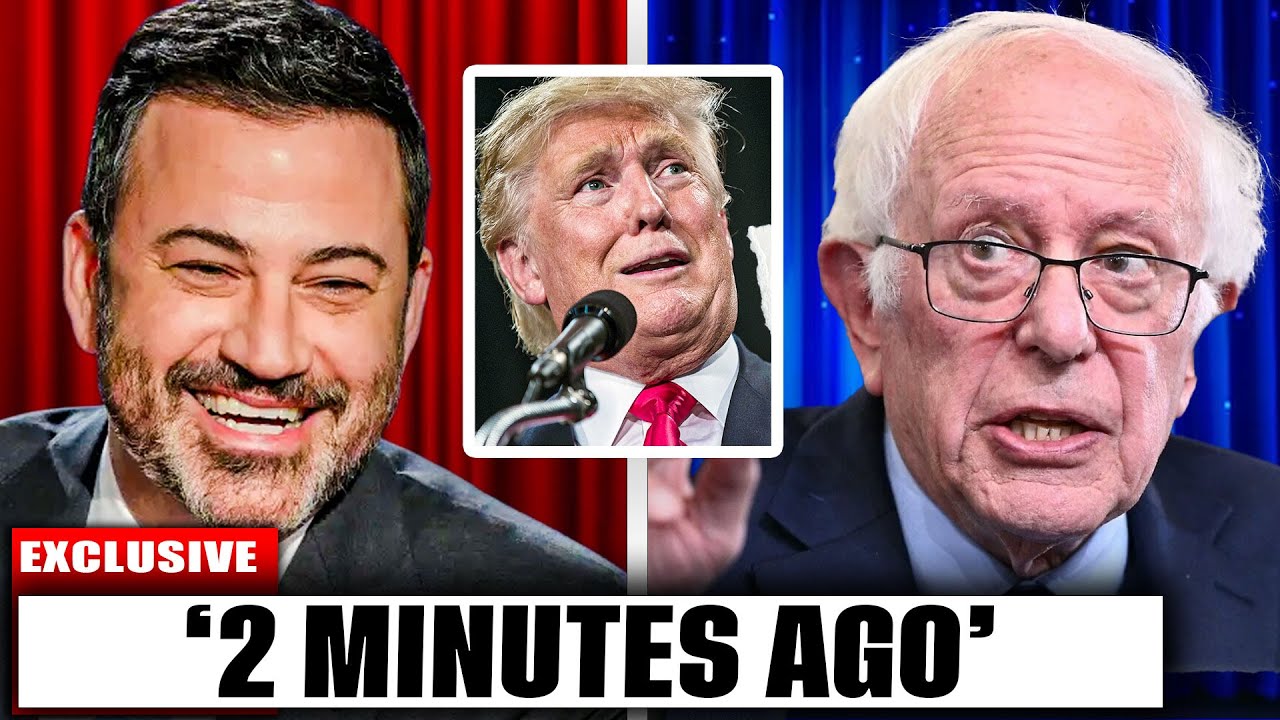
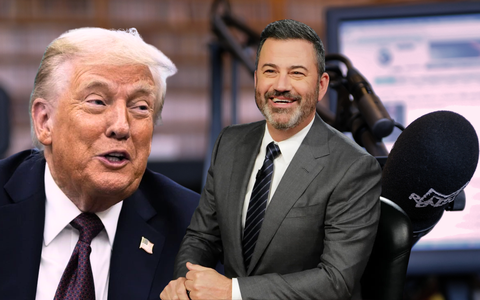
Jimmy Kimmel mocked the spectacle.
Bernie Sanders criticized it as dangerous, authoritarian behavior unfit for a president.
That should have been the end of it.
Instead, it triggered a meltdown.
FROM CRITICISM TO THREATS
Within hours of the criticism going viral, something unprecedented happened.
The U.S. State Department — under direct political pressure — took control of the USA House pavilion at Davos, blocking California Governor Gavin Newsom from delivering a scheduled speech.
Then came the escalation.
FCC Chairman Brendan Carr appeared on a conservative podcast and issued what many described as a thinly veiled threat:
“We can do this the easy way or the hard way. These companies can find ways to take action on Kimmel — or there’s going to be additional work for the FCC ahead.”
Let that sink in.
The head of the federal agency that controls broadcast licenses was publicly pressuring networks to silence a comedian who criticized the president.
That is not opinion.
That is not speculation.
That is documented authoritarian behavior.
CORPORATE CAPITULATION: ABC BLINKS
The response was swift — and chilling.
Within hours:
-
ABC and Disney suspended Jimmy Kimmel Live
-
No investigation
-
No internal review
-
No due process
Just immediate compliance.
Trump celebrated on Truth Social, gloating that Kimmel had been “cancelled” and mocking his ratings.
The playbook was clear:
-
Government threatens
-
Corporation caves
-
President celebrates
This is how censorship works in modern America — not through laws, but through fear.
THE MOMENT BERNIE SANDERS STEPPED IN
While most politicians stayed silent, Bernie Sanders did not.
The very next day, Sanders went on national television and said what others wouldn’t:
“This country is rapidly moving toward an authoritarian form of society.”
He didn’t hedge.
He didn’t soften the language.
He named the threat.
And then he acted.
THE LETTER THAT CHANGED EVERYTHING
On September 25, 2025, Sanders sent a formal letter to NextStar Media Group — the owner of more than 60 ABC affiliate stations that continued to block Kimmel even after ABC reversed course.
Sanders wrote:
“Being able to publicly criticize or make fun of the President of the United States is what separates America from tinpot dictatorships and authoritarian regimes.”
He went further.
Sanders accused NextStar of censoring Kimmel not out of principle, but because it needed Trump administration approval for a $6.2 billion merger with Tegna.
In other words:
Silence the comedian — secure the merger.
That accusation landed like a bomb.
THE PUBLIC FIGHTS BACK
Americans didn’t miss what was happening.
-
Protests erupted outside Disney and ABC offices
-
Advertisers began asking questions
-
Disney+ subscriptions were canceled en masse
-
The hashtag #FreeKimmel exploded nationwide
Kimmel’s return monologue racked up 26 million views in days.
The message was unmistakable:
If the government can silence a comedian, it can silence anyone.
THE RETREAT — BUT NOT A CLEAN ONE
Under intense public pressure, ABC reinstated Jimmy Kimmel Live after just six days.
But the damage was done.
More than 60 local ABC stations, owned by NextStar and Sinclair, continued to block the show, denying millions of Americans access to protected political speech.
Censorship hadn’t ended.
It had just been outsourced.
WHY THIS MOMENT MATTERS
This was not about Jimmy Kimmel.
It was not about Bernie Sanders.
It was not even about Donald Trump alone.
It was about how fragile free expression becomes when political power meets corporate dependency.
Trump didn’t need to pass a law.
He didn’t need to issue an executive order.
He just needed to threaten.
And for a moment — it worked.
THE FINAL IRONY
Trump has openly praised dictators.
He has said “sometimes you need a dictator.”
He has mocked democratic norms repeatedly.
And yet, when confronted by a comedian and a senator using nothing but speech, satire, and public pressure, his reaction proved their point.
Authoritarians fear ridicule.
They fear exposure.
They fear losing control of the narrative.
Donald Trump threatened censorship to project power —
and instead exposed just how far that power was already corroding democracy.
BOTTOM LINE
This was a warning shot.
The machinery of censorship exists.
It can be activated quickly.
And it relies less on laws than on fear and compliance.
But this episode also proved something else:
Resistance works.
Sunlight matters.
And when the public pushes back, even powerful systems retreat.
The question now isn’t whether this could happen again.
It’s whether next time, the public will recognize it fast enough to stop it.






