Canada’s $6 Billion Border Standoff: Why Windsor Says the Gordie Howe Bridge Can Stay Closed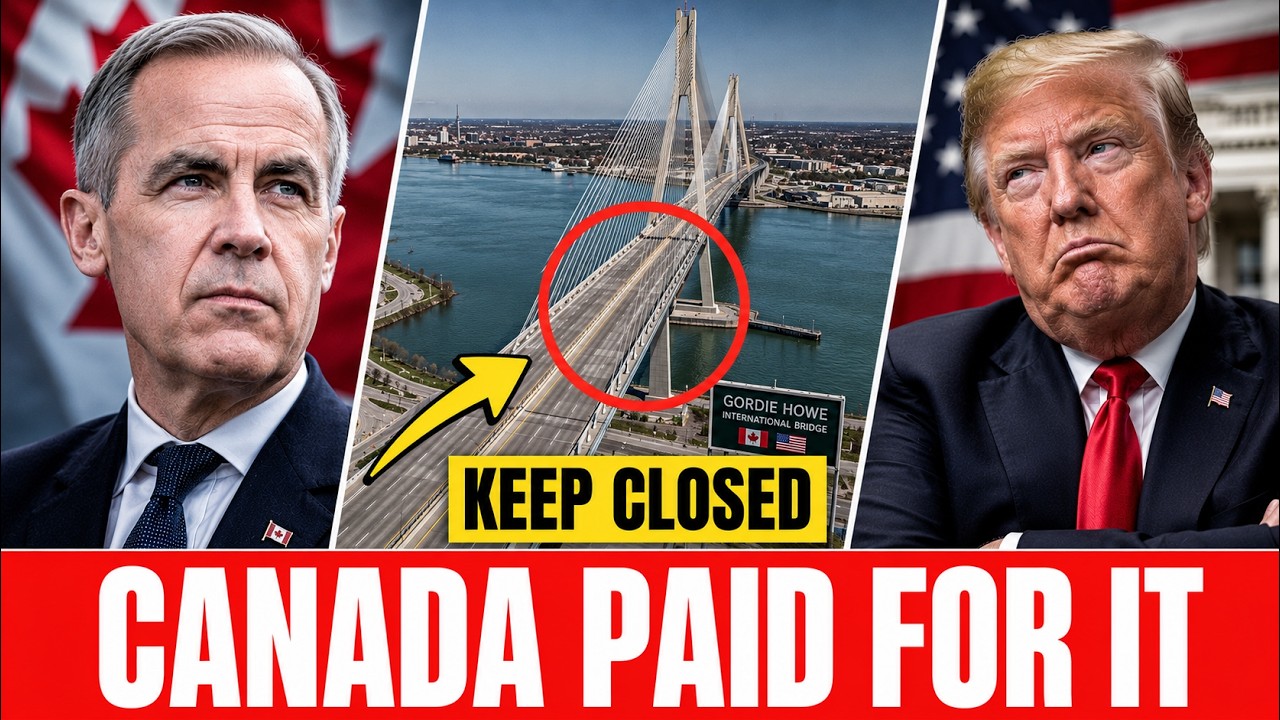
The unfinished silence surrounding the Gordie Howe International Bridge has rapidly become one of the most politically sensitive symbols in the modern Canada–United States relationship. Stretching across the Detroit River between Windsor and Detroit, the bridge was designed to modernize North America’s busiest commercial trade corridor. Yet despite construction being completed and systems fully tested, not a single vehicle has crossed it.
Canadian officials originally framed the delay as a technical matter involving safety inspections, customs coordination, toll integration, and commissioning procedures. However, recent statements from both Canadian and American officials have increasingly suggested the impasse is political rather than operational. What was once presented as a routine infrastructure timeline has evolved into a broader dispute tied directly to trade negotiations and diplomatic leverage.
At the center of the controversy stands Donald Trump, who publicly argued that the bridge should not open until what he described as “unfair trade practices” between Canada and the United States are addressed. His remarks intensified tensions after he suggested the United States should receive at least partial ownership of the crossing before operations begin.
Canada’s position has remained notably firm. Prime Minister Mark Carney reportedly reminded Washington that Canada financed the entire project, contributing approximately $6.4 billion toward construction. Canadian officials also rejected claims that American workers and materials were excluded from the project, emphasizing that U.S. steel and labor participated throughout development.
What makes this dispute particularly unusual is the ownership structure already established years ago through bilateral agreements. The bridge itself is jointly managed through arrangements involving Canadian authorities and the state of Michigan, despite Canada assuming the overwhelming financial burden. Ottawa therefore sees recent American demands as inconsistent with previously negotiated terms.


Behind the political rhetoric lies another influential factor: the long-standing opposition from the owners of the privately operated Ambassador Bridge. The Moroun family, which controls the older bridge connecting Detroit and Windsor, has spent years resisting the Gordie Howe project because of the potential threat it poses to its commercial dominance.
Reports indicating that businessman Matthew Moroun met with senior members of the Trump administration shortly before public threats against the bridge surfaced have added another layer of controversy. Critics in Windsor argue that the situation increasingly resembles a clash between public infrastructure priorities and private economic interests.
Mayor Drew Dilkens emerged as one of the most outspoken voices during the dispute. In radio interviews, Dilkens argued that Canada should not rush into a concessionary agreement merely to accelerate the bridge’s opening. His comments surprised many observers because Windsor itself has waited decades for the crossing to become operational.
Rather than pushing Ottawa toward compromise, Dilkens suggested Canada could afford patience. He argued that tariff-related slowdowns in trade volumes mean the existing Ambassador Bridge still has enough capacity to handle current traffic demands. According to his reasoning, Canada is not operating under immediate economic desperation.
That posture represents a significant shift in tone within Canada–United States relations. Historically, Canada has often been portrayed as the smaller economic partner forced to react quickly whenever trade tensions escalate. The current standoff suggests a more measured Canadian approach, one willing to endure delays rather than accept terms perceived as politically disadvantageous.
The bridge itself was originally celebrated as a transformational infrastructure project expected to strengthen automotive manufacturing supply chains, reduce border congestion, and deepen economic integration between Ontario and Michigan. Instead, it has become a symbol of how vulnerable cross-border cooperation can become when trade disputes intersect with domestic political calculations.
At the same time, resistance to the delay is growing within Michigan itself. Business groups, state officials, and lawmakers across Detroit have repeatedly emphasized the economic importance of opening the crossing as quickly as possible. Many regional leaders argue the project is critical for manufacturing stability and long-term job growth throughout the Great Lakes region.
Several Michigan officials have reportedly criticized efforts to politicize the bridge, warning that delaying operations harms both American and Canadian industries. The Detroit–Windsor corridor remains one of the most economically integrated trade zones in North America, particularly for automotive production networks that rely on constant cross-border transportation.
This tension highlights a deeper contradiction within the broader dispute. While national political rhetoric in Washington focuses on trade grievances, many local stakeholders on both sides of the border overwhelmingly support the bridge’s immediate opening. Factories, logistics firms, truck operators, and commuters all stand to benefit from expanded capacity and reduced delays.
Canadian federal minister Evan Solomon further intensified speculation when he publicly acknowledged ongoing negotiations between Canadian and American officials specifically concerning the bridge. His comments appeared to confirm that the delay was directly tied to broader trade discussions rather than technical readiness alone.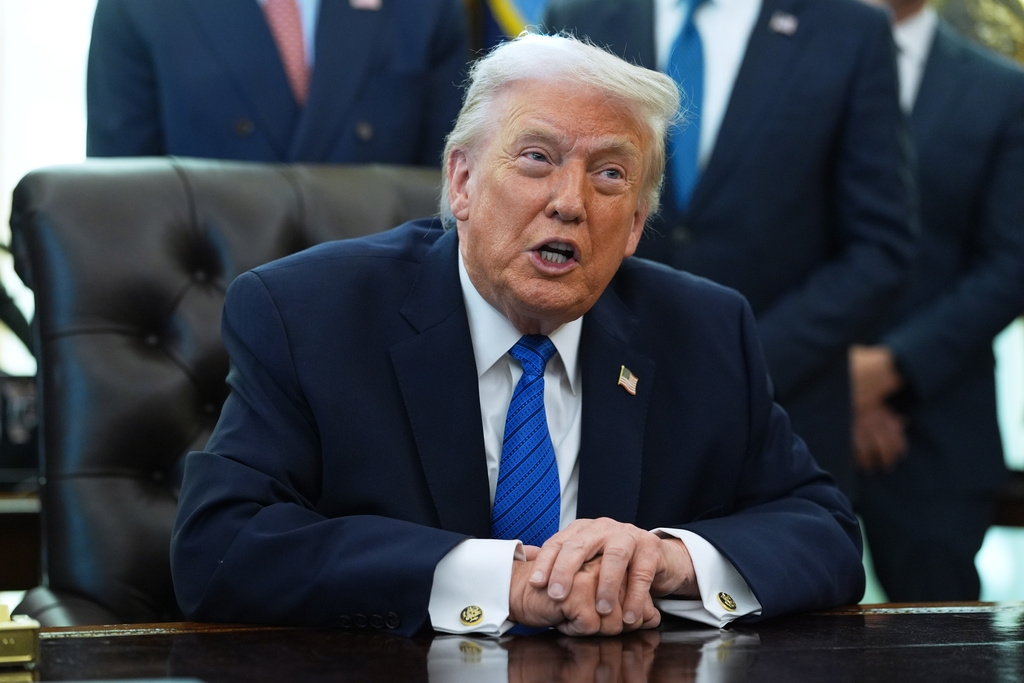
The significance of those remarks became even greater after American ambassador Pete Hoekstra also referenced unresolved negotiations between Ottawa and Washington. Together, the statements from both governments reinforced the growing perception that the bridge is now effectively part of a larger bargaining process.
For many observers, the Gordie Howe dispute now represents more than an infrastructure disagreement. It reflects changing assumptions about leverage, dependency, and negotiation power between Canada and the United States. The idea that Ottawa may willingly leave a completed multibillion-dollar bridge unused rather than accept unfavorable conditions would have seemed unlikely in previous decades.
The symbolism is difficult to ignore. A bridge intended to reduce friction between two allied economies has instead become the focal point of diplomatic tension. The crossing built to facilitate trade is now itself constrained by unresolved trade disputes.
Whether Canada ultimately maintains this patient negotiating posture remains uncertain. Officials continue to publicly reference a spring 2026 operational timeline, but no definitive opening date has yet been announced. Much now depends on the outcome of broader tariff discussions and the ability of both governments to reach mutually acceptable terms behind closed doors.
For businesses and communities on both sides of the Detroit River, the uncertainty continues to carry economic consequences. Manufacturers, suppliers, and transportation companies are watching carefully for any indication that an agreement has been finalized and that the bridge may finally begin operations.
The Gordie Howe International Bridge will almost certainly open eventually. The more consequential question now concerns the political conditions attached to that opening. In many ways, the standoff has already transformed the bridge into something larger than infrastructure — a visible measure of how Canada and the United States negotiate power, trade, and sovereignty in a rapidly changing political climate.






