Something doesn’t feel right in Australian politics right now. A growing number of voters are sensing a fundamental shift beneath the surface, and new opinion polls are confirming what many have suspected for months. One Nation’s support is not just growing — it is surging at a pace that is sending shockwaves through the established political order in Canberra. As the party gains momentum across regional Australia and outer suburban seats, analysts are beginning to warn that the country’s long-dominant two-party system may be on the brink of collapse at the next federal election.
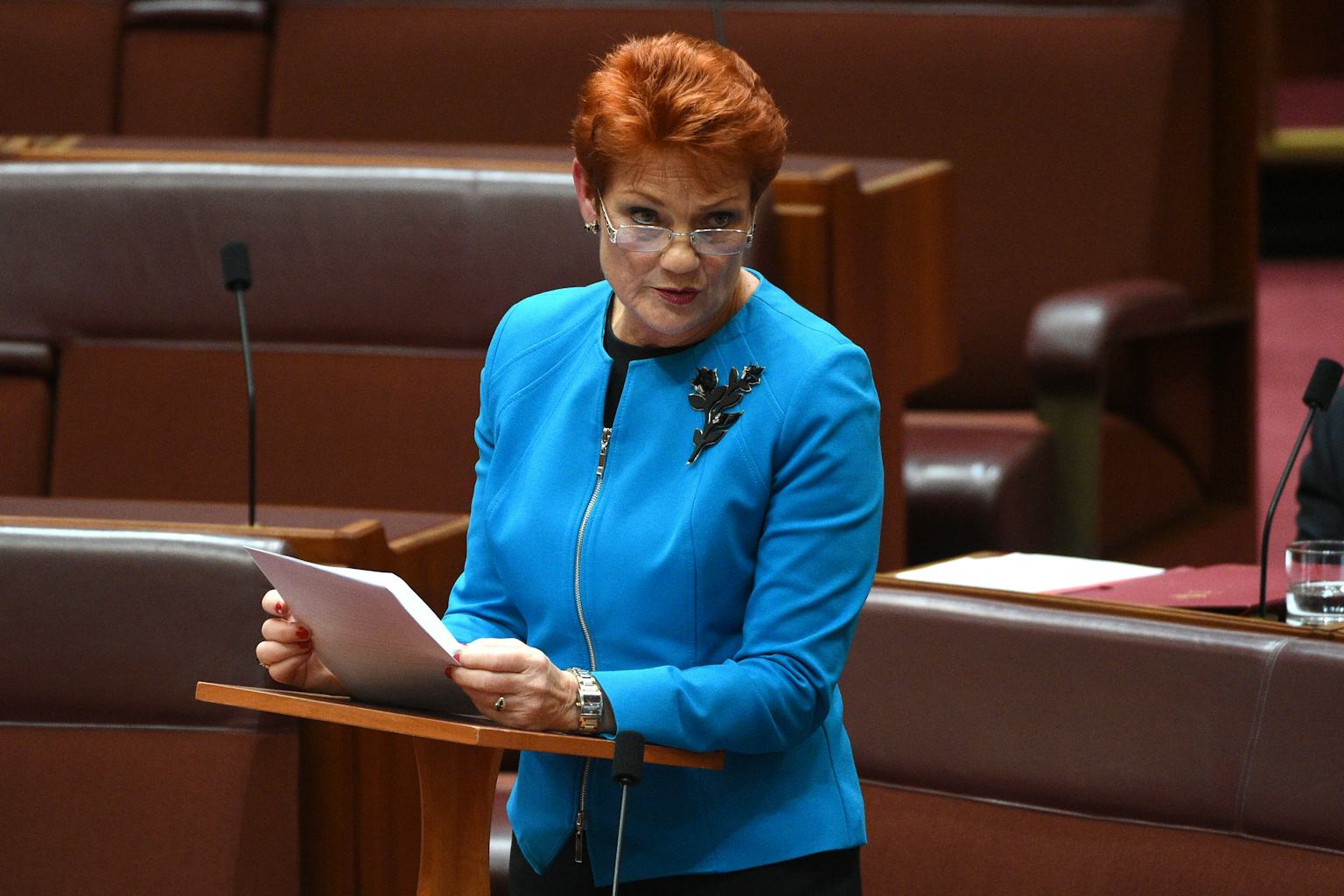
This is no longer a fringe story confined to protest votes. One Nation is tapping into deep, widespread frustration that has been building for years. Cost of living pressures, housing affordability, immigration levels, energy prices, and a sense that ordinary Australians are being left behind have created a perfect storm of discontent. Pauline Hanson’s party is positioning itself as the voice for those who feel ignored by both Labor and the Coalition, and voters are responding in increasing numbers.
Recent polling data paints a striking picture. In several key regional and outer metropolitan seats, One Nation is polling in double digits, with some surveys showing them overtaking one of the major parties in primary vote share. The trend is particularly strong in areas where economic anxiety is highest and trust in traditional politicians is lowest. This is not random protest voting. It reflects a deliberate rejection of the status quo by people who feel both Labor and the Coalition have failed to deliver on basic promises of affordability, security, and fairness.
The implications of this surge are profound. For decades, Australian politics has been defined by the comfortable dominance of Labor and the Liberal-National Coalition. This two-party system has shaped policy, elections, and national direction for generations. If One Nation continues its upward trajectory, that system could face its most serious challenge since the rise of the Greens more than two decades ago. A fragmented vote could lead to hung parliaments, balance-of-power negotiations, and a fundamental realignment of how power is exercised in Canberra.
Many Australians are expressing a deep sense that “something doesn’t feel right.” They look around and see rising costs, strained services, and a political class that seems increasingly disconnected from their daily realities. Housing has become almost unattainable for young families. Power bills have skyrocketed despite Australia being one of the world’s largest energy exporters. Immigration levels have added pressure to infrastructure that was already struggling to cope. Meanwhile, wages have not kept pace, and the gap between rich and poor continues to widen. In this environment, Pauline Hanson’s straightforward message — put Australians first, control borders, protect local jobs, and demand better value from government — is finding a receptive audience.

One Nation’s appeal goes beyond specific policies. It represents a broader rejection of what many see as elite consensus politics. Voters tired of being told what they should think about immigration, cultural change, and economic priorities are gravitating toward a party that refuses to conform to Canberra’s unwritten rules. Hanson’s willingness to speak bluntly about issues that others avoid has earned her a loyal following, even as it draws fierce criticism from mainstream media and the major parties.
The major parties are watching these developments with growing alarm. Labor, already struggling with cost-of-living backlash, faces the prospect of losing working-class support to One Nation in key seats. The Coalition, traditionally strong in regional areas, is seeing its base eroded as voters seek a more assertive voice on immigration and economic nationalism. Both parties may be forced to adjust their strategies dramatically, potentially leading to policy shifts that could reshape Australian politics for years to come.
This moment feels like the beginning of something larger. Political realignments rarely happen overnight, but the conditions for one are clearly present. Economic insecurity, cultural anxiety, and institutional distrust have combined to create fertile ground for outsider movements. One Nation is capitalising on this moment with a clarity and consistency that the major parties have struggled to match.
The potential impact on Australia’s political landscape is profound. A stronger One Nation could break the two-party dominance that has characterised Australian politics for decades. Even without winning government, the party could hold the balance of power in the Senate or key lower house seats, giving it significant leverage to influence policy.
For Australian democracy, this development presents both opportunities and risks. On one hand, it offers a genuine alternative voice and forces the major parties to engage with issues they might otherwise ignore. On the other hand, increased polarisation could make consensus on important national challenges more difficult to achieve.
The coming months will be critical as all parties position themselves for the election campaign. Pauline Hanson will likely continue her strong grassroots approach, connecting directly with voters in regional areas. The major parties will need to decide whether to confront One Nation head-on or attempt to co-opt some of their popular positions.
The rise of One Nation also reflects broader global trends. Across Western democracies, populist and nationalist parties have gained ground by addressing concerns about immigration, economic insecurity, and cultural change. Australia is not immune to these international patterns. Pauline Hanson’s enduring appeal suggests that a significant portion of the electorate feels unrepresented by the traditional political establishment.

As this political realignment unfolds, the big question remains: Is a massive anti-establishment revolt now coming at the next election? The signs are increasingly pointing in that direction, and the major parties ignore them at their peril. Australian voters are sending a clear message that they are tired of the same old promises and want real change. Whether One Nation can capitalise on this moment will shape the country’s political future for years to come.
The establishment in Canberra can no longer afford to ignore the voices of ordinary Australians who feel left behind. The next federal election is shaping up to be one of the most unpredictable and consequential in modern Australian history.
The political map of Australia could look very different after the next election if these trends continue. The two-party system that has defined Australian politics for generations is under unprecedented pressure, and the outcome remains highly uncertain.
One Nation’s surge is forcing a long-overdue national conversation about the pace of change, the protection of Australian workers, and the need to prioritise domestic needs. Whether this leads to a healthier democracy or greater division is the central question facing the country today.
The coming election will be a defining moment. Australians are demanding change, and the major parties can no longer take their support for granted. The future of Australian politics is being written right now — and One Nation is playing a central role in that story.






