
THE QUIET CHICAGO DREAMER WHO LEARNED TO DOMINATE AMERICA WITH COMEDY
Long before millions watched him every night on national television, Stephen Colbert was a nervous young performer fighting for attention inside Chicago’s unforgiving improv clubs. The cramped basements of Second City and iO Theater became the battlefield where he sharpened his instincts, tested his courage, and slowly built the fearless stage presence that would later define his career.
Improvisation was not simply entertainment for Colbert. It became a survival skill. Every performance forced him to think faster, react smarter, and transform chaos into comedy within seconds. The brutal unpredictability of live improv trained his mind like a weapon, preparing him for the high-pressure world of television and political satire.
Night after night, Colbert learned how to command a room using intelligence instead of volume. He discovered that humor could expose hypocrisy more effectively than anger ever could. Audiences laughed, but beneath those laughs was something sharper — a performer studying human behavior with almost surgical precision and turning observation into unforgettable comedy.
The Chicago comedy scene also taught Colbert humility and discipline. Success was never guaranteed, and performers survived only if they adapted constantly. He watched talented comedians fail because they relied on ego rather than connection. That lesson stayed with him forever and later became one of the foundations of his extraordinary television success.
What began inside small underground theaters eventually became the blueprint for a cultural phenomenon. The same instincts Colbert developed in those smoky improv rooms would later allow him to challenge politicians, dismantle media narratives, and dominate the world of late-night television without ever losing the sharp intelligence that first made audiences notice him.
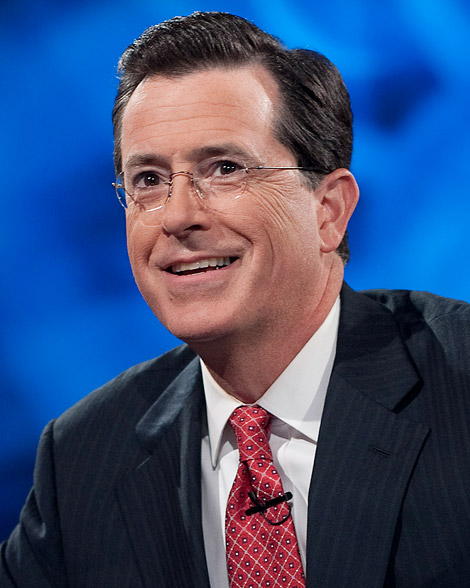
THE DAILY SHOW CREATED A SATIRICAL MONSTER AMERICA COULD NOT IGNORE
Stephen Colbert’s arrival on The Daily Show completely changed the trajectory of his career. Under Jon Stewart’s leadership, the program had already become a powerful voice in political comedy, but Colbert brought something uniquely explosive. He created a satirical conservative commentator so convincing and outrageously confident that audiences instantly became obsessed with the character.
The brilliance of the performance came from its precision. Colbert never played the role as simple parody. He embodied every exaggerated mannerism, every dramatic overreaction, and every absurd talking point with total commitment. The result was comedy so convincing that some viewers initially struggled to determine whether he was joking or speaking seriously.
As the character evolved, Colbert became one of the most recognizable faces in American satire. His segments blended intelligence, theatrical arrogance, and devastating political commentary into something entirely fresh. He mocked cable-news culture so effectively that many real television personalities unknowingly began imitating the exaggerated style he originally created as satire.
The success of The Daily Show transformed Colbert into more than a comedian. He became a national commentator capable of influencing how millions of Americans understood politics and media. His performances demonstrated that comedy could dissect propaganda, expose manipulation, and challenge authority while still remaining outrageously entertaining and wildly unpredictable.
By the time audiences fully embraced his satirical persona, it was clear that Colbert had outgrown the role of supporting correspondent. He was no longer simply contributing to the cultural conversation. He was becoming one of the defining comedic voices of an entire generation hungry for truth delivered through fearless laughter and razor-sharp satire.

THE COLBERT REPORT TURNED SATIRE INTO A CULTURAL REVOLUTION
When The Colbert Report premiered in 2005, it immediately shattered expectations for what late-night political comedy could achieve. The show did not merely parody conservative media culture — it completely immersed viewers inside a bizarre alternate reality where confidence mattered more than facts and emotion overwhelmed logic at every possible opportunity.
Night after night, Colbert perfected the illusion of a bombastic television patriot obsessed with ego, nationalism, and theatrical outrage. The satire worked because it reflected genuine media behavior so accurately that audiences often found themselves laughing and feeling deeply uncomfortable at the exact same time while watching the show unfold.
One of the program’s greatest achievements was introducing the concept of “truthiness” into mainstream culture. The term captured a growing political reality where emotional belief increasingly replaced objective evidence. Through comedy, Colbert identified a dangerous transformation happening inside American media long before many traditional analysts fully recognized its impact on society.
The Colbert Report quickly became essential viewing for audiences trying to navigate America’s rapidly changing political climate. It earned critical acclaim, massive ratings, and countless awards because it accomplished something rare: it entertained viewers while simultaneously forcing them to confront uncomfortable truths about power, manipulation, and modern political performance.
For nearly a decade, the show influenced political conversations far beyond television studios. Politicians reacted to it. Journalists referenced it. Young audiences learned to question media narratives because of it. Colbert transformed satire from simple entertainment into a cultural force capable of shaping national discourse and challenging powerful institutions directly.
THE LATE SHOW MADE COLBERT THE DEFINING VOICE OF MODERN AMERICA
When Stephen Colbert replaced David Letterman as host of The Late Show in 2015, many critics questioned whether he could succeed without hiding behind satire. Audiences had spent years associating him with a fictional character. Suddenly, he had to step forward as himself and prove he could carry one of television’s most legendary franchises.
Instead of struggling, Colbert completely reinvented modern late-night television. He blended intelligence, emotional honesty, political commentary, and traditional entertainment into a format that felt urgent and deeply connected to real American life. His monologues became nightly events where comedy and current events collided with remarkable energy and precision.
During moments of political chaos, national tragedy, and cultural division, Colbert’s show evolved into more than entertainment. Millions of viewers turned to him searching for perspective, relief, and emotional release. He mastered the rare ability to criticize power fiercely while still creating moments of humanity, empathy, and genuine connection with audiences.
What separated Colbert from many television hosts was his willingness to speak openly about values and principles. He did not present himself as politically neutral or emotionally detached. Instead, he embraced the idea that comedy could carry moral weight and that humor could become a tool for confronting fear, dishonesty, and extremism directly.
Today, Stephen Colbert stands as one of the most influential figures in American entertainment history. From Chicago improv stages to the most powerful desk in television, he transformed comedy into a cultural weapon capable of shaping public conversation. His journey proves that intelligence, courage, and creativity still possess the power to redefine an entire industry forever.






