STEPHEN COLBERT TURNED HIS FINAL MONOLOGUE INTO PURE TELEVISION CHAOS
The final episode of The Late Show with Stephen Colbert exploded into something far beyond a normal goodbye. Instead of delivering a polished Hollywood farewell filled with emotional speeches and safe nostalgia, Colbert transformed the broadcast into a wild, unpredictable spectacle that felt completely unfiltered and brutally honest from beginning to end.
From the moment he walked onto the stage, Colbert mocked the entire concept of sentimental television finales. He joked about losing his job, mocked celebrity culture, and turned his own cancellation into comedy. Audiences quickly realized they were not watching a carefully scripted goodbye but a chaotic collision between satire, frustration, and raw emotional honesty.
The atmosphere inside the Ed Sullivan Theater became increasingly surreal as Colbert abandoned traditional late-night structure. Conversations jumped from collapsing infrastructure to fake Roman priests and bizarre public scandals. Every joke carried the feeling that absolutely anything could happen next, creating one of the most unpredictable broadcasts television audiences had seen in years.
Rather than presenting himself as a tragic television legend saying farewell, Colbert leaned fully into absurdity. He joked that his future career might involve hosting a tiny public-access program in Michigan for twelve viewers. The humor landed because it combined self-destruction, sarcasm, and genuine vulnerability all at the same time.
By refusing to follow the expected emotional formula, Colbert completely shattered the traditional rules of late-night television finales. Viewers expecting tears and elegant tributes instead witnessed controlled chaos, uncomfortable honesty, and a host deliberately dismantling the glossy fantasy of celebrity culture in front of millions watching live across America.
THE BANANA INCIDENT PUSHED THE ENTIRE SHOW INTO MADNESS
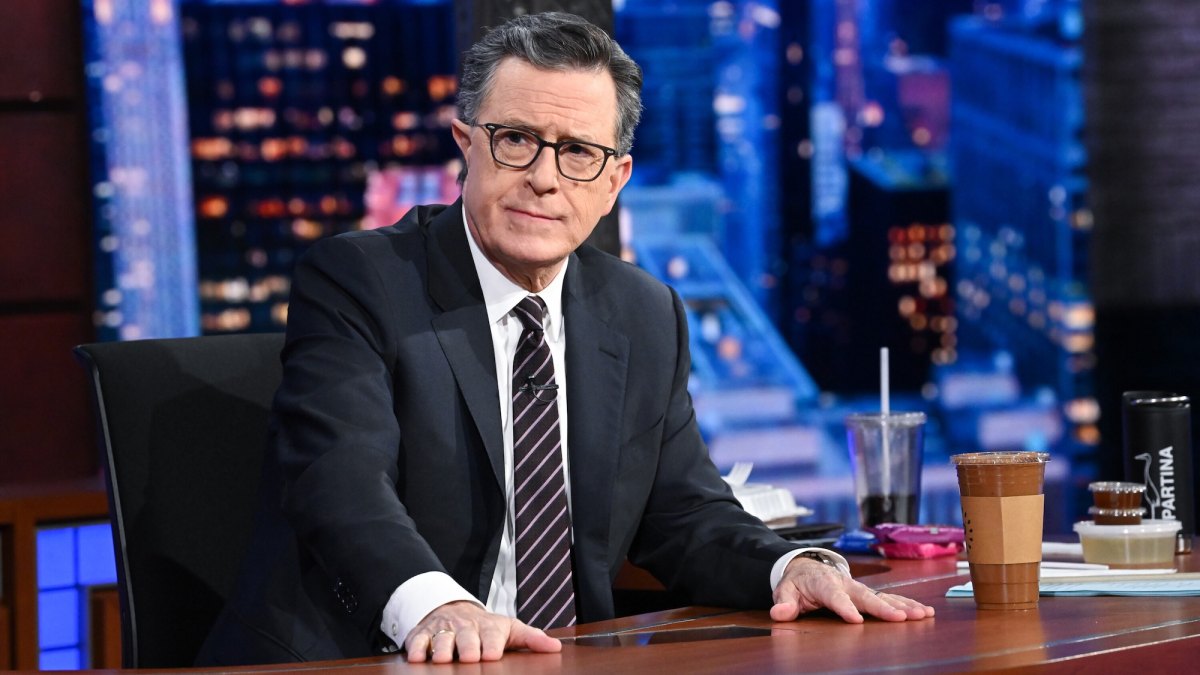
The emotional tension exploded during Colbert’s final “First Drafts” segment, which instantly spiraled into complete chaos. What began as a harmless retirement joke quickly turned into one of the strangest moments in modern late-night history after Colbert revealed a rejected farewell card asking how to start an OnlyFans account featuring his “tootsies.”
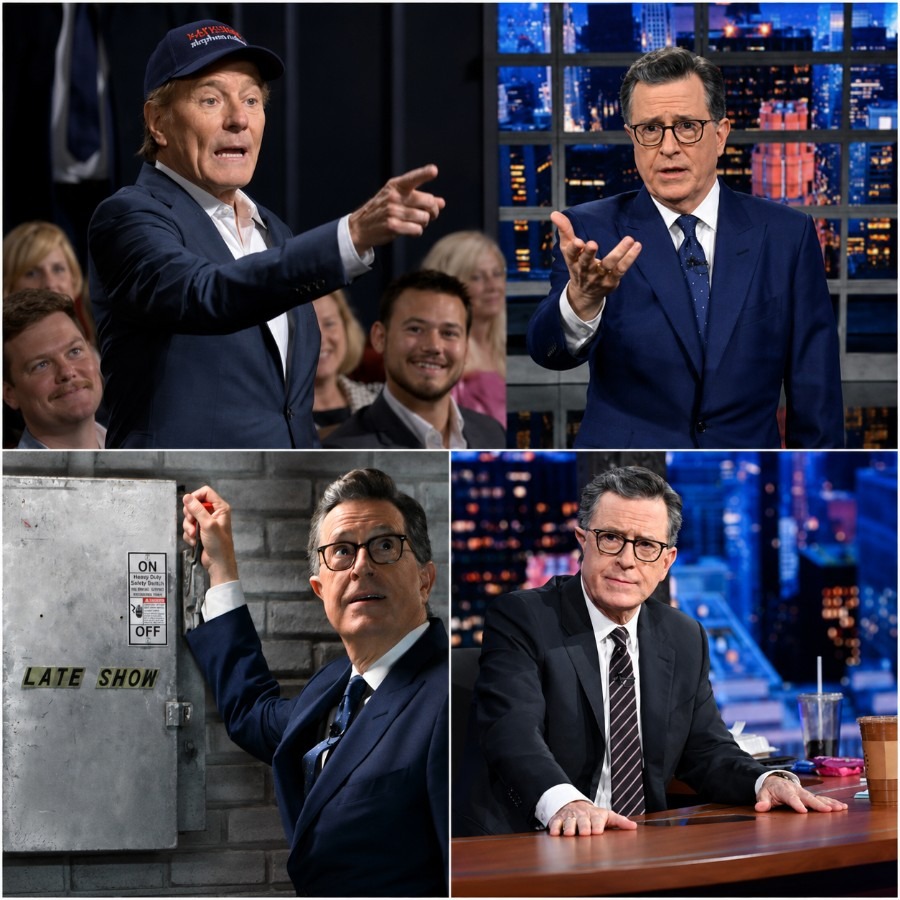
The bizarre humor immediately set the tone for what followed next. Bryan Cranston suddenly appeared demanding participation in the finale, only to be publicly rejected by Colbert for attempting what he called a “cheap celebrity stunt.” The awkward exchange stunned audiences because it felt intentionally uncomfortable, blurring the line between scripted comedy and genuine tension.
Things became even stranger when Paul Rudd interrupted the monologue carrying retirement bananas and reading an excessively long poem. The audience laughed nervously as Colbert struggled to maintain control of the show. The entire scene felt chaotic in a way that modern television rarely allows, which only made viewers more fascinated by every second.
Then came the moment social media instantly immortalized. Tim Meadows stormed onto the stage demanding recognition based on his shared Second City history with Colbert. After being rejected, Meadows screamed “Screw you, Colbert!” before stealing Paul Rudd’s leftover bananas and disappearing backstage as the audience completely lost control laughing.
Within minutes, clips of the banana confrontation flooded the internet. Fans debated whether the insanity was scripted or entirely spontaneous. That uncertainty became part of the magic. The finale succeeded because it embraced unpredictability so completely that viewers genuinely felt like they were witnessing television chaos unfold live in real time.

COLBERT USED COMEDY TO DESTROY POLITICAL ABSURDITY ONE LAST TIME
Even during his farewell episode, Stephen Colbert refused to abandon political satire. Instead of delivering safe nostalgia, he continued attacking media dysfunction, public-health controversies, and government incompetence with the same sharp intensity that defined his career. His final monologue became both a comedy performance and a cultural autopsy of modern America.
One of the most talked-about moments involved Colbert mocking a controversial federal health appointment. He joked about a vaccine-skeptic penile implant specialist managing national antivirus policy, turning public-health frustration into explosive comedy. The audience erupted because the absurdity sounded almost too ridiculous to believe, yet painfully recognizable at the same time.
Colbert’s political humor worked because he understood how to transform complicated societal fears into sharp, memorable jokes. He mocked collapsing infrastructure, misinformation, and bureaucratic dysfunction without sounding detached or robotic. Instead, every punchline carried visible exhaustion, frustration, and disbelief at the strange direction modern public life had taken.
What made the finale especially powerful was the emotional contrast between outrage and comedy. Colbert could deliver devastating political criticism one moment, then immediately pivot into absurd jokes about fake priests or stolen bananas. That balance allowed viewers to laugh while still feeling the deeper anxiety underneath the humor surrounding contemporary American culture.
For years, Colbert proved that late-night comedy could influence national conversations more effectively than many traditional news programs. His final episode reinforced that legacy completely. Even during his farewell, he remained committed to exposing hypocrisy, challenging powerful institutions, and reminding audiences that comedy can still function as a serious weapon against public absurdity.
THE FINAL GOODBYE BECAME A CULTURAL MOMENT AMERICA WILL NEVER FORGET
As the broadcast approached its conclusion, the emotional tone shifted once again. Amid the madness, Colbert spoke openly about his childhood dream of becoming an oceanographer inspired by Jacques Cousteau. The moment became unexpectedly touching when he revealed bizarre dolphin-themed billboards from South Carolina encouraging him to finally pursue marine biology.
The surreal dolphin campaign perfectly captured the spirit of the entire finale. Nothing about the night followed traditional television logic. Emotional sincerity existed beside total absurdity. Colbert moved effortlessly between heartfelt reflection and surreal comedy, creating an atmosphere where audiences genuinely did not know whether to laugh, cry, or simply stare in disbelief.
Viewers across social media immediately declared the finale one of the most unforgettable moments in late-night history. Some praised its emotional honesty, while others celebrated its complete rejection of polished Hollywood sentimentality. Nearly everyone agreed on one thing: no other television host could have created something simultaneously so chaotic, emotional, uncomfortable, and hilarious.
The final broadcast also symbolized the end of a major era in American television. For more than a decade, Colbert’s desk became a nightly destination for millions searching for political satire, emotional release, and intelligent humor during turbulent cultural moments. His departure left many viewers wondering whether late-night television could ever feel this unpredictable again.
By the time the cameras stopped rolling, Stephen Colbert had achieved something extraordinarily rare. He transformed a network farewell into a chaotic cultural event people would discuss for years. Instead of leaving quietly, he detonated the entire late-night formula one final time and reminded America why he became one of television’s most fearless comedic voices.







