Russia’s Empty Frontier: How the Far East Is Slowly Slipping Away
The map still looks imposing. Russia stretches across Eurasia in one uninterrupted sweep of territory, spanning forests, tundra, mountains and frozen coastlines larger than entire continents. But on the country’s eastern edge, beyond Lake Baikal and toward the Pacific, a quieter crisis has been unfolding for decades — one measured not in military defeats or lost borders, but in disappearing people.
The Russian Far East, a territory covering nearly 40 percent of Russia’s landmass, is slowly emptying out. Towns that once housed miners, engineers and military workers are thinning into ghost settlements. Young people leave for Moscow, St. Petersburg or Novosibirsk. Few return.


The scale of the demographic decline is staggering. In 1989, the region that now forms the Far Eastern Federal District held more than 10 million people. Today, fewer than eight million remain. Entire regions have lost a third, half or even two-thirds of their populations since the collapse of the Soviet Union. In Chukotka, Russia’s northeastern frontier across from Alaska, the population has fallen by nearly 70 percent.
For President Vladimir Putin, the problem is more than statistical. Russian officials have repeatedly described the Far East as a national security issue. The concern is not simply that Russia is losing people. It is that the vacuum is being filled by outside influence — primarily Chinese economic power and, increasingly, foreign labor.
The Far East occupies one of the most strategically valuable positions on Earth. It borders China, North Korea and the Pacific Ocean. It contains immense reserves of oil, gas, gold, timber, fish and rare earth minerals. It also holds Russia’s most important Pacific ports, including Vladivostok, the headquarters of the Russian Pacific Fleet and the eastern terminus of the Trans-Siberian Railway. (Wikipedia)

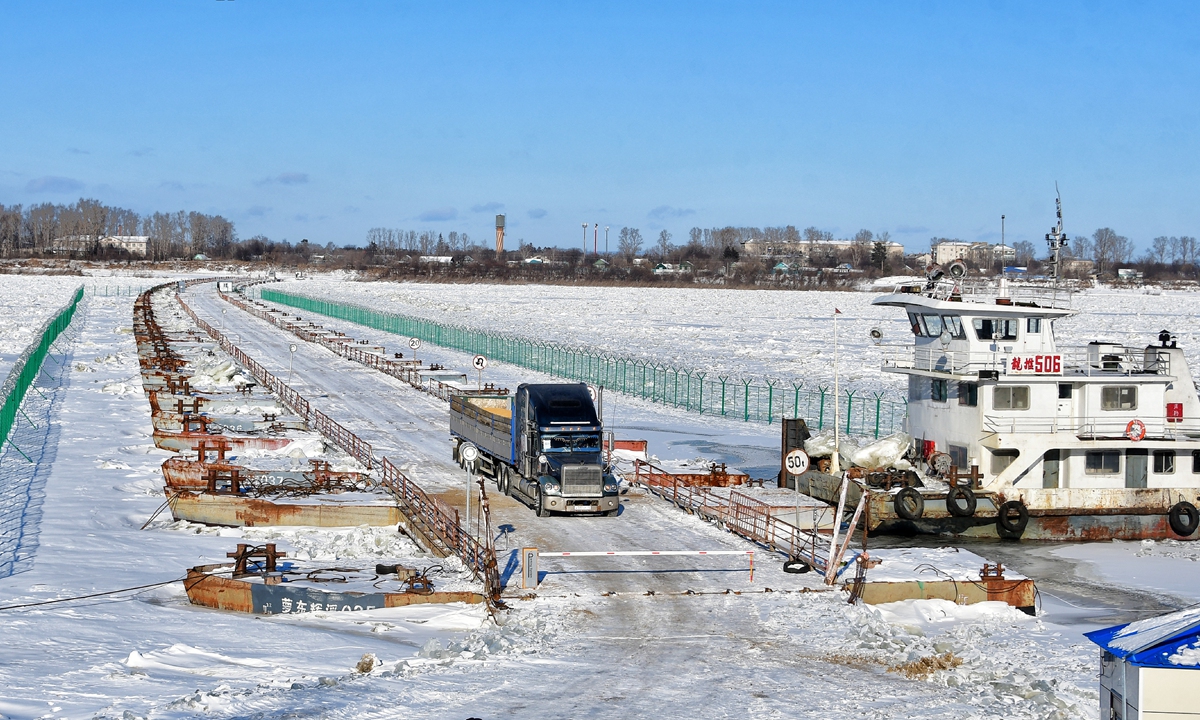
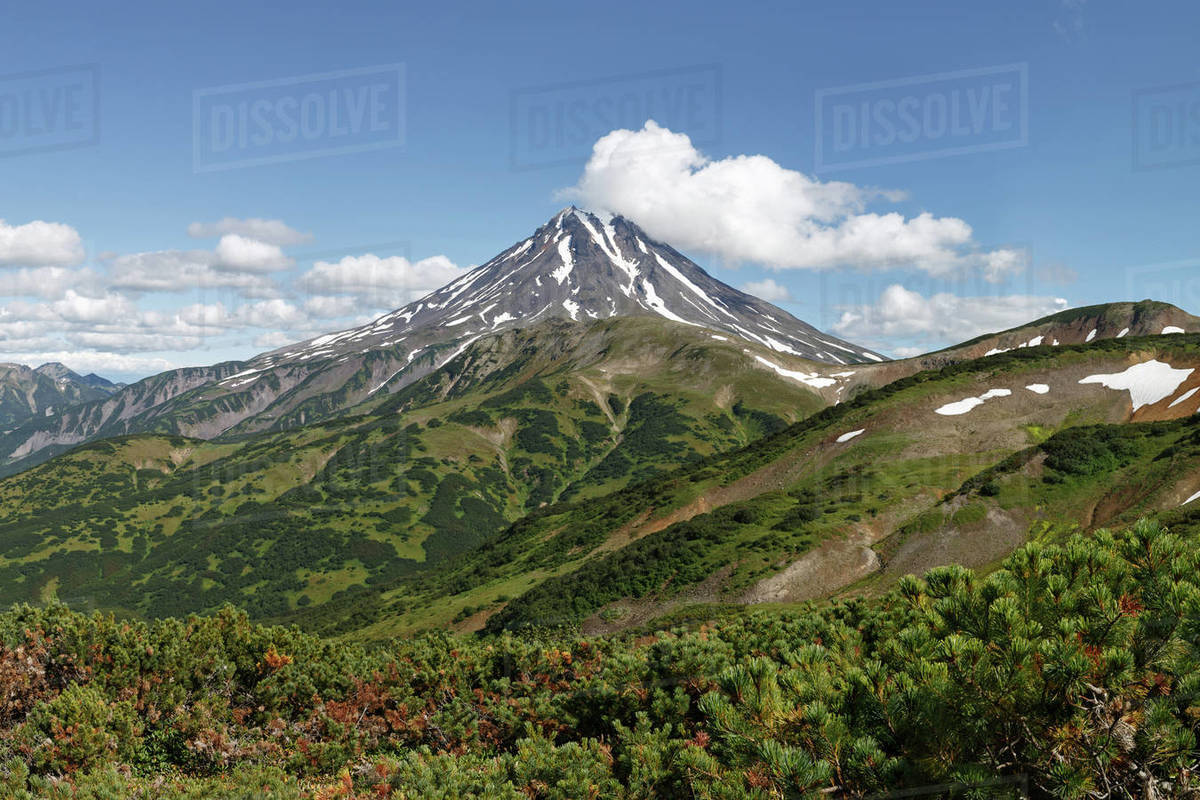

Yet despite its geopolitical significance, the region has become increasingly difficult to inhabit. Winters are severe. Distances are immense. Infrastructure is deteriorating. And the economic incentives that once drew Soviet citizens eastward have largely vanished.
Under the Soviet Union, Moscow treated the Far East as a state project. Workers were offered wages dramatically above the national average, subsidized housing and guaranteed social benefits. The message was clear: endure the hardship temporarily, accumulate savings, then return west with security and opportunity.
That bargain collapsed with the Soviet Union itself.
When the USSR dissolved in 1991, inflation wiped out savings, state guarantees evaporated and transportation networks deteriorated. Suddenly, the Far East no longer represented sacrifice with reward. It represented isolation without compensation.
The first wave of departures was immediate. Engineers, teachers, miners and military families left in large numbers during the 1990s. But the deeper problem emerged later: the exodus never stopped.
Today, the reasons people leave are less ideological than practical.
Wages in the Far East remain somewhat higher than in western Russia, but the cost of living is dramatically steeper. Food, fuel, housing and transportation often cost 30 to 80 percent more depending on the region. In places like Kamchatka or Chukotka, basic goods must travel enormous distances through unreliable supply chains.
The result is a brutal economic equation. Residents earn slightly more but spend substantially more. For younger Russians with education or mobility, moving west increasingly feels like the only rational decision.
The quality-of-life gap compounds the problem. Healthcare access has shrunk as clinics and hospitals in smaller settlements close. Schools have merged or disappeared entirely as student populations decline. Crime and poverty rates remain above the national average.
The demographic spiral reinforces itself.
When younger residents leave, tax revenues shrink. Regional governments then devote more resources toward pensions and emergency services rather than long-term development. Infrastructure decays further. Families reconsider staying. Another generation departs.
In many settlements, the remaining population is disproportionately older and dependent on state support.
Moscow has spent decades attempting to reverse the trend.
Successive governments launched development programs promising investment, infrastructure and incentives for migration eastward. Special economic zones were created. Tax benefits were expanded. Airfare subsidies appeared. The Kremlin even offered free land plots to citizens willing to relocate.
But many of those offers exposed the deeper dysfunction of the strategy itself.
The “free hectare” program, heavily promoted by the Russian government, granted land in remote eastern territories to settlers. Yet much of the land lacked roads, utilities or rail access. In many cases, recipients received territory that was effectively unusable without massive personal investment.
The symbolism was revealing. Russia was offering land faster than it could provide civilization around it.
Meanwhile, the war in Ukraine intensified nearly every structural weakness facing the Far East.
Mobilization hit remote regions disproportionately hard, removing working-age men from already labor-starved communities. Defense spending crowded out infrastructure investment. Aviation shortages worsened under sanctions, leaving isolated settlements even more disconnected from western Russia.
Projects once presented as transformative quietly stalled.
In late 2023, Russian planners announced ambitious goals to build hundreds of domestic aircraft to compensate for sanctions and Western restrictions. But production targets repeatedly fell short, illustrating how difficult it had become for Russia to modernize critical infrastructure under wartime conditions.
As Moscow struggled to maintain its own eastern territories, China’s role expanded.
Trade between China and the Russian Far East has surged since the invasion of Ukraine. Chinese businesses increasingly dominate regional commerce, logistics and investment. Border infrastructure has deepened economic integration between northeastern China and Russian Pacific ports.


The transformation is visible most clearly in cities such as Vladivostok and along the Amur River corridor, where Chinese capital and labor have become increasingly central to local economies.
For Beijing, the arrangement is strategically advantageous.
China gains access to natural resources, transport routes and Pacific maritime infrastructure without confrontation. Russian dependency, accelerated by sanctions and war, gives Beijing leverage that would have been politically unimaginable a decade ago.
Historical memory shadows the relationship as well.
Before 1860, parts of what is now Russia’s Far East belonged to Qing China, including territory surrounding modern Vladivostok. Chinese discourse occasionally references these historical claims symbolically, often through the revival of older Chinese place names.
There is little evidence China seeks military confrontation over the territory. It may not need to.
Influence can emerge gradually through economics, demographics and dependence.
At the same time, Russia has increasingly turned to another authoritarian neighbor to fill labor shortages: North Korea.
Tens of thousands of North Korean laborers are now believed to be working in Russia, particularly in construction and industrial sectors across the Far East. Human rights groups and defectors have long described many of these arrangements as highly coercive, with wages flowing largely back to Pyongyang rather than to workers themselves.
The irony is difficult to ignore.
Russia, a nuclear superpower spanning eleven time zones, increasingly depends on labor imported from one of the world’s poorest and most isolated states to sustain parts of its own territory.
Inside Russia, the demographic decline has also fueled uneasy political conversations.
Small activist circles, particularly among exiled Russian dissidents, have revived discussions about Siberian regionalism and greater autonomy for eastern territories. Some invoke the phrase “United States of Siberia,” once mostly cultural satire, as a broader critique of Moscow’s centralized rule.
These movements remain fringe. There is no imminent separatist uprising in the Far East.
But the discussions reveal something deeper: distance is reshaping identity.
Many residents of the Far East feel economically and psychologically disconnected from Moscow. Flights to western Russia can be longer and more expensive than international travel to parts of Asia. Trade increasingly flows south toward China rather than west across Siberia.
The gravitational pull of Asia is becoming stronger than the pull of European Russia.
And geography amplifies every weakness.
The Far East is not merely remote. It is one of the harshest inhabited environments on Earth. Maintaining roads, railways, hospitals and settlements across such enormous distances requires sustained state capacity and massive investment. Soviet planners managed that through centralized control and subsidies. Modern Russia, constrained by sanctions, corruption and war expenditures, has struggled to replicate it.
The long-term implications are difficult to predict.
Russia is unlikely to “lose” the Far East formally. Borders will not suddenly disappear. Chinese tanks are not poised to roll into Vladivostok.
But geopolitical power is not determined solely by maps.
It is determined by who lives in a territory, who works there, who builds infrastructure, who extracts resources and whose economy becomes indispensable.
On those measures, the balance in the Far East is gradually shifting.
The region remains rich beyond imagination in resources and strategic value. It sits beside some of the world’s most dynamic economies and maritime routes. In another political context, it might have become one of Eurasia’s great growth corridors.
Instead, it has become a landscape of demographic retreat.
Russia still governs the Far East administratively. But increasingly, it struggles to populate it, develop it or persuade its own citizens to remain there.
That may prove to be the more important story of the 21st century — not whether Russia can expand its influence abroad, but whether it can hold together the immense frontier it already possesses. (Wikipedia)






