The Battle for the Bush: How a Growing Rural Rebellion Is Testing the Albanese Government
The morning mist had barely lifted from the limestone plains of Canberra when the low, rhythmic thrum of diesel engines began to reverberate through the streets of Australia’s capital. By 8:30 a.m., the meticulously planned, geometric avenues designed by Walter Burley Griffin were transformed. A slow-moving blockade of trucks, four-wheel drives, and heavy agricultural machinery ground the city’s key thoroughfares to a near-complete halt.
The gridlock in the nation’s capital represents the latest and most volatile flashpoint in a deepening cultural and economic schism dividing Australia. On one side stands Prime Minister Anthony Albanese’s urban-centric Labor government, committed to an ambitious green energy transition and sweeping regulatory reforms. On the other is the country’s regional backbone—a furious coalition of farmers, pastoralists, and truck drivers who argue that the government’s policies are driving family-run agricultural operations into extinction.
At the heart of the unrest is what rural leaders call an ideological assault disguised as progressive policy. In recent months, tensions have boiled over regarding a multi-front legislative push by the Labor administration, including the phasing out of live sheep exports by sea, proposed changes to tax structures for self-managed superannuation funds holding agricultural land, and the forced expansion of renewable energy transmission lines across prime farming acreage.
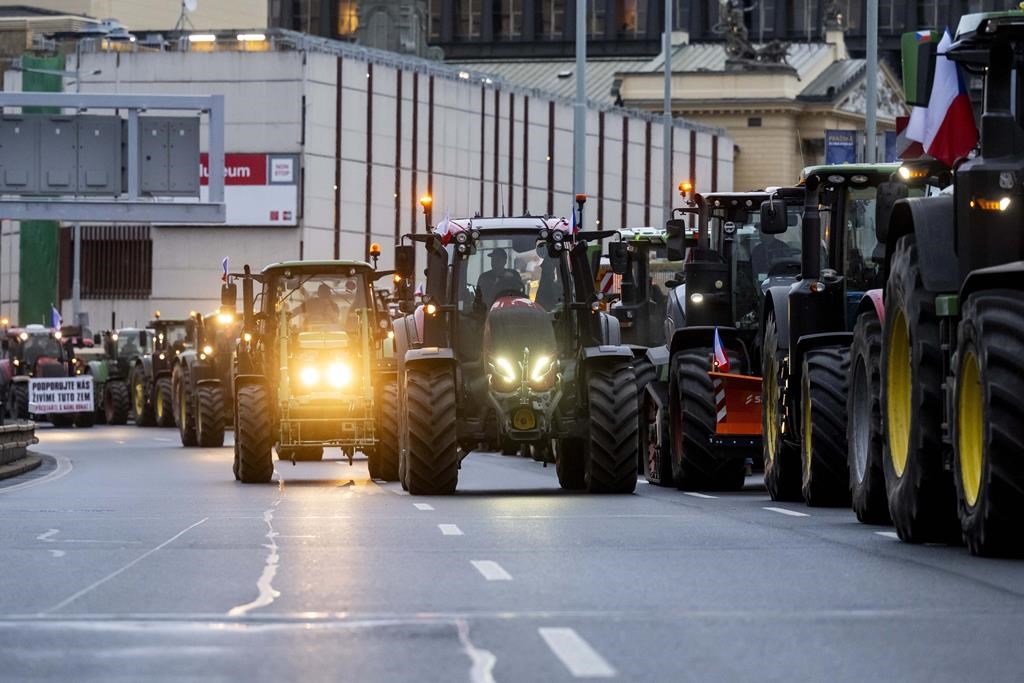
The protest on the lawns of Parliament House, spearheaded by the National Farmers’ Federation, brought thousands of regional Australians to Canberra. Many had driven through the night from fields and paddocks hundreds of miles away in New South Wales, Victoria, and Queensland, carrying signs emblazoned with the movement’s rallying cry: “No Farmers, No Food.”
For the Albanese government, the optics of a besieged capital present an acute political dilemma. While the administration has successfully presided over a post-pandemic rebound in agricultural export values, its policy agenda remains firmly tethered to the progressive priorities of metropolitan inner-city electorates—seats that Labor must defend against a rising tide of climate-focused independent politicians.
The anger on display in Canberra, however, suggests that the political cost of ignoring regional Australia is rising. The blockade delayed morning commuters, forced federal politicians to navigate a labyrinth of detours, and presented a stark visual counter-narrative to the government’s claims of steady, consultative leadership.
The resentment has been compounding for months. The decision to legislatively mandate an end to the live sheep export trade by sea deeply alienated communities in Western Australia, where the industry serves as an economic lifeblood. While animal welfare organizations celebrated the ban as a landmark victory, rural communities viewed it as a betrayal dictated by urban activists who have never set foot in a shearing shed.
Simultaneously, the government’s planned “Super Tax” adjustments, which target unrealised capital gains on high-value assets held within self-managed super funds, have triggered widespread panic among multigenerational farming families. Because agricultural land values have surged dramatically across Australia, many family farms are worth millions on paper, despite yielding volatile, climate-dependent cash flows.

Rural accountants warn that taxing these paper gains before an asset is actually sold could force families to break up and sell off portions of their land, unravelling succession plans that have preserved family farms for generations. It is a technical nuance of tax policy that, in the bush, is interpreted as an existential threat.
The physical landscape of regional Australia is also becoming a battleground for the nation’s climate ambitions. To meet its target of 82% renewable energy generation, the government must construct thousands of miles of high-voltage transmission lines and thousands of wind and solar installations, the vast majority of which must be built on regional land.
In states like Victoria, land-access legislation designed to expedite the construction of these power grids has sparked fierce resistance. Farmers who refuse surveyors access to their properties face steep fines under new laws, leading to tense standoffs between landholders and energy developers.
“People who don’t understand how a farm operates are sitting in offices in Canberra, Sydney, and Melbourne dictating our livelihoods,” said David Jochinke, the President of the National Farmers’ Federation, addressing the crowd on the parliamentary lawns. “We stand between prosperity and the food security of this nation. We deserve to be at the table, not on the menu.”
The political opposition has been quick to capitalize on the rural backlash. Peter Dutton, the leader of the conservative Liberal-National Coalition, moved eagerly among the protesting crowds, promising to roll back the live export ban and scrap what he characterized as Labor’s punitive red tape.
By positioning the Coalition as the unyielding defender of the “Aussie bush,” Dutton is attempting to rebuild the traditional conservative base ahead of future electoral cycles. The strategy aims to weaponize the distinct sense of cultural alienation felt by rural voters, who increasingly feel like demographic second-class citizens in a nation dominated by booming coastal metropolises.
The Albanese administration has sought to counter this narrative by pointing to the raw economic data. Minister for Agriculture Julie Collins recently highlighted data showing that Australian agricultural output is projected to surpass $100 billion early, driven by strong global demand and diversified trade access.
Government officials argue that their policies are balanced, designed to safeguard the environment and secure long-term sustainability while ensuring that the agricultural sector remains globally competitive in a decarbonizing marketplace. They dismiss accusations of animosity toward the bush, framing their interventions as necessary modernization.
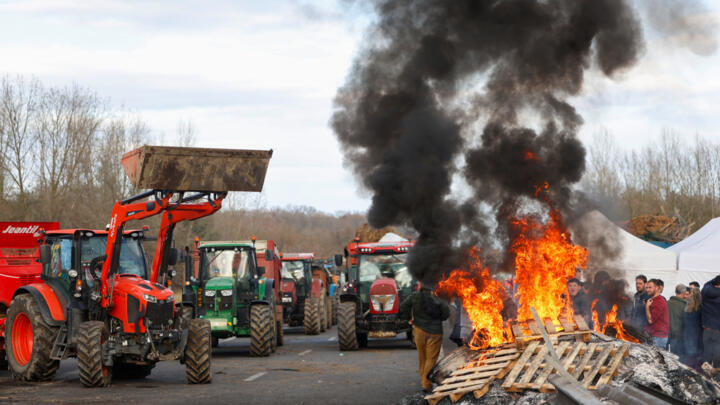
Yet, the mathematical prosperity of the agricultural sector does little to soothe the anxieties of individual farmers facing a maze of new compliance measures, such as Scope 3 emissions reporting and stringent biosecurity levies. The disconnect highlights a deeper structural reality: while the macro-economy thrives, the micro-level family farm feels increasingly besieged by administrative overhead.
The scene in Canberra eventually quieted as the afternoon wore on, with the long columns of tractors and utility vehicles beginning their slow trek back to the regional heartlands. The physical gridlock dissolved, but the political logjam remained entirely unresolved.
For Anthony Albanese, the challenge moving forward is not merely economic, but fundamentally cultural. Managing a modern economy requires balancing the urgent demands of a changing climate with the foundational needs of the industries that physically sustain the population.
As the dust settles on the capital’s tarmac, the message from the countryside remains clear. If the federal government continues to chart a course for the nation’s future without securing the consent of those who work its soil, the roads to Canberra will likely see the return of the tractors.






