Australia’s political tensions intensified again after former Liberal figures publicly distanced themselves from the party during a high-profile event in the Blue Mountains, adding fresh momentum to the growing rise of Pauline Hanson’s One Nation.
The comments came during a pub gathering that quickly drew attention online after former Liberal members openly criticised the direction of the Liberal Party of Australia.
Among those speaking was Hughes, who reportedly declared that she no longer recognised the party she once supported.
Standing alongside former Liberal vice-president Teena McQueen, the remarks immediately triggered debate across political circles and social media.
For many conservative voters, the comments reflected growing frustration with what some perceive as the Liberal Party’s identity crisis following years of electoral setbacks and internal division.
According to supporters attending the event, the atmosphere was charged with dissatisfaction toward both major parties.
Several attendees reportedly expressed concerns about cost-of-living pressures, housing affordability, migration policy and what they described as the weakening of traditional conservative values.
The event itself may have appeared small on the surface.
But politically, many analysts believe it symbolises a much larger trend unfolding across Australia.
Increasing numbers of disillusioned conservative voters appear willing to shift toward smaller populist parties rather than remain loyal to traditional Coalition politics.
That shift is becoming especially important for Pauline Hanson’s One Nation.
For years, One Nation existed largely on the political margins.
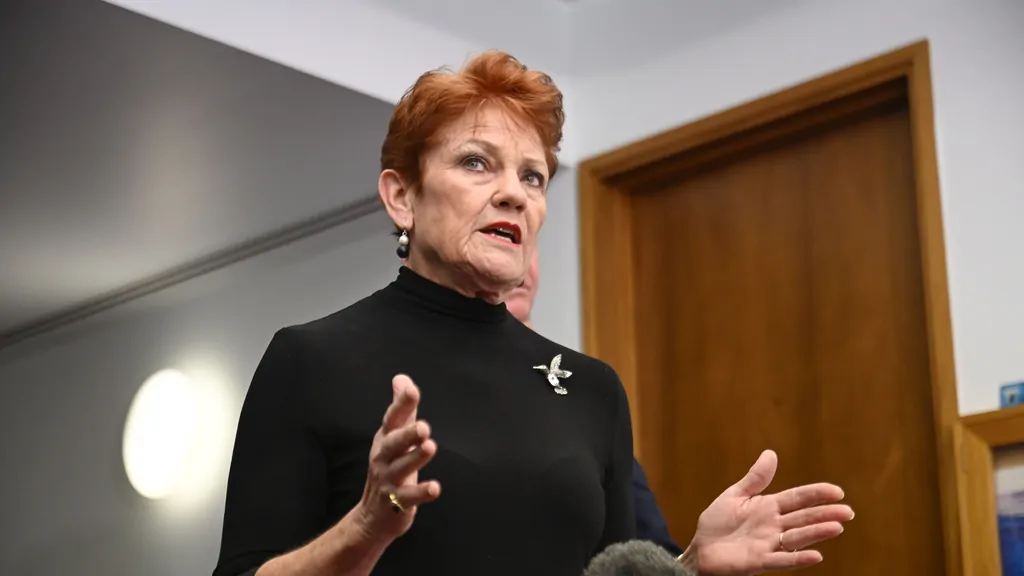
Now, however, frustration over inflation, migration, energy costs and housing pressure is creating conditions where outsider political movements are gaining renewed traction.
Supporters of Pauline Hanson argue the party speaks more directly about issues affecting ordinary Australians than either Labor or the Coalition.
Critics, meanwhile, accuse One Nation of exploiting public anger while offering overly simplistic solutions to deeply complex economic and social problems.
Still, the polling momentum surrounding the party has become increasingly difficult for mainstream political strategists to ignore.
The comments from Hughes about no longer recognising the Liberal Party struck a nerve precisely because they echoed a broader sentiment circulating among parts of the conservative base.
Some former Liberal voters argue the party has drifted away from its traditional priorities on taxation, national identity, energy and economic management.
Others believe internal factional fighting has weakened the party’s public credibility.
The appearance of Teena McQueen at the event added further symbolic weight.
McQueen has long been associated with outspoken conservative commentary and criticism of the Liberal Party’s strategic direction.
Political observers note that gatherings like this are increasingly becoming spaces where anti-establishment frustration is openly expressed.
Rather than formal political rallies, many of these conversations now spread through grassroots events, talkback radio and viral online clips.
Social media has accelerated the trend dramatically.
Short emotional statements often travel much faster than detailed policy discussions, particularly when they tap into broader public frustration.
That dynamic has played a major role in the recent visibility of minor parties and populist political movements.
Meanwhile, the broader Australian political environment remains highly volatile.
Cost-of-living pressures continue dominating public debate, while housing affordability and migration remain deeply divisive national issues.
In that atmosphere, voter loyalty is becoming increasingly unstable.
Analysts say the Liberal Party now faces a serious challenge: how to reconnect with conservative voters drifting toward parties further outside the traditional political mainstream.
Some strategists believe the Coalition must move more aggressively on issues like migration, energy prices and economic pressure.
Others warn that chasing populist rhetoric could alienate moderate urban voters even further.
That internal dilemma continues shaping debate inside conservative politics.
At the same time, Labor is also monitoring the rise of smaller parties carefully.
If One Nation and other minor parties continue gaining support, future elections could become far more fragmented and unpredictable.
Minority government scenarios — once considered relatively rare in Australia — are now discussed much more seriously by political analysts.
For now, the remarks made in the Blue Mountains represent more than one isolated protest event.
They reflect a deeper political mood spreading across parts of the country: frustration, distrust and growing impatience with the traditional political establishment.
And as One Nation’s support continues attracting national attention, both major parties are being forced to confront an uncomfortable reality — a growing number of Australians no longer feel politically represented by the system they once trusted.






