Nobody expected this silent Canadian backlash to rattle America’s biggest tourism cities… until Las Vegas publicly asked Canadians to come back.
What started as fewer border crossings is now turning into a serious economic warning sign that Washington can no longer ignore.

Canada and the United States have always shared one of the closest travel and trade relationships in the world. Canadians flooded American vacation hotspots for decades, filling hotels in Florida, casinos in Nevada, and beach towns across the country. But suddenly, something changed — and the shift is becoming impossible to ignore.
At first, it looked like a temporary slowdown. Airports noticed fewer Canadian travelers. Border crossings seemed quieter than usual. Tourism officials assumed it was just another weak season. But then the numbers started getting worse.
Much worse.
Early estimates suggested Canadian travel to the United States had dropped around 25%. That alone was alarming because Canada has traditionally been America’s largest source of international visitors. But when analysts began tracking mobile phone activity instead of relying only on border reports, the picture became even more dramatic. The real decline appeared closer to 42%.
That was no longer a slowdown. That was a massive behavioral shift.
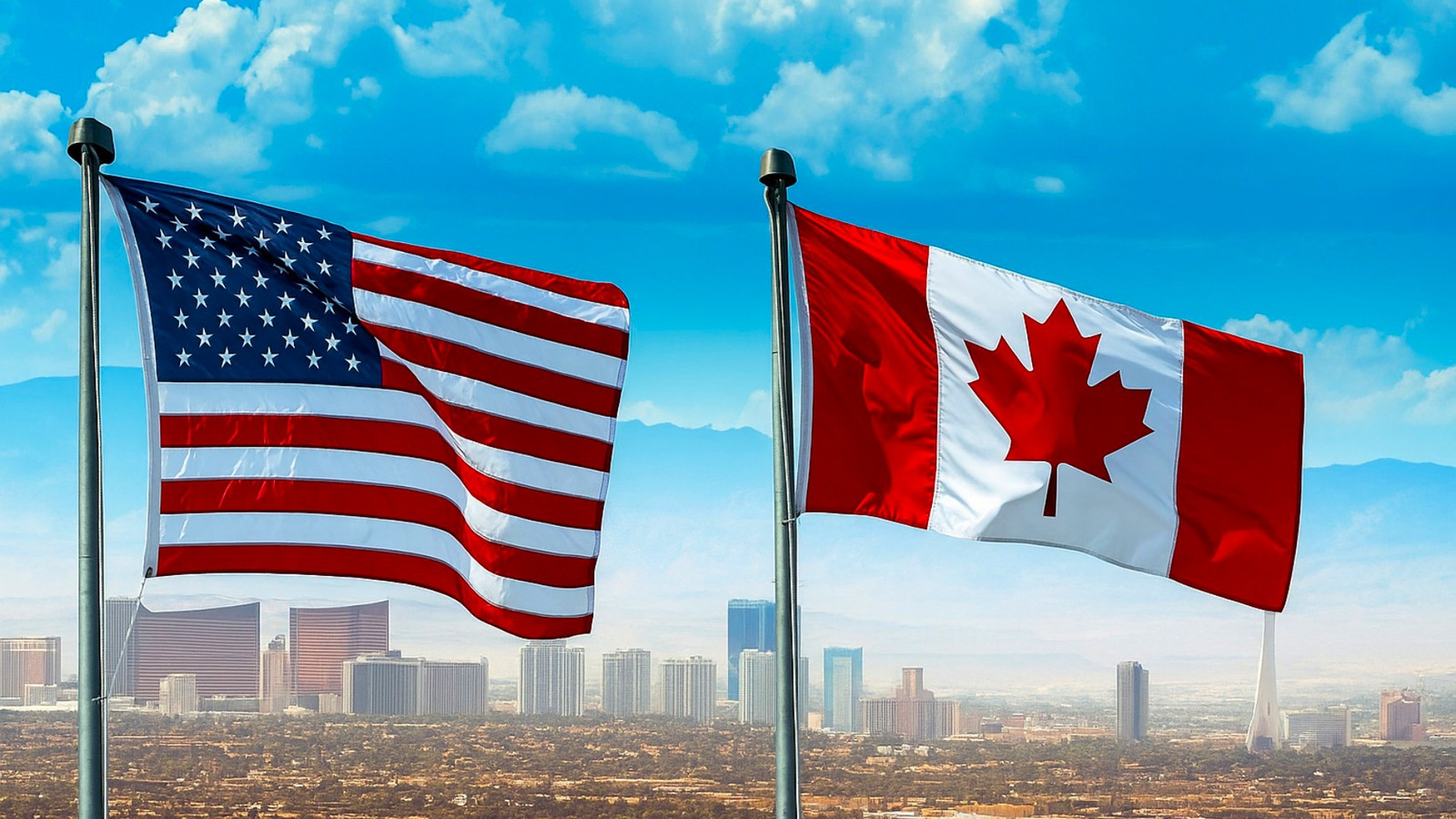
Cities that depended heavily on Canadian tourism suddenly felt the impact almost overnight. Myrtle Beach reportedly lost nearly 65% of its Canadian visitors. Hotels in Florida began noticing empty rooms during periods that were normally packed with snowbirds escaping winter. Restaurants, entertainment venues, and local businesses quietly started losing revenue.
Then came the moment that truly shocked people.
The mayor of Las Vegas publicly appealed to Canadians to return.
For one of the world’s most iconic tourism capitals to openly admit it missed Canadian visitors sent a powerful message. Las Vegas isn’t a city that usually begs anyone to come back. Yet suddenly, one of America’s entertainment giants was acknowledging just how important Canadian spending had become.
But by then, this was no longer simply about vacations.
At the same time American tourism leaders were asking Canadians to return, many Canadian industries were already under pressure from U.S. tariffs affecting steel, aluminum, forestry, and manufacturing. For many Canadians, the contradiction became emotional. Social media conversations exploded with questions that sounded increasingly personal:
Why spend money in the United States while Canadian workers are being squeezed at home?

That mindset spread faster than anyone expected.
Soon, the reaction expanded beyond tourism. Several Canadian provinces began reducing American alcohol products on shelves, and what many critics initially mocked as symbolic politics suddenly started hurting real export numbers. U.S. alcohol groups quietly admitted losses were mounting. Even executives who rarely make public apologies began softening their tone.
That’s when people realized something governments often overlook: consumers hold enormous economic power.
No official boycott was announced. No law forced Canadians to change their habits. Millions of small personal choices simply started moving in the same direction. One family chose a Canadian vacation over Florida. One shopper bought local wine instead of imported whiskey. One business shifted conference plans away from the United States.
Individually, those decisions looked tiny.
Together, they created visible economic pressure.

Now, the conversation inside Canada is evolving into something even larger. Increasingly, Canadians are questioning why government agencies continue purchasing so many American-made vehicles while domestic industries face growing uncertainty. Comparisons to countries like Japan and France — where governments strongly support local manufacturing — are becoming more common.
That debate could become far more serious than the tourism decline itself.
Canada remains one of the biggest international buyers of American-made vehicles. If public sentiment begins influencing government procurement policies or large-scale purchasing behavior, the economic consequences could spread far beyond casinos and beach resorts.
And perhaps the most fascinating part of this entire story is how quietly it happened.
There was no massive political speech. No dramatic national campaign. Just a slow emotional shift building across millions of everyday decisions.
The tone in Canada is changing from frustration to something deeper: independence, resilience, self-reliance, and support for local workers.

Whether people agree with the movement or not, the ripple effects are already being felt across tourism, exports, corporate travel, and manufacturing conversations on both sides of the border.
Now Washington faces a growing question that didn’t seem possible a year ago:
What happens if this mindset keeps spreading?
Because if Canadians continue redirecting where they travel, shop, and invest, the economic relationship between the two countries could enter a completely new phase — one far bigger than anyone expected.






