For years, Canada’s energy industry has lived with the same frustrating reality.
The country possesses some of the largest natural gas reserves on Earth, yet much of that gas has been sold at deeply discounted North American prices while overseas buyers in Asia paid four or five times more for the exact same product.
Canada had the resources.

Canada had the demand waiting overseas.
But Canada lacked the infrastructure to truly compete.
Now, that may finally be changing.
This week, global energy giant Shell signaled that the long-awaited LNG Canada Phase 2 expansion is moving much closer to reality — and the implications could be enormous not only for Canada’s economy, but for the global energy market itself.
The move did not come through a dramatic political announcement or a flashy press conference.
Instead, it came quietly through investment commitments.

Shell and its partners are reportedly preparing to spend hundreds of millions of dollars on early engineering and development work even before the project receives final approval. In the energy world, that kind of spending sends a powerful message: companies usually do not commit serious capital unless they believe the project is highly likely to proceed.
And this project is massive.
Located in Kitimat, British Columbia, LNG Canada Phase 2 could become one of the largest private-sector investments in Canadian history. Estimates suggest the full expansion may cost up to $40 billion CAD once pipelines, export facilities, and supporting infrastructure are included.
If completed, the expansion would dramatically transform Canada’s role in the global natural gas trade.
Right now, LNG Canada Phase 1 — already under construction — is designed to export about 14 million tonnes of liquefied natural gas annually. Phase 2 would potentially double that capacity, turning Canada into a major LNG exporter capable of competing directly with the United States, Qatar, and Australia in Asian markets.
That matters because geography changes everything.
For decades, Canadian gas producers have been trapped inside the North American market, where oversupply has kept prices relatively low. In many cases, Canadian natural gas has traded around $2 to $3 per MMBtu.
Meanwhile, in Asia and parts of Europe, LNG prices have often reached $12, $14, or even higher during periods of strong demand or geopolitical instability.
That pricing gap represents one of the largest missed economic opportunities in modern Canadian history.
And Shell appears determined to change it.
The logic behind LNG Canada is straightforward but extremely powerful.
Instead of sending nearly all Canadian gas south into the United States through pipelines, Canada would supercool the gas into liquid form on the Pacific Coast and ship it directly across the ocean to countries like Japan, South Korea, and potentially India and Southeast Asian markets.
That shift would fundamentally alter Canada’s energy independence.
For years, critics argued Canada was too dependent on the American market for energy exports. Even though the United States remains Canada’s largest trading partner, relying too heavily on a single buyer creates vulnerability — especially during periods of trade disputes or political tension.
Many Canadian policymakers increasingly view LNG exports as a strategic diversification tool.
And recent geopolitical events have only strengthened that argument.
After Russia’s invasion of Ukraine disrupted global energy markets, countries around the world scrambled to secure reliable long-term natural gas supplies. European nations desperately searched for alternatives to Russian gas, while Asian economies accelerated efforts to lock in stable LNG contracts before future shortages emerged.
Suddenly, Canada’s Pacific Coast location became incredibly valuable.
Unlike American Gulf Coast projects, Canadian LNG facilities offer shorter shipping routes to Asia. That reduces transportation costs and lowers emissions associated with long-distance shipping.
Industry leaders believe this geographic advantage could make Canadian LNG especially attractive over the coming decades.
But the story is not just about economics.
It is also deeply political.
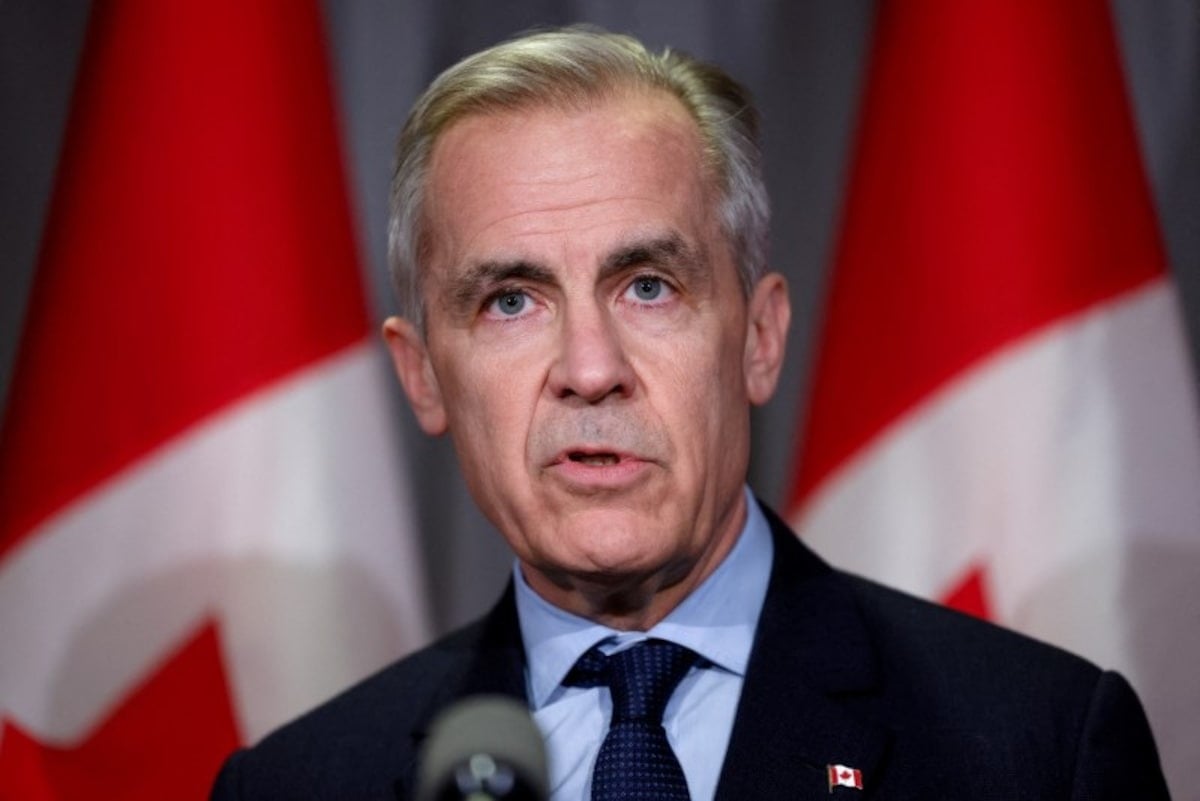
Prime Minister Mark Carney’s government has increasingly promoted Canada as a reliable democratic supplier of global energy during a time of geopolitical instability. While balancing climate commitments remains politically sensitive, Ottawa also recognizes that energy exports generate enormous revenues, create jobs, and strengthen Canada’s international influence.
That balancing act explains why LNG Canada has become such an important national project.
Supporters argue the expansion could create tens of thousands of jobs across construction, engineering, shipping, and long-term operations. Indigenous partnerships connected to pipelines and infrastructure may also deliver substantial economic benefits to participating First Nations communities.
And unlike many previous Canadian energy battles, LNG Canada has managed to secure significant Indigenous involvement.
Several First Nations groups have signed agreements tied to pipeline routes, employment opportunities, and revenue-sharing structures connected to the Coastal GasLink project that feeds LNG Canada.
That does not mean opposition has disappeared.
Far from it.
Environmental activists continue raising concerns about emissions, ecosystem disruption, and the long-term climate implications of expanding fossil fuel infrastructure. Critics argue that massive LNG investments could lock Canada into decades of carbon-intensive energy production precisely when many countries are trying to transition toward renewable energy.
The debate has become one of the defining political tensions in modern Canada.
Can the country simultaneously pursue climate leadership while massively expanding natural gas exports?
Supporters say yes.
They argue Canadian LNG could actually reduce global emissions by replacing coal-fired electricity generation in Asia. Since natural gas burns cleaner than coal, proponents believe exporting LNG from Canada may help developing economies transition toward lower-emission energy systems.
Critics remain skeptical, arguing the full lifecycle emissions from extraction, liquefaction, transportation, and combustion remain substantial.
That environmental debate will almost certainly intensify as final approvals approach.
And approvals are still not guaranteed.
Before Phase 2 officially moves forward, developers must secure additional commercial agreements, long-term buyers, regulatory permissions, and confidence that global LNG demand will remain strong enough to justify the enormous investment.
That final investment decision is expected sometime before the end of 2026.
Yet many analysts already believe the momentum is becoming difficult to stop.
Especially because global demand projections remain surprisingly strong.
While renewable energy continues expanding rapidly, many Asian economies still expect natural gas to play a critical role in electricity generation for decades. Countries such as Japan and South Korea continue viewing LNG as essential for energy security, particularly after recent geopolitical shocks exposed the dangers of relying too heavily on unstable suppliers.
At the same time, investors increasingly see Canada as politically stable compared to many competing energy-exporting regions.
That stability matters enormously when projects require tens of billions of dollars and decades of operation to recover costs.
Shell clearly understands this.
The company has become one of the strongest backers of Canada’s LNG ambitions, viewing the country as a long-term strategic export hub. Industry insiders believe Shell’s willingness to spend early-stage capital before final approval is designed partly to accelerate momentum and reassure markets that the project remains on track.
And momentum is exactly what Canada’s energy sector has lacked for years.
For much of the past decade, investors grew frustrated by regulatory delays, pipeline cancellations, legal uncertainty, and political conflicts surrounding major Canadian energy projects. Several multibillion-dollar proposals collapsed entirely after years of delays and escalating costs.
That history made many observers skeptical that Canada could ever complete a globally competitive LNG megaproject.
Now, perceptions are changing.
LNG Canada Phase 1 is already more than 85% complete, with first exports expected soon. The existence of that infrastructure dramatically improves the economics of Phase 2 because much of the foundational work has already been done.
In other words, Canada is no longer talking theoretically about becoming an LNG exporter.
It is happening.
And once exports begin flowing at large scale, the country’s economic landscape could shift significantly.
Provincial governments are already anticipating billions in future tax revenues and royalties. Energy companies expect stronger long-term pricing for Canadian gas producers. Local communities near Kitimat are preparing for population growth, housing demand, and industrial expansion tied to LNG operations.
Even global investors are paying closer attention.
Some analysts now believe Canada may become one of the most strategically important LNG suppliers in the Pacific region over the next twenty years — especially if geopolitical tensions continue disrupting global energy trade routes.
That possibility would have seemed unrealistic not long ago.
But suddenly, Canada finds itself at the center of a changing world energy map.
And perhaps that is why Shell’s latest move feels so important.
Because it was not just another corporate investment announcement.
It was a signal.
A signal that some of the world’s biggest energy players increasingly believe Canada is finally ready to become a true global energy superpower — not just in resources underground, but in actual global influence.
If LNG Canada Phase 2 receives final approval next year, historians may eventually look back at this moment as the turning point when Canada stopped being merely a resource-rich country trapped by geography…
…and started becoming one of the world’s most important energy exporters.






