Budget 2026 Places Literacy and Numeracy at Centre of Education Reform Agenda
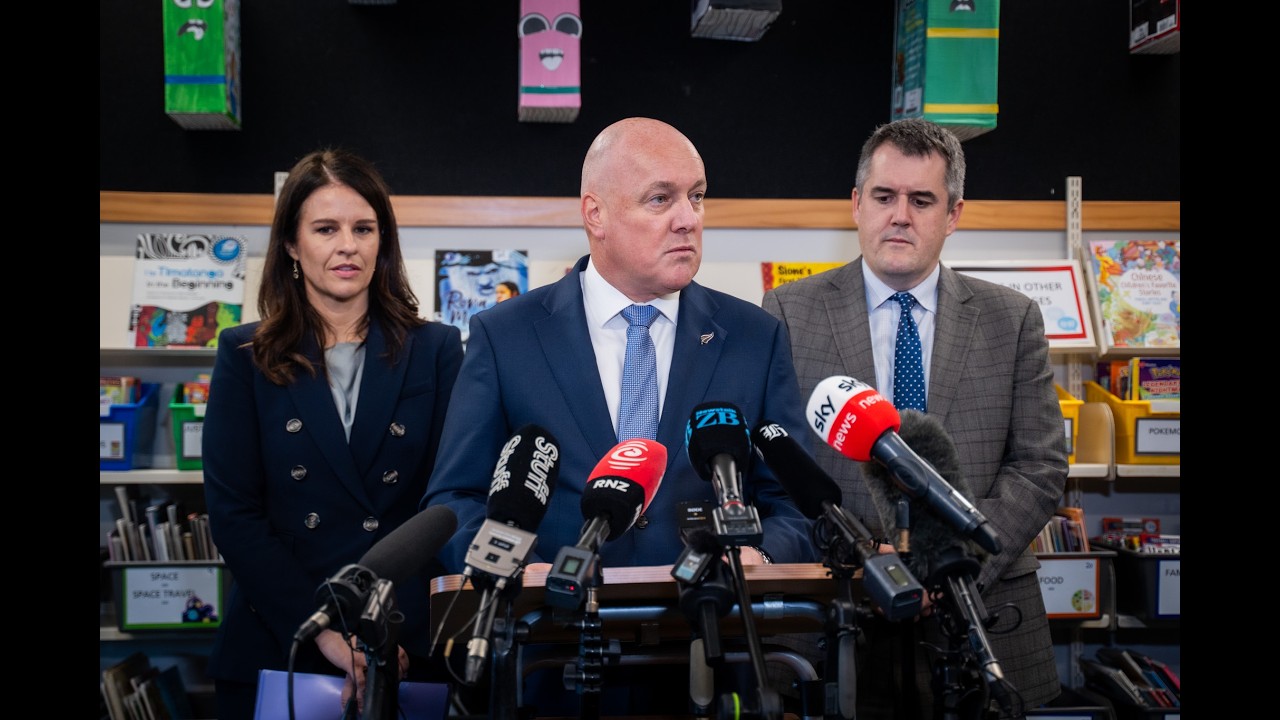
The Government has set out new Budget 2026 measures aimed at strengthening reading, writing and mathematics across New Zealand’s education system, in what ministers describe as a renewed focus on foundational skills that underpin long-term academic achievement and workforce readiness. The announcement comes at a time when education performance has remained a recurring point of political and public debate.
The funding package is directed primarily at schools and early learning environments, with an emphasis on structured interventions designed to lift literacy and numeracy outcomes. Officials say the initiative will combine targeted classroom support, teacher development and improved assessment tools, although many of the operational details are still to be finalised through subsequent Ministry guidance.
Early indications suggest the policy will be rolled out in stages, with priority given to lower year levels where evidence suggests intervention can have the most sustained impact. Ministers have framed the investment as part of a wider attempt to address long-standing variation in student achievement, particularly in reading comprehension and basic mathematical competency.
The Government has positioned the Budget announcement as a central pillar of its education strategy, arguing that consistent attainment in core subjects is essential not only for individual student success but also for national productivity and economic resilience in the longer term.
Education Minister Erica Stanford has led the policy rollout, emphasising that the approach is grounded in structured teaching methods and international evidence on literacy and numeracy improvement. She has pointed to the need for clearer instructional frameworks in classrooms, alongside better tools to monitor student progress over time.
The announcement has been accompanied by a broader narrative from ministers that the education system requires a sharper focus on measurable outcomes, particularly in areas where national performance has shown uneven results across regions and demographic groups.
Officials have indicated that a portion of the funding will be allocated to professional development for teachers, with a focus on strengthening instructional consistency in reading and mathematics. This includes support for evidence-based teaching strategies and resources intended to reduce variation in classroom delivery.
Alongside classroom-focused investment, the Government has also signalled changes to assessment practices, with the intention of improving how student achievement is tracked and reported. However, education sector stakeholders have called for greater clarity on how these adjustments will interact with existing reporting systems and school accountability frameworks.
Opposition parties have questioned whether the scale of funding is sufficient to deliver the level of systemic improvement being promised, arguing that structural challenges in staffing, resourcing and classroom support may limit the effectiveness of new initiatives unless addressed more directly.
Teacher unions and education sector organisations have broadly acknowledged the focus on literacy and numeracy as a priority area, but have warned that successful implementation will depend heavily on whether schools are given adequate time, funding and staffing capacity to adapt to new requirements.
The Government has defended the package as a targeted intervention rather than a wholesale restructuring of the system, arguing that focused investment in foundational skills is more likely to produce measurable improvements than broader, less concentrated reforms.
Sector leaders have raised broader concerns about how the initiative will align with other ongoing reforms, including changes to senior secondary qualifications and curriculum design, warning that overlapping policy shifts could place additional pressure on schools already managing multiple transitions.
There is also ongoing discussion within the education community about how success will be defined and measured, with some experts emphasising the importance of long-term tracking rather than short-term performance gains in standardised assessments.
Ministers have pointed to international comparisons to justify the emphasis on literacy and numeracy, noting that many comparable education systems place strong weight on early mastery of foundational skills as a predictor of later academic and labour market outcomes.
Public reaction has been mixed, with some parents and community groups welcoming the renewed attention to basic skills, while others have expressed concern about whether schools have sufficient capacity to absorb new initiatives without added strain on teachers.
Education analysts have suggested that while the policy direction is broadly consistent with global trends, its effectiveness will depend heavily on implementation detail, particularly in relation to teacher support, resource distribution and consistency of delivery across different school contexts.
The Ministry of Education is expected to release further guidance outlining how schools will access funding, what programmes will be prioritised, and how progress will be monitored over time. These details are likely to be closely scrutinised by sector representatives as the rollout progresses.
Implementation challenges remain a key focus for school leaders, many of whom are seeking clearer timelines and assurances that the introduction of new initiatives will not add complexity to already demanding administrative and instructional workloads.
As Budget 2026 measures move from announcement to execution, attention is expected to remain firmly on whether the Government can demonstrate tangible improvements in literacy and numeracy outcomes within a reasonable timeframe, given the long-established challenges in shifting national education performance indicators.
For now, the announcement represents a clear policy emphasis on foundational learning within the broader education agenda, though questions around delivery, capacity and long-term sustainability are likely to remain central to the political and sectoral debate in the months ahead.






