Trump’s Auto Tariffs Send Shock Waves Through a Global Industry — and Back to the U.S.
WASHINGTON — When President Donald Trump announced a sweeping 25 percent tariff on all imported cars and light trucks, effective April 2, the declaration was framed as a straightforward assertion of “America First” industrial policy. Vehicles built inside the United States, he said, would face no penalty. Those built abroad would.
The policy took effect immediately, without a phase-in period or carve-outs for complex supply chains. And almost overnight, the global automotive industry began to recalibrate — not in Washington, but in boardrooms in Munich, Stuttgart, Ingolstadt, and beyond.
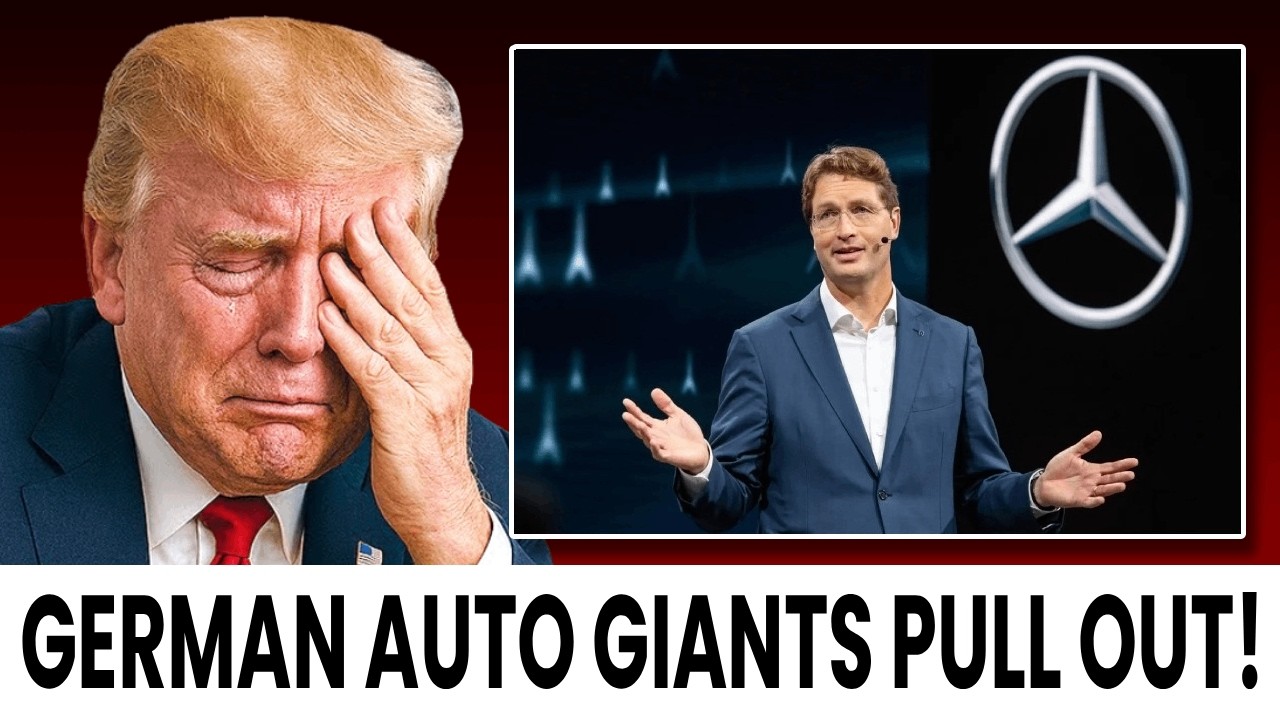
Within weeks, some of the world’s most recognizable German manufacturers — BMW, Mercedes-Benz, and Audi — began quietly pulling back from the U.S. market. Shipments were halted or slowed, expansion plans were frozen, and long-term strategies were rewritten. The reaction was not symbolic. It was economic.

A Policy That Redefined the Math
For decades, the global auto industry has been built on intricate, cross-border supply chains. Final assembly might occur in the United States, but engines, transmissions, electronic control units, and advanced software systems often arrive from Europe, Mexico, or Asia.
The new tariff disrupted that balance instantly.
German manufacturers were not newcomers to U.S. production. BMW’s massive plant in Spartanburg, South Carolina, and Mercedes-Benz’s facility in Tuscaloosa, Alabama, employ thousands of American workers and export vehicles worldwide. But the tariff applied not only to finished cars — it also raised the cost of imported components essential to those U.S.-based operations.
Executives familiar with the calculations described the result as “commercially unworkable.” Absorbing the costs would erase margins. Passing them on would price vehicles out of a fiercely competitive market.
For Audi, the challenge was even starker. With no U.S. assembly plant, its American business depended entirely on imports. Layered tariffs pushed effective costs so high that continuing deliveries became financially untenable.
Within days, shipments stopped.
The Immediate Effects at Home
The consequences quickly reached beyond corporate earnings reports.
Dealer inventories thinned. Pricing became volatile. Consumers faced uncertainty about availability, servicing, and long-term support. Local dealers — many independently owned — reported confusion and frustration as supply commitments were revised or withdrawn.
More significantly, the impact spread through the domestic supplier network. Thousands of U.S. companies — from precision machine shops in the Midwest to advanced electronics firms on the West Coast — had built businesses around contracts with German automakers. As orders slowed or were canceled, layoffs followed.
Economic development agencies in South Carolina and Alabama warned that secondary employment effects could outpace direct job losses. BMW’s Spartanburg operation alone supports tens of thousands of jobs when suppliers and regional services are included.
A policy intended to strengthen domestic manufacturing instead exposed how deeply foreign automakers were woven into the American industrial fabric.
Exports, Not Just Imports
The tariffs also undercut a less visible pillar of U.S. manufacturing: exports.
Vehicles assembled by German brands in the United States — including BMW’s popular SUVs — are shipped to markets around the world. As trade tensions escalated, retaliatory measures and market uncertainty reduced the competitiveness of those American-made exports.
Industry analysts estimate that billions of dollars in U.S. auto exports are now at risk, compounding the domestic fallout. The losses are not limited to foreign companies operating in the United States; they ripple across ports, logistics firms, and transportation networks.
A Strategic Pivot to Asia
As access to the U.S. market grew more unpredictable, German automakers accelerated plans elsewhere — most notably in China.
China offers scale, policy stability, and aggressive incentives for electric and luxury vehicles. In recent months, Mercedes-Benz announced that its next major electric vehicle platform would debut in China. BMW moved forward with a major expansion in Chengdu. Audi deepened partnerships with Chinese technology firms while expanding research and development centers in Shanghai and Shenzhen.
These moves go beyond assembly. They involve design studios, software engineering teams, and autonomous driving research — the core of future automotive innovation.
“When the center of gravity shifts, standards follow,” said one European auto analyst. “If vehicles are designed and tested primarily in China, that ecosystem shapes global norms.”
Domestic Automakers Feel the Pressure
American manufacturers have not emerged as clear winners.
Companies like Ford, General Motors, and Stellantis rely heavily on imported components, including semiconductors, battery cells, and advanced electronics. Tariffs on those inputs raised costs across the industry.
Ford disclosed tariff-related expenses in the billions. General Motors withdrew earnings guidance, citing uncertainty. Smaller suppliers reported cash-flow stress and delayed investment decisions.
Equally important, competition diminished. German luxury brands have long set benchmarks in infotainment systems, drivetrain efficiency, and digital integration. Their reduced presence weakens a pressure that historically pushed U.S. automakers to innovate faster.

A Fracturing Trade Environment
Internationally, the response has been cautious but firm.
The European Union views the auto tariffs as a direct threat to its largest export sector, particularly Germany’s. While negotiations continue, officials have openly discussed diversification strategies to reduce reliance on the U.S. market.
Exports of German vehicles to the United States have already declined, reversing years of growth. Other sectors — machinery, chemicals, and industrial equipment — have seen similar drops amid overlapping tariffs on steel and aluminum.
Trade experts warn that the cumulative effect is not a single dispute, but a structural shift toward regionalized production and fragmented markets.
“Stability is becoming more valuable than efficiency,” said a former trade negotiator. “Companies are willing to pay more to reduce political risk.”
Long-Term Costs, Not Short-Term Wins
Supporters of the tariffs argue that short-term disruption is the price of restoring manufacturing independence. But economists caution that industrial ecosystems cannot be rebuilt overnight — especially when policy signals are volatile.
Automotive investment decisions typically span five to seven years. Sudden policy reversals erode the confidence needed to commit capital at scale.
“What’s being lost isn’t just factories,” said one industry economist. “It’s influence — the ability to shape where technology goes next.”
A Defining Moment for the Industry
The withdrawal of BMW, Mercedes-Benz, and Audi from significant portions of the U.S. market is not merely a branding shift. It is a signal of how quickly global industries respond to policy uncertainty — and how difficult it is to reverse once supply chains move.
For policymakers, the challenge now is reconciling industrial ambition with economic reality. For manufacturers, it is navigating a world where access is conditional and predictability is scarce.
And for consumers, the effects are already visible: higher prices, fewer choices, and a future in which the cars shaping global mobility may be designed far from American roads.
The race to define the next era of transportation is accelerating. The question is no longer whether tariffs change behavior — but whether the United States will like where that change leads.






