By XAMXAM
NEW YORK — Late-night comedy in the United States has long occupied an ambiguous space between entertainment and civic ritual. It offers laughter at the end of the day, but it has also served, at moments of political strain, as an informal forum for moral judgment. In recent weeks, that role has sharpened. A series of monologues and segments by Jimmy Kimmel and Stephen Colbert aimed at Donald Trump suggested that late night is no longer content merely to mock power. It is attempting to interrogate it.
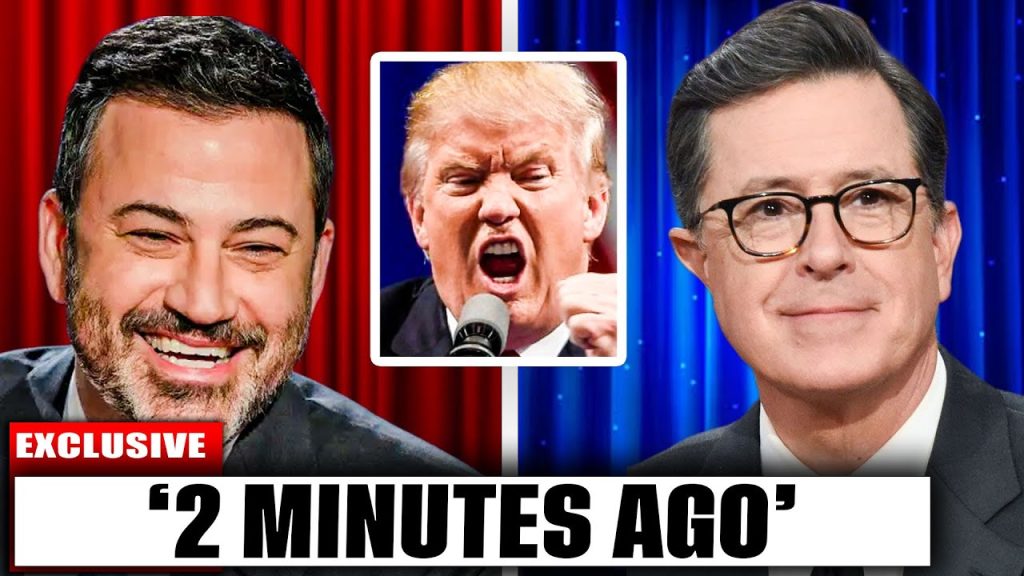
The shift was not announced. It emerged gradually, through tone rather than format. Jokes gave way to extended explanations. Punch lines were paired with clips, timelines and citations. Laughter remained, but it often arrived later, after the audience had been asked to sit with discomfort.
Both hosts framed their recent broadcasts around the same premise: that repetition, spectacle and outrage have overwhelmed public memory, allowing events of consequence to fade before they can be examined. Comedy, they implied, might be one of the few remaining tools capable of slowing that cycle.
Mr. Colbert’s opening monologue one evening dispensed almost entirely with his usual rhythm. Seated at his desk, he spoke directly, describing what he characterized as a pattern in which official narratives are asserted with confidence even as evidence remains contested. The delivery was controlled, even restrained, but the implication was severe. The issue was not a single policy or statement, he suggested, but a broader insistence on defining truth through authority rather than verification.
Mr. Kimmel, for his part, leaned into juxtaposition. He replayed recent remarks by Mr. Trump about economic conditions — prices, wages, affordability — and placed them alongside publicly available data and video footage. The comedy emerged not from exaggeration but from contrast. The audience reaction followed a familiar arc: laughter, then silence, then applause that felt less celebratory than affirmational.
Together, the two hosts constructed a narrative that extended beyond any individual joke. They returned repeatedly to questions of accountability: who bears responsibility when official claims conflict with observable facts, and what mechanisms remain when institutions appear reluctant to confront those conflicts directly.
The most serious moments involved discussion of a fatal encounter between federal agents and a civilian, a case that both comedians described in stark terms while acknowledging that investigations were ongoing and that accounts remained disputed. They criticized what they portrayed as premature conclusions offered by administration officials and emphasized the need for transparency. In doing so, they adopted a language more common to editorial pages than monologue desks.
This approach marked a departure from earlier eras of political comedy, when satire often relied on caricature and hyperbole. Here, the humor was secondary. The primary objective seemed to be documentation — to create a record that might resist the erosion of attention.
Mr. Trump’s response followed a familiar pattern. On social media, he dismissed the segments as dishonest, accused the hosts of bias and celebrated reports that one network had temporarily suspended programming after internal controversy. He framed the criticism as persecution and suggested that media corporations were acting out of political hostility rather than journalistic concern.
That reaction, paradoxically, reinforced the comedians’ argument. Each denunciation became further material, folded into subsequent broadcasts as evidence of a feedback loop: criticism produces outrage, outrage produces retaliation, retaliation becomes the story.
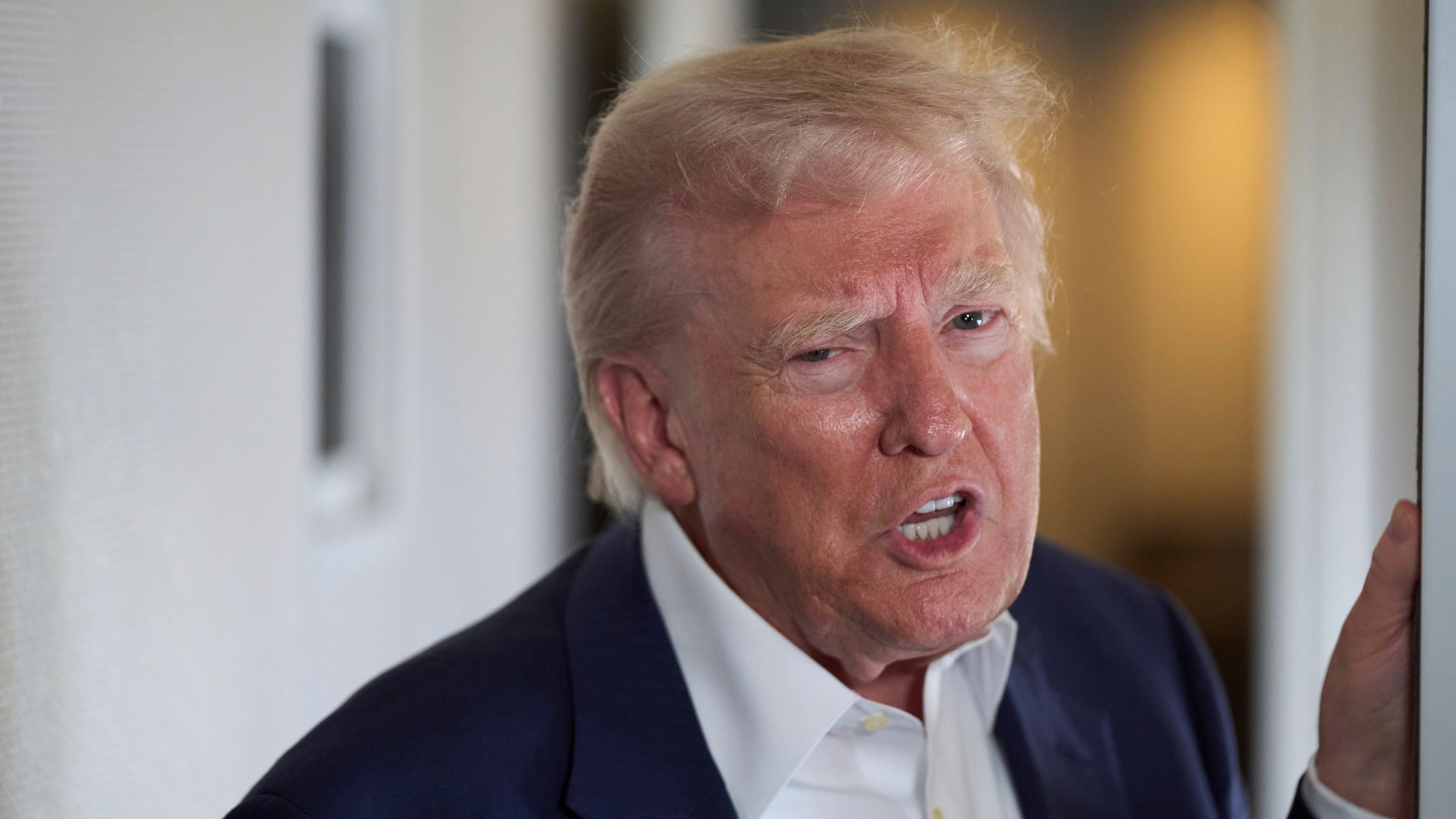
What distinguishes this moment is not the sharpness of the satire — American late night has been unsparing before — but its insistence on staying with a subject. Instead of moving on after a viral clip, both Mr. Kimmel and Mr. Colbert returned to the same themes night after night. They treated the repetition not as redundancy, but as necessity.
The audience response suggests a receptiveness to that persistence. Applause arrived not only at jokes but at moments of clarification, when a timeline was laid out or a contradiction was named plainly. The laughter, when it came, often carried an edge of recognition rather than release.
Critics of this approach argue that comedians risk overstepping their mandate, substituting performance for reporting and blurring the line between satire and advocacy. Supporters counter that the line has already been blurred by political communication itself, and that withholding judgment in the face of contested facts can amount to acquiescence.
Historically, late-night television has filled such gaps before. During the Vietnam War, in the aftermath of Watergate, and in the years following September 11, comedians have served as translators of public anxiety, articulating doubts that were widely felt but cautiously expressed elsewhere. What feels different now is the scale of the claim: that comedy might be one of the last spaces where power is challenged consistently, rather than episodically.
There are limits to that role. Neither Mr. Kimmel nor Mr. Colbert possesses subpoena power. Their evidence is drawn from public sources, their conclusions provisional. They cannot replace courts, legislatures or independent journalism. Both hosts, to varying degrees, acknowledged that constraint, repeatedly urging viewers to pay attention beyond television.
Yet their influence lies precisely in that acknowledgment. By refusing to present themselves as final arbiters, they framed their broadcasts as invitations rather than verdicts. The message was not “believe us,” but “do not forget.”
For Mr. Trump, the segments represented another chapter in a long-running conflict with cultural institutions that challenge his narrative authority. His supporters dismissed the shows as elitist or malicious. His critics hailed them as overdue. Between those camps, a broader audience appeared less interested in allegiance than in coherence — in understanding how competing claims fit together, if they do at all.
Late-night comedy cannot resolve that tension. What it can do, as these broadcasts demonstrated, is slow the tempo long enough for questions to be asked in full. In an environment defined by acceleration — by the constant replacement of one outrage with the next — that slowing may itself be a form of resistance.
Whether this moment marks a lasting transformation or a temporary intensification remains unclear. Television has a short memory, and audiences move on. But for now, the desks of two comedians have become unlikely platforms for civic reckoning, offering not just laughter, but a reminder that power, when scrutinized patiently, often reveals more than it intends.
In that sense, the recent convergence of Mr. Kimmel and Mr. Colbert was less a coordinated “takedown” than a shared assertion: that attention, sustained and deliberate, is still a political act.







