Deep within the jagged, fog-shrouded wilderness of northern British Columbia, a massive corporate maneuver is quietly underway, poised to permanently alter the global geopolitical energy map and rewrite Canada’s role as a major energy superpower in an increasingly volatile international marketplace.
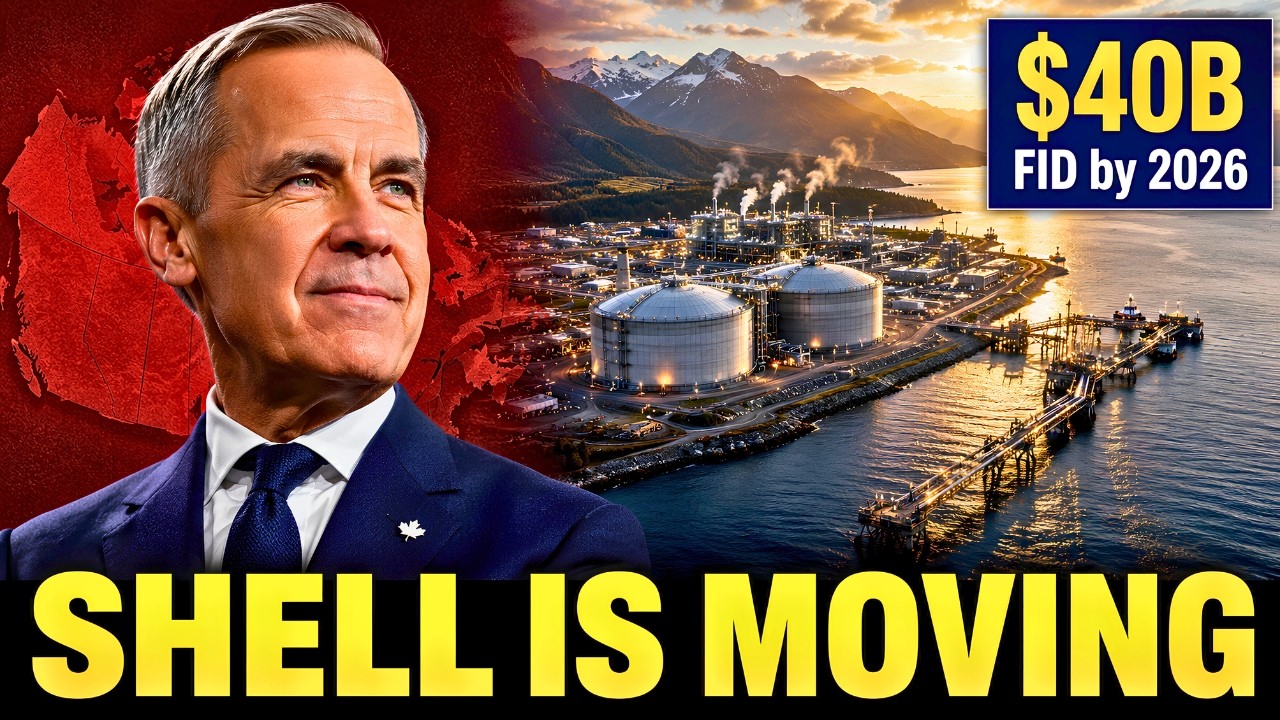
The global energy titan Shell, alongside its deep-pocketed multinational joint venture partners, recently approved a massive nine-figure interim funding package, signals a definitive, long-awaited move toward the historic construction of the forty-billion-dollar LNG Canada Phase Two export terminal facility in Kitimat.
This substantial financial commitment represents far more than a simple corporate feasibility study; it indicates that the corporate coalition has effectively made up its mind, clearing the final regulatory, engineering, and indigenous hurdles before announcing a binding final investment decision by the end of 2026.
For decades, Canada has remained an isolated energy giant, sitting atop some of the largest, most lucrative natural gas reserves on the planet but possessing virtually no independent logistical infrastructure to export those vital commodities beyond the highly localized North American pipeline network.
The vast Peace River region of northeastern British Columbia has continuously yielded historic volumes of high-quality natural gas, yet producers have been forced to sell their output at deeply discounted domestic benchmark prices while lucrative global markets remained entirely out of physical reach.
Currently, North American natural gas trades at a modest two dollars and fifty cents per million BTU, while energy-starved Asian and European markets routinely pay upwards of twelve to fourteen dollars for the exact same volume, driven by the structural supply shocks of recent years.
This immense pricing disparity represents billions of dollars in lost national revenue that Canada has essentially surrendered for a generation. The ambitious LNG Canada Phase Two infrastructure project is explicitly designed to bridge this lucrative macroeconomic gap, transforming the nation’s fiscal future permanently.
The strategic geography of the project centers on the remote town of Kitimat, which sits perfectly at the head of the Douglas Channel. This long, deep fjord cuts ninety kilometers through the imposing Coast Mountains, offering safe, year-round ice-free navigation for the world’s largest maritime vessels.
These specialized, three-hundred-meter-long LNG tankers can carry vast amounts of liquefied natural gas directly across the trans-Pacific shipping lanes, utilizing a unique northern Great Circle route that significantly slashes transit times to major industrial markets in Japan, South Korea, China, and Taiwan.
The immense global importance of this northern gateway is vividly illustrated by the diverse corporate ownership structure of the joint venture itself. Shell firmly leads the consortium with a dominant forty percent stake, flanked by state-backed energy heavyweights from China, Japan, South Korea, and Malaysia.
Phase One of the facility officially opened for commercial operations in 2025, currently exporting approximately fourteen million tons of liquefied natural gas annually. This initial phase successfully demonstrated the operational viability of the northern corridor, sending roughly two hundred massive tanker loads across the Pacific.
The proposed Phase Two expansion will aggressively double the facility’s total processing capacity to nearly thirty million tons per year. This massive scaling up will effectively elevate Canada from a mere footnote into a dominant, structurally vital player within the highly competitive global energy landscape.
The recent nine-figure financial injection is being meticulously deployed into four critical operational areas, including advanced engineering diagnostics, the tentative procurement of long-lead industrial equipment, crucial commercial finalization across the supply chain, and the negotiation of binding agreements with First Nations communities.
In the complex world of heavy industrial engineering, ordering long-lead procurement items like massive cryogenic heat exchangers and industrial turbines represents a point of no return. These highly customized, multi-million-dollar machines require years to manufacture and carry rigid, non-cancelable contractual obligations once initiated.
Recognizing these powerful corporate signals, the federal government moved swiftly to solidify its political support. Energy Minister Tim Hodgson recently flew to Vancouver to announce an enhanced, comprehensive trilateral cooperation agreement alongside provincial authorities and the executive leadership of LNG Canada.
The public announcement established an official, shared target for a positive final investment decision by the conclusion of 2026. Standing alongside federal officials was British Columbia’s Premier David Eby, a politician whose political history has often been defined by deep skepticism toward fossil fuel infrastructure.
Eby’s enthusiastic endorsement of Phase Two reflects a profound, calculated shift in the regional environmental politics surrounding natural gas. Unlike crude oil, natural gas produces significantly less carbon dioxide when burned, making it a highly attractive transition fuel for nations looking to displace coal.
The strategic environmental argument underpinning the project posits that every single LNG tanker departing from Kitimat directly displaces carbon-heavy coal-fired electricity generation in rapidly developing Asian economies. This effectively reduces aggregate global emissions while simultaneously generating immense domestic tax and royalty revenues.
Despite the overwhelming political and corporate momentum, formidable obstacles still loom large on the horizon before the project can officially break ground. The historical legacy of constructing the connected Coastal GasLink pipeline remains deeply contested, having triggered intense opposition and protests from indigenous hereditary chiefs.
Phase Two will strictly require extensive, legally binding new agreements with various First Nations communities along the existing pipeline corridor and the terminal footprint. Navigating these complex relationships with genuine respect and mutual economic benefit remains the single most critical near-term variable for Shell.
Furthermore, the long-term economic model must withstand the notorious volatility of global energy markets. While current international spot prices render Phase Two highly profitable, a sudden, sustained collapse below eight dollars per million BTU could fundamentally alter the long-term return profile for institutional investors.
Nevertheless, Shell’s executive leadership is deliberately modeling multi-decadal demand curves across the Asia-Pacific region rather than reacting to temporary spot market fluctuations. The structural case for Canadian LNG remains incredibly robust, anchored by Europe’s permanent energy security crisis and Asia’s industrial dependence.
The expansion will also require an extensive environmental review of the proposed marine terminal operations within the Douglas Channel. Doubling the frequency of massive tanker movements demands rigorous ecological safeguards to protect the delicate coastal ecosystems and vital marine mammal habitats of the region.
As corporate supply chains globally adapt to an era increasingly defined by intense geopolitical friction and national security priorities, this remote Canadian gateway is uniquely positioned to serve as a stable, politically secure anchor for western democratic allies throughout the Pacific Rim.
The profound transformation of Kitimat from a quiet coastal outpost into a multi-billion-dollar linchpin of global logistics illustrates a fundamental truth of modern economics: geography creates immense strategic opportunity, but only for those possessing the political will to construct the necessary infrastructure.
The massive three-billion-dollar port expansion occurring simultaneously in the region underscores how the broader Canadian northwest is rapidly emerging as a critical commercial bottleneck, connecting North America’s agricultural and industrial heartland directly to the roaring economies of the Far East.
The striking cultural tapestry of Prince Rupert and Kitimat, defined by ancient indigenous traditions, historic salmon canneries, and stunning natural landscapes, now coexists with the hyper-modern reality of automated shipping container terminals and state-of-the-art gas liquefaction facilities operating day and night.
Local residents view these massive industrial developments with a complex mixture of economic optimism and deep environmental concern. While the influx of global capital promises high-paying jobs and robust municipal infrastructure, preserving the pristine wilderness remains a non-negotiable priority for the community.
The upcoming final investment decision in late 2026 will ultimately serve as a definitive litmus test for Canada’s ability to execute mega-scale infrastructure projects in the modern era, balancing strict environmental mandates and indigenous sovereignty with urgent global energy security demands.
If Shell and its global partners officially deliver a positive verdict, Canada will permanently shatter its historic dependence on the single American market, fundamentally reordering the geopolitics of the Pacific and ensuring that its vast natural wealth finally commands a true global premium.






