For years, Donald Trump proudly pointed to the USMCA — known in Canada as CUSMA — as proof that he could rebuild North American trade on “fairer” terms. Standing beside Canadian and Mexican leaders, he celebrated the agreement as a massive victory for American workers and a new era of cooperation between allies.
Now, many Canadians are asking a brutal question:
If the deal was so successful… why is Washington suddenly treating Canada like an economic enemy again?
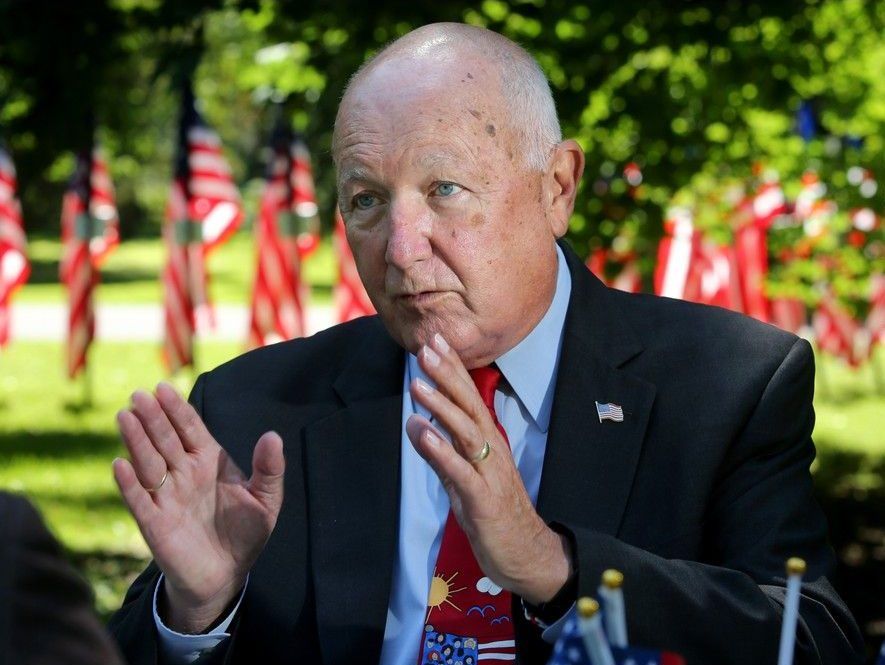
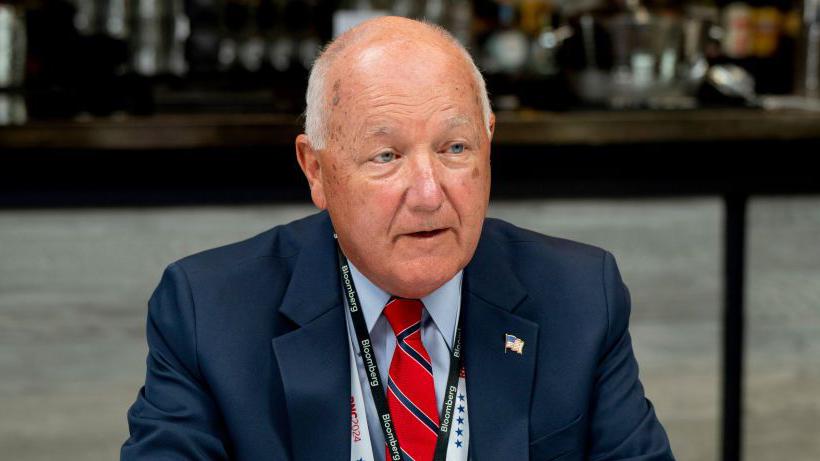
That question exploded back into the spotlight after recent comments from U.S. Ambassador Pete Hoekstra triggered a new wave of outrage across Canada. During a public appearance, Hoekstra reportedly said he did not fully understand why Canadians were so angry with the United States over tariffs and trade tensions.
The reaction was immediate.
For many Canadians, the issue is not complicated at all.
A trade agreement was negotiated. It was signed. It was publicly celebrated. And then, according to critics, Washington turned around and undermined the very spirit of the deal it once praised.
Across Canadian media and social platforms, frustration has been building for months. What once looked like temporary economic friction is now beginning to feel much deeper — a growing breakdown of trust between two countries that have historically described themselves as inseparable allies.
The timing could hardly be worse.
Canada is already dealing with rising costs of living, economic uncertainty, pressure on housing markets, and growing fears about long-term stability in global trade. Against that backdrop, renewed tariff battles with the United States are being viewed by many Canadians not merely as policy disagreements, but as direct attacks on economic security.
And this time, the public mood feels different.
For decades, Canada often responded cautiously when tensions with Washington escalated. Canadian leaders traditionally tried to avoid open confrontation with the United States, knowing how dependent the Canadian economy remained on American markets.
But observers say something has changed.
From online boycott campaigns targeting American products to calls for Canadians to vacation domestically instead of crossing the border, resentment is no longer limited to political circles. Ordinary consumers are increasingly participating in what some analysts describe as a quiet economic backlash.
Tourism operators near the border have reportedly begun noticing shifts in travel behavior. Some Canadian businesses have openly promoted “Buy Canadian” campaigns with renewed intensity. Social media feeds have become flooded with messages accusing Washington of hypocrisy.
One phrase appears repeatedly:
“How can America demand loyalty while breaking its own agreements?”
That sentiment intensified further after Hoekstra’s remarks.
Critics argued the ambassador fundamentally misunderstood the emotional dimension of the dispute. To many Canadians, the anger is not only about tariffs themselves. It is about perceived disrespect.
The United States and Canada have long presented their relationship as unique — built on shared values, integrated economies, military alliances, and one of the largest trading partnerships in the world.
But when tariffs reappear despite a celebrated trade agreement, many Canadians feel the partnership suddenly looks far more one-sided.
Political analysts say the contradiction surrounding Trump’s own role is especially damaging.
After all, Trump himself repeatedly called the USMCA a major achievement. He argued it corrected flaws in NAFTA and established a fairer system for North American trade. His administration promoted the agreement aggressively as proof that tough negotiations could still preserve strong international partnerships.
Now, critics ask whether those promises were ever truly meant to last.
Some Canadian commentators have gone even further, arguing that Washington increasingly views trade agreements less as binding commitments and more as temporary tools that can be ignored whenever politically convenient.
That perception is beginning to reshape Canadian political thinking.
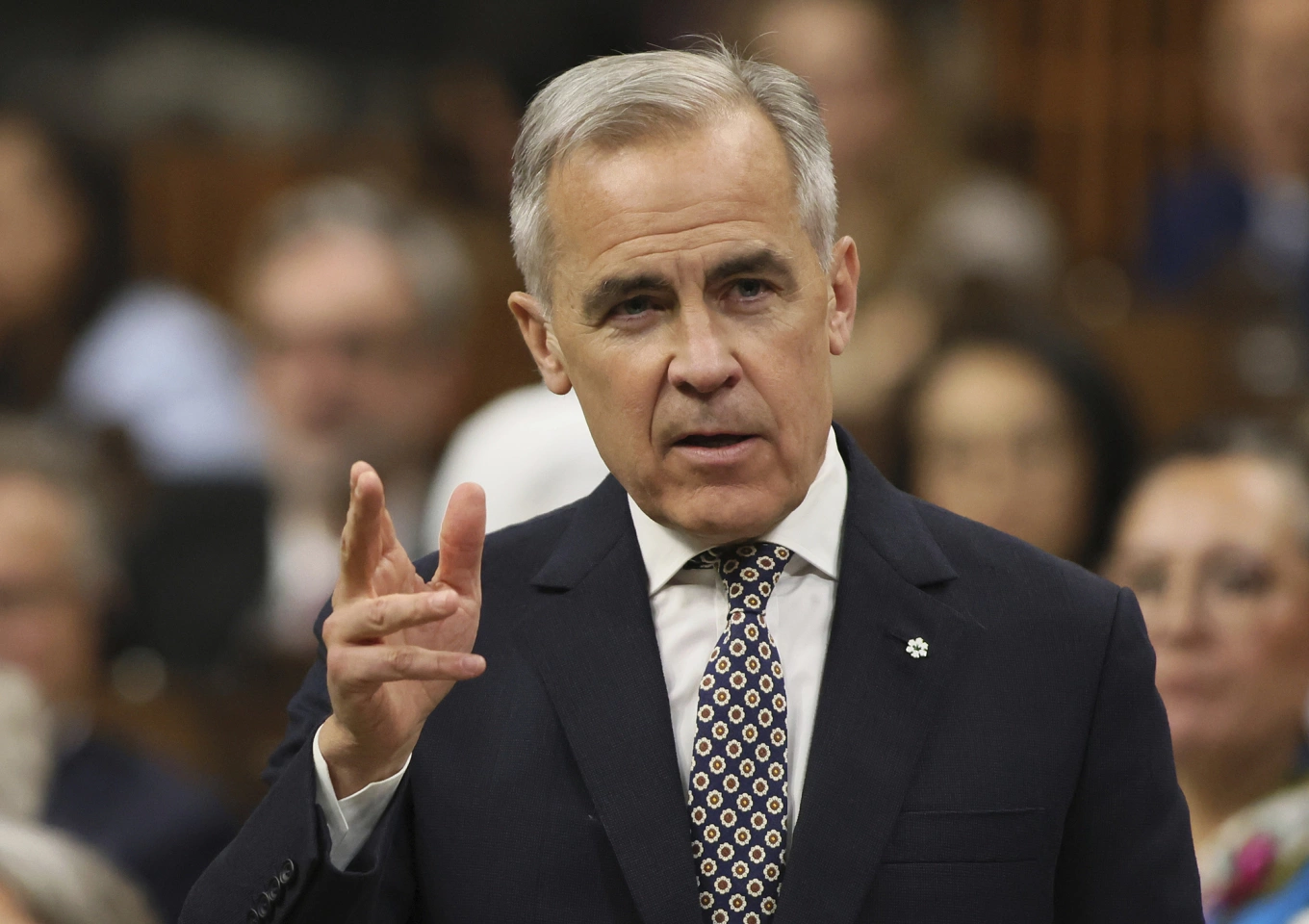
Under Prime Minister Mark Carney, Canada has signaled a more assertive approach toward economic sovereignty and international partnerships. Officials have increasingly emphasized trade diversification, seeking stronger ties with Europe and Indo-Pacific economies while reducing overdependence on the United States.
The message coming from Ottawa appears increasingly clear:
Canada no longer wants to place all of its economic trust in Washington.
That shift would have been almost unthinkable a decade ago.
For generations, close integration with the U.S. economy was viewed as the unquestioned foundation of Canadian prosperity. But recent tensions — from tariffs to political rhetoric — have forced many Canadians to reconsider whether that dependency creates long-term vulnerability.
And public opinion appears to be evolving rapidly.
Polling discussions on Canadian television and radio increasingly feature questions about national independence, supply chain resilience, and whether Canada should accelerate efforts to strengthen domestic industries rather than relying so heavily on American partnerships.
The emotional tone of the debate has also hardened.
Some Canadians now openly describe the United States less as a trusted partner and more as an unpredictable superpower capable of turning against allies whenever domestic politics demand it.
That perception may be exactly what alarms diplomats most.
Because once trust erodes between neighboring countries, rebuilding it becomes extraordinarily difficult.
The irony is that this dispute is unfolding between nations with some of the deepest economic integration on Earth. Millions of jobs depend on stable cross-border commerce. Entire industries — automotive manufacturing, agriculture, energy, natural resources — are built around seamless cooperation between the two economies.
Yet despite those realities, the political rhetoric on both sides is becoming increasingly confrontational.
In Canada, some politicians argue the country has spent too long trying to appease Washington without receiving equal respect in return.
In the United States, economic nationalism continues to resonate with voters frustrated by globalization and manufacturing decline.
Caught in the middle are businesses, workers, and consumers whose livelihoods depend on stability.
Many Canadian exporters now worry that unpredictability itself may become the biggest economic threat. Even if individual tariff disputes are eventually resolved, repeated cycles of confrontation create uncertainty that discourages investment and long-term planning.
And uncertainty spreads quickly.
Several business leaders have warned that once companies begin questioning the reliability of North American trade rules, they may start looking elsewhere for safer opportunities.
That possibility carries enormous implications not only for Canada, but also for the United States.
Because despite political tensions, Canada remains one of America’s most important economic partners. A breakdown in confidence between the two countries could ripple through industries on both sides of the border.
Meanwhile, online reactions continue growing more emotional by the day.
Some Canadians accuse Washington of acting arrogantly toward its closest ally. Others argue Canada must finally “stand up for itself” economically and politically.
Even moderate voices who once strongly defended the Canada-U.S. partnership are beginning to express discomfort about the direction of relations.
And hovering over all of it is a larger question few officials want to answer directly:
If signed agreements can suddenly become meaningless during moments of political pressure, what exactly is the value of those agreements in the first place?
That question may ultimately define this entire controversy.
Because this is no longer simply a debate over tariffs, percentages, or trade mechanisms.
It is becoming a debate about credibility.
About whether allies still trust each other.
About whether economic partnerships survive political opportunism.
And about whether Canada’s future may ultimately require a far more independent path than many once imagined.
For now, the anger inside Canada shows little sign of fading.
And with every new comment from Washington, more Canadians appear to be asking the same unsettling question:
Was the United States ever truly committed to the partnership it celebrated so loudly in the first place?






