Judges Warn of Consequences as Donald Trump Tests the Limits of Courtroom Authority
Contempt Orders, Gag Violations and Escalating Tensions Raise Unprecedented Questions About the Rule of Law
NEW YORK — For months, Donald J. Trump has used courtrooms as political stages, railing against judges, prosecutors and witnesses in language more familiar to campaign rallies than legal proceedings. Now, judges overseeing his criminal cases are issuing increasingly direct warnings: courtroom rules apply to everyone — including a former president — and continued defiance may carry consequences no court has yet been forced to impose.
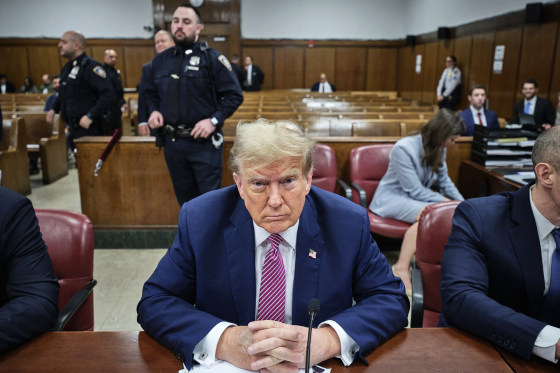
In New York, Judge Juan Merchan, who presided over Trump’s criminal hush-money trial, has already held the former president in contempt multiple times for violating a gag order designed to protect jurors, witnesses and court staff. In written rulings and from the bench, Judge Merchan made clear that monetary fines may not be sufficient to deter future misconduct — and that incarceration, though extraordinary, remains a lawful option.
“The court will not tolerate willful violations of its lawful orders,” Judge Merchan wrote in one ruling, adding that jail time is a tool courts may use when lesser sanctions fail.
While Trump has not been jailed and no judge has ordered physical restraint, the warnings themselves mark a significant escalation — and a moment of profound tension for the American legal system.
A Pattern of Defiance
Trump’s courtroom conduct has followed a consistent pattern across jurisdictions. During hearings in New York, Florida and Washington, he has spoken out of turn, criticized judges on social media despite explicit orders not to do so, and portrayed judicial proceedings as political persecution.
In New York, Judge Merchan imposed a gag order barring Trump from publicly attacking jurors, witnesses and certain court personnel. Prosecutors later documented repeated violations, citing social media posts and campaign remarks that referenced witnesses by name or implied retaliation.
After finding Trump in contempt, Judge Merchan imposed fines and issued a stark warning: continued defiance could force the court to consider stronger measures.
Legal analysts across the ideological spectrum have noted that the judge’s language was unusually explicit — not because incarceration was imminent, but because the court was signaling it would not allow its authority to be ignored indefinitely.
What the Law Allows — and What It Rarely Requires
Under American law, judges possess broad authority to maintain order and enforce compliance in their courtrooms. Contempt powers allow courts to impose fines, remove disruptive defendants, or in extreme cases order short-term detention.
“These are not hypothetical powers,” said former federal prosecutor and legal scholar Joyce Vance, writing in public commentary. “They exist to protect the integrity of the judicial process. What makes this moment extraordinary is not the law, but the defendant.”
Historically, courts have been reluctant to use physical restraint against high-profile defendants, particularly former or current public officials, because of the political ramifications. But legal experts stress that reluctance is not the same as prohibition.
“If a defendant repeatedly refuses to comply with court orders, the judge’s obligation is to the law, not to the defendant’s status,” said Andrew Weissmann, former lead prosecutor in the Mueller investigation, in televised legal analysis.
The Unprecedented Scenario Courts Are Trying to Avoid
Trump is not a sitting president in the New York criminal case, but the implications of aggressive enforcement ripple far beyond a single courtroom. The image of a former — or potentially future — president being physically removed from a courtroom would be unprecedented in modern American history.
Judges appear acutely aware of that reality. Their warnings, legal analysts say, are intended to deter escalation, not provoke it.
“This is the judiciary walking a tightrope,” said a former New York state judge who requested anonymity to speak candidly. “Back down, and you teach future defendants that power buys immunity. Push too hard, and you risk turning the courtroom into a constitutional crisis.”
Trump’s Strategy: Pressure and Performance
Trump’s legal team has largely avoided directly challenging the courts’ authority to impose contempt sanctions. Instead, Trump himself has framed restrictions on his speech as violations of his First Amendment rights, a claim that multiple appellate courts have rejected in this context.
Judges have consistently ruled that gag orders narrowly tailored to protect trial integrity are constitutional — especially when a defendant has demonstrated a pattern of intimidation or harassment.
Trump’s critics argue that his courtroom behavior is deliberate: a strategy to provoke judges, energize supporters, and cast any enforcement action as political repression.
His allies in Congress and conservative media have echoed that framing, warning that jailing Trump — even briefly — would “tear the country apart.”
Legal scholars counter that such arguments, if allowed to dictate judicial behavior, would effectively place certain defendants above the law.
The Stakes for the Justice System
At issue is more than Trump’s conduct. The situation has become a referendum on whether American courts can enforce their own rules when the defendant is powerful, polarizing and politically influential.
“This is a stress test for the rule of law,” said Laurence Tribe, the Harvard constitutional scholar. “Courts cannot function if their orders are optional. At the same time, they must act with precision and restraint to preserve legitimacy.”
So far, judges appear committed to exhausting every lesser option before considering physical restraint or detention. Fines, warnings and written findings have been used not only as punishment, but as a public record — documenting that the court acted methodically and proportionally.
What Comes Next
No judge has ordered Trump removed by bailiffs or placed in custody. But the legal foundation for such action has been clearly laid out.
If Trump continues to violate court orders, judges may face a stark choice: enforce the law fully, regardless of political fallout, or retreat — a move that could permanently weaken judicial authority.
For now, the warnings stand as both deterrent and declaration: the courtroom is not a campaign stage, and the rule of law does not bend easily to power.
Whether Trump alters his behavior — or forces courts into truly uncharted territory — remains an open question. What is clear is that the judiciary is preparing for possibilities it has long hoped never to confront.






