Alberta’s Separation Debate Intensifies as Carney Faces a Political Balancing Act Amid Rising National Tensions
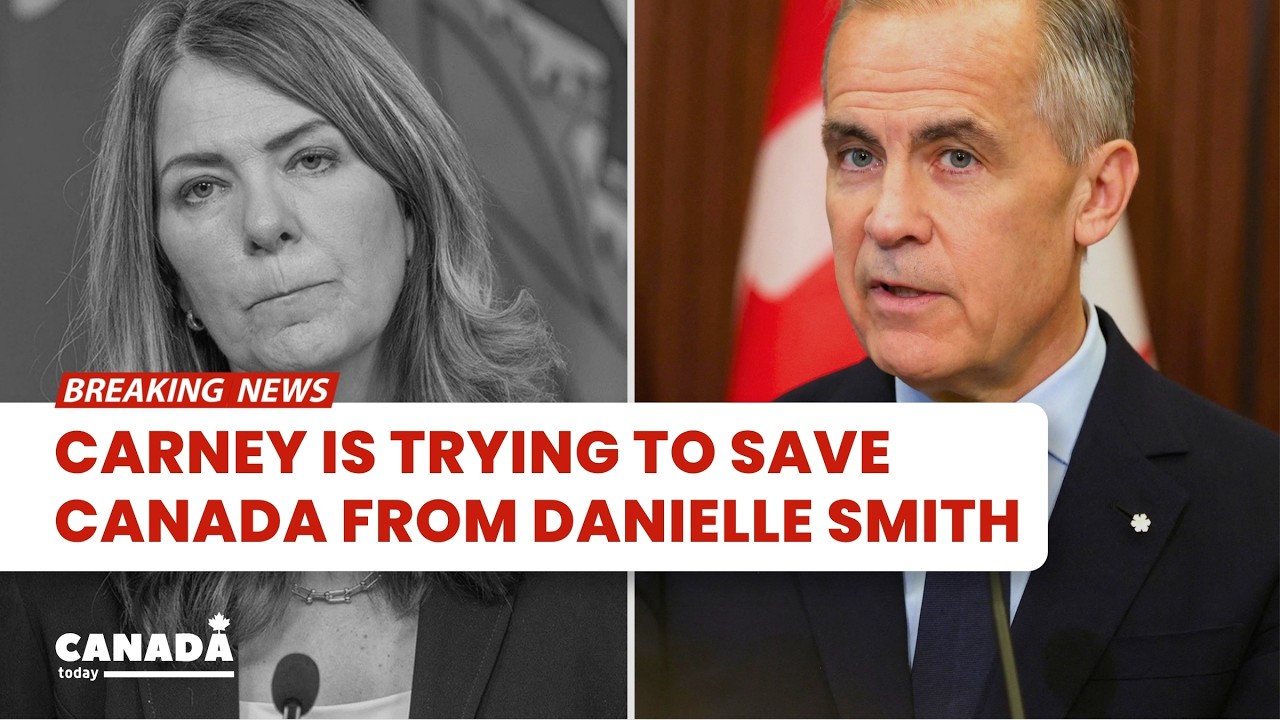
The political tension between Alberta and Ottawa has escalated into a defining national issue, as questions surrounding a potential referendum on Alberta’s future continue to dominate Canadian political discourse. At the centre of this unfolding debate stands Mark Carney, whose government is simultaneously attempting to advance large-scale economic projects while managing rising separatist rhetoric from Alberta Premier Danielle Smith.
The discussion has emerged at a sensitive moment for Canada, as federal and provincial leaders navigate competing priorities involving energy development, infrastructure investment, and national unity. Critics argue that the timing of renewed separatist discourse risks undermining investor confidence at a moment when major projects are being actively negotiated.
Business leaders warn that political uncertainty may complicate long-term infrastructure planning. The Alberta Chamber of Commerce and Canadian Chamber of Commerce have both expressed concern that referendum speculation could introduce instability into an already complex investment environment.
Supporters of Alberta’s position argue that the province continues to face unresolved grievances regarding resource development and federal-provincial cooperation. However, critics counter that the current federal government has shown increased willingness to engage on major projects, including pipelines and energy expansion initiatives.
Political analysts suggest that the central question is no longer whether Alberta has economic opportunities within Canada, but whether political messaging is aligning with those opportunities or undermining them.
Scott Reid, a political commentator referenced in the discussion, described the situation as a choice between governing for long-term provincial development or maintaining internal political cohesion within Alberta’s conservative base.
Observers note that this internal political pressure may be influencing the decision to keep referendum rhetoric active, even as broader economic negotiations between Alberta and Ottawa show signs of progress.
Investor confidence remains a central concern. Large-scale infrastructure projects, particularly in energy and transportation, require long-term certainty. Analysts caution that uncertainty regarding constitutional stability can significantly affect capital allocation decisions.
Economic stakeholders emphasize that even the perception of instability can deter investment, regardless of whether any formal separation process is realistically likely.
Federal-provincial relations have been further complicated by broader geopolitical pressures, including ongoing trade tensions with the United States under the administration of Donald Trump.
Within this context, Ottawa’s approach has focused on balancing firm national unity messaging with continued efforts to demonstrate economic partnership with Alberta.
Mark Carney’s strategy, according to analysts, has been to maintain a dual-track approach: reinforcing Canada’s unity while continuing to support investment-oriented negotiations with provincial governments.
Political commentators note that this balancing act is particularly delicate, as overly aggressive federal responses could intensify separatist sentiment, while overly passive responses could be interpreted as weakness.
Historical comparisons have been drawn to earlier periods of constitutional tension in Canada, particularly debates involving Quebec, where federal responses required careful calibration to avoid escalation.
The Alberta government’s referendum discussion, however, has introduced new uncertainty into this dynamic, particularly because it intersects directly with economic development strategies already underway.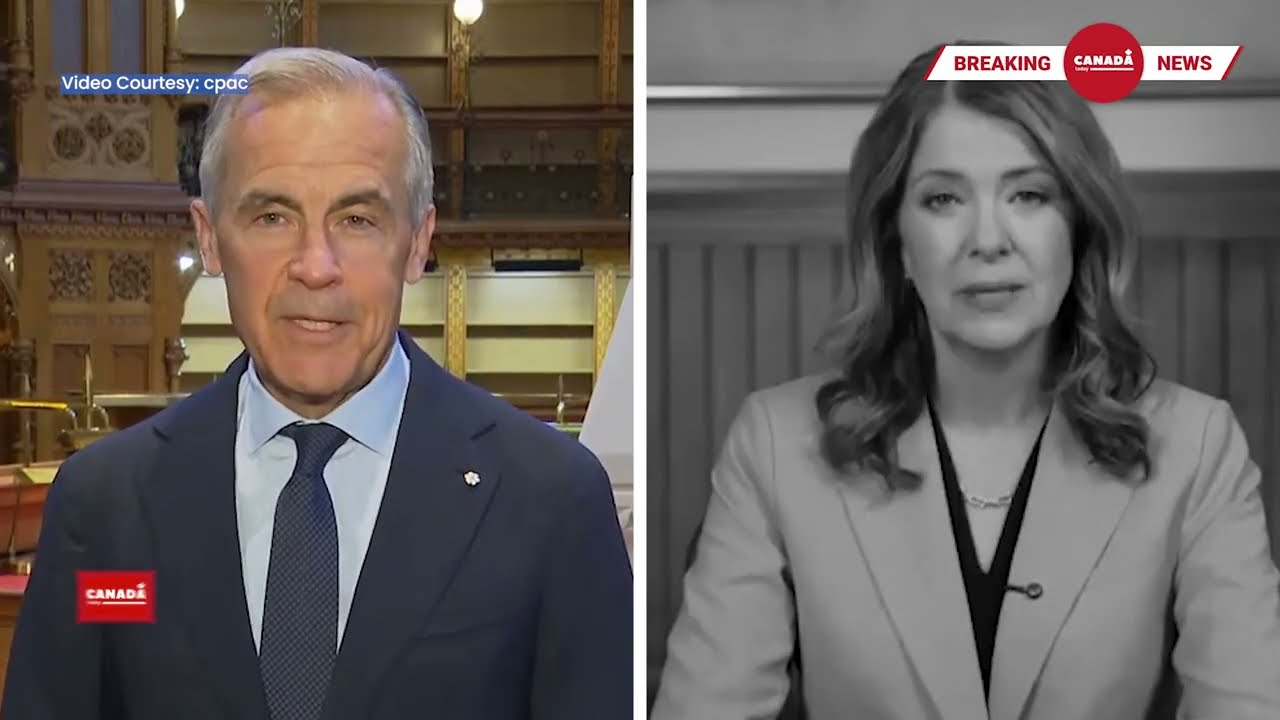
Some analysts argue that Alberta’s current approach reflects internal political pressures rather than a coordinated economic strategy aligned with long-term provincial development goals.
Others caution that separatist sentiment, even if limited in scale, can have disproportionate effects on investment sentiment due to the sensitivity of large-scale infrastructure financing.
Energy and infrastructure projects remain central to the dispute, as both federal and provincial governments continue to advocate for expanded pipeline capacity and increased export capability.
Yet the coexistence of expansion plans and political uncertainty creates what economists describe as a “confidence contradiction,” where growth initiatives are paired with instability signals.
As a result, Canada’s political landscape is now facing competing narratives: one focused on national economic integration and investment expansion, and another driven by internal political positioning and regional autonomy debates.


The contradiction between these narratives has become increasingly visible, particularly as federal policy continues to emphasize infrastructure development while provincial rhetoric highlights constitutional dissatisfaction.
Political observers suggest that this divergence may define the next phase of Canada’s internal political debate, particularly if referendum discussions continue alongside active federal-provincial negotiations.
Supporters of federal policy argue that economic engagement remains the most effective path to addressing provincial concerns, particularly through investment in energy, trade, and infrastructure development.
Critics, however, warn that ongoing referendum rhetoric risks weakening the very economic foundations that both levels of government are attempting to strengthen.
The broader national implication is that Alberta’s political direction is now being closely watched by other provinces, which may reassess their own relationships with Ottawa depending on how this situation evolves.
Analysts emphasize that once separation discourse becomes part of mainstream political dialogue, it can alter intergovernmental bargaining dynamics across the entire federation.
Within Ottawa, maintaining a stable tone while continuing negotiations has become a central priority, as policymakers attempt to prevent escalation while preserving economic momentum.
At the provincial level, however, internal political considerations continue to influence messaging, particularly as leaders seek to maintain support within their respective political bases.
The resulting tension reflects a broader structural challenge in Canadian federalism: balancing regional autonomy with national cohesion in an increasingly complex economic and geopolitical environment.
Looking ahead, the outcome of this debate will likely depend not only on formal negotiations, but also on whether political actors choose de-escalation or continued confrontation as their primary strategy.
For now, Canada remains in a state of political and economic uncertainty, where competing visions of the country’s future are being tested in real time, and where the consequences of those decisions extend far beyond Alberta itself.






