Wall Street Shock Follows Trump’s “Maximum Pressure” Campaign as Markets Reprice US–Canada Risk
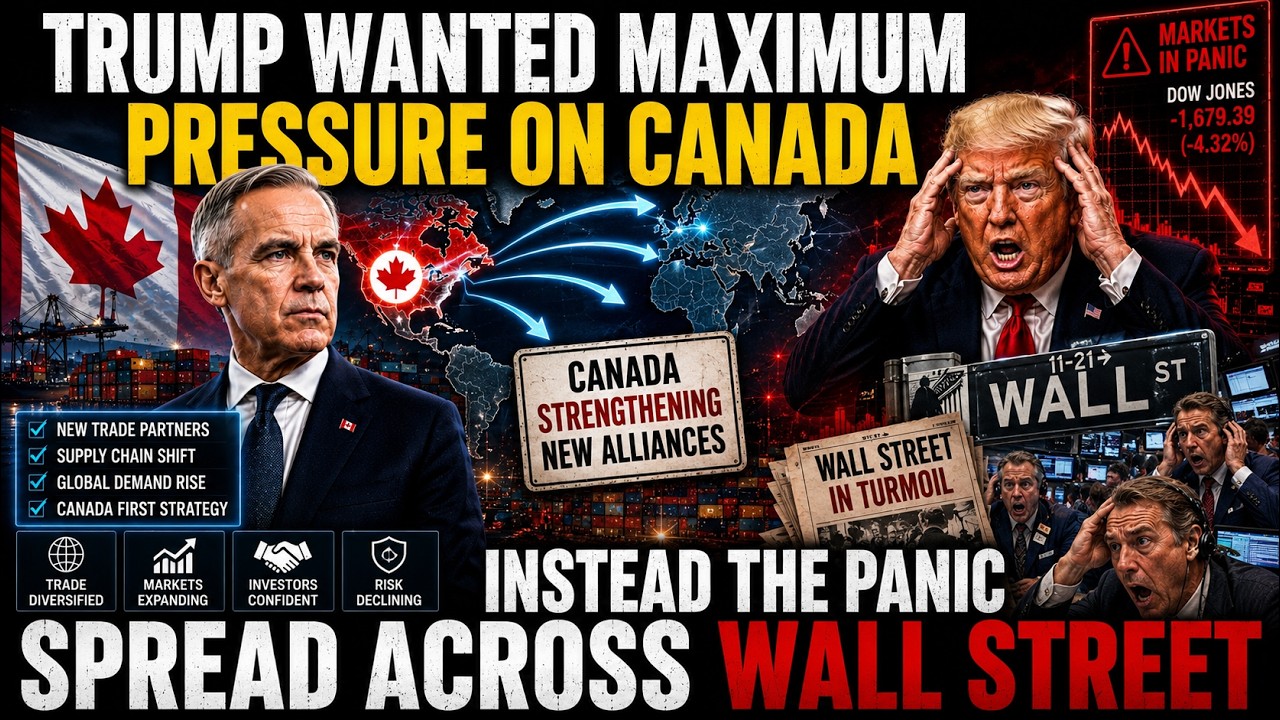
The announcement of a so-called “maximum pressure initiative” by the United States administration has triggered one of the most abrupt market reactions in recent years, as investors rapidly reassessed the stability of North American trade relations. The policy, which escalates tariffs and financial restrictions on Canada, has intensified concerns across global markets and prompted immediate volatility on Wall Street.
At the centre of the unfolding situation is the deepening economic tension between the United States and Canada, with Canadian leadership under Mark Carney now positioned as a key counterweight to Washington’s increasingly aggressive trade posture.
The White House announcement introduced what it described as maximum tariff and financial pressure measures targeting Canadian exports, investment channels, and cross-border financial activity. The statement, released shortly before trading began in New York, outlined broad restrictions affecting multiple sectors, including energy, manufacturing, and financial services.
Markets reacted within minutes. Traders and institutional investors quickly began repricing risk across North American assets, anticipating potential disruptions to deeply integrated supply chains between the two economies.
The initial sell-off was sharp and immediate, with major US equity indices recording steep declines in early trading as uncertainty spread through global financial systems. Analysts attributed the move not to a single policy element, but to the perceived scale and breadth of the measures.
Technology and industrial sectors were among the hardest hit, reflecting their heavy reliance on cross-border supply chains and integrated production networks that link US firms with Canadian suppliers and energy inputs.
Bond markets also reacted, with yields shifting upward as investors reassessed the broader fiscal and economic implications of sustained trade confrontation between two of the world’s most interconnected economies.
Financial analysts noted that the speed of the market response reflected not only the policy announcement itself, but also accumulated sensitivity after months of escalating trade tensions between Washington and Ottawa.
According to market observers, investors had already developed pricing models based on repeated cycles of tariff escalation and partial recovery, but the latest measures were interpreted as a qualitative escalation beyond previous rounds.
The designation framework described in the announcement introduced new compliance requirements for US companies engaged in cross-border trade with Canadian entities, increasing uncertainty for firms with deeply embedded supply chain exposure.
This complexity, analysts argue, contributed significantly to the rapid repricing of risk across equity and bond markets, particularly among multinational corporations with integrated North American operations.
Within hours, volatility indicators spiked, reflecting heightened uncertainty about the durability of US–Canada economic relations and the potential for prolonged disruption.
Market strategists suggested that investors were no longer pricing in temporary trade friction, but instead evaluating scenarios involving sustained structural decoupling between the two economies.
The scale of exposure was especially pronounced given the volume of annual trade and investment flows between the United States and Canada, which underpin key sectors of the American industrial base.
Economic commentators noted that the announcement effectively forced markets to reassess assumptions about predictability in US trade policy, particularly with regard to long-standing bilateral agreements.
By the end of the trading window, analysts were describing the session as one of the most significant trade-policy-driven market events in recent memory, driven by uncertainty rather than confirmed economic outcomes.
Canadian leadership response was measured, with officials emphasizing the importance of maintaining economic stability while continuing to pursue diversification strategies.
At the centre of Canada’s strategic response remains Mark Carney, whose government has been increasingly focused on reducing structural dependence on a single export partner.

Political analysts highlight that Carney’s messaging has emphasized resilience and diversification rather than direct escalation, aiming to stabilize investor sentiment while maintaining diplomatic flexibility.
Meanwhile in Washington, officials defended the initiative as a necessary escalation in response to long-running trade disputes, arguing that previous measures had failed to produce policy alignment.
Critics of the policy, however, warn that the breadth of the restrictions could increase costs for American companies and consumers by disrupting established supply chains.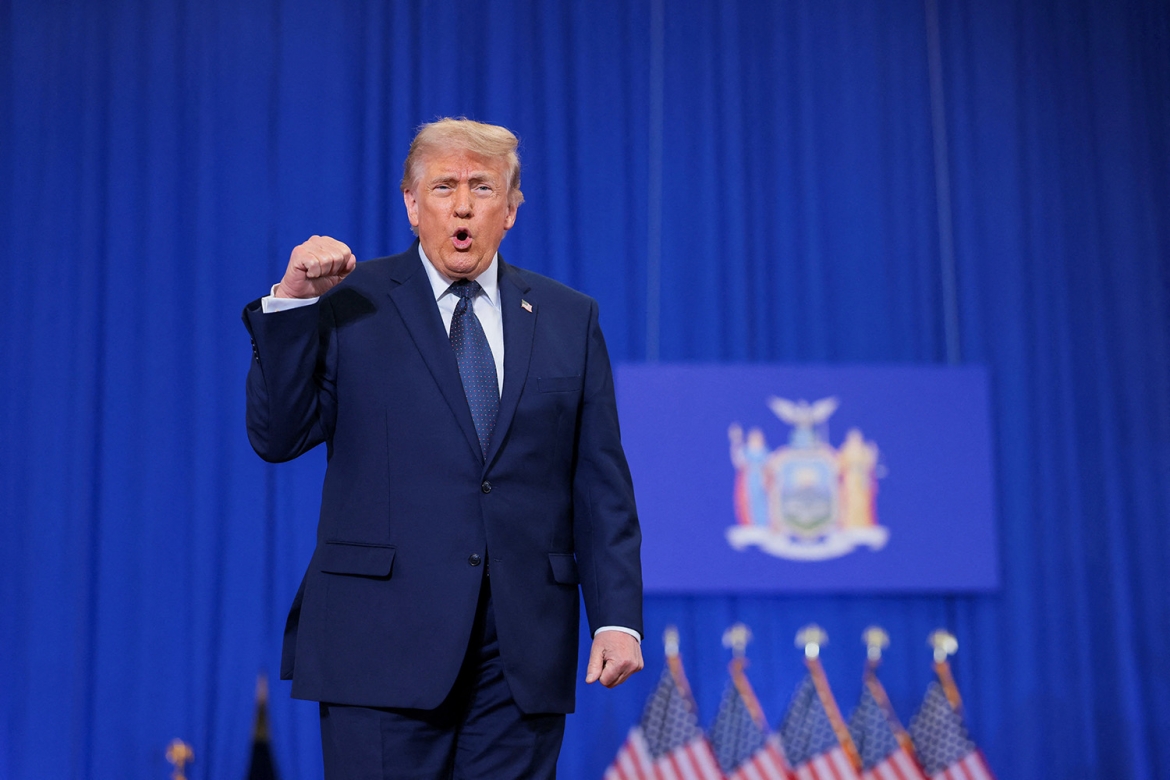
Economists observing the situation suggest that the core issue is not only tariff levels, but the cumulative effect of financial, regulatory, and diplomatic constraints on integrated markets.
Several market analysts concluded that the rapid reaction from Wall Street reflects a broader structural truth: markets are increasingly treating US–Canada trade stability as a central pillar of North American economic performance.
As uncertainty persists, attention now turns to whether the measures will be sustained, modified, or partially reversed in response to financial market reactions and political pressure.
For now, the episode has underscored a critical shift: what was once considered a stable and predictable bilateral economic relationship is now being actively repriced by global markets in real time, with consequences that extend far beyond tariffs themselves.






