Lithium, Submarines, and Strategic Industry Convergence: Canada’s Defence Procurement and Critical Minerals Alignment Under Scrutiny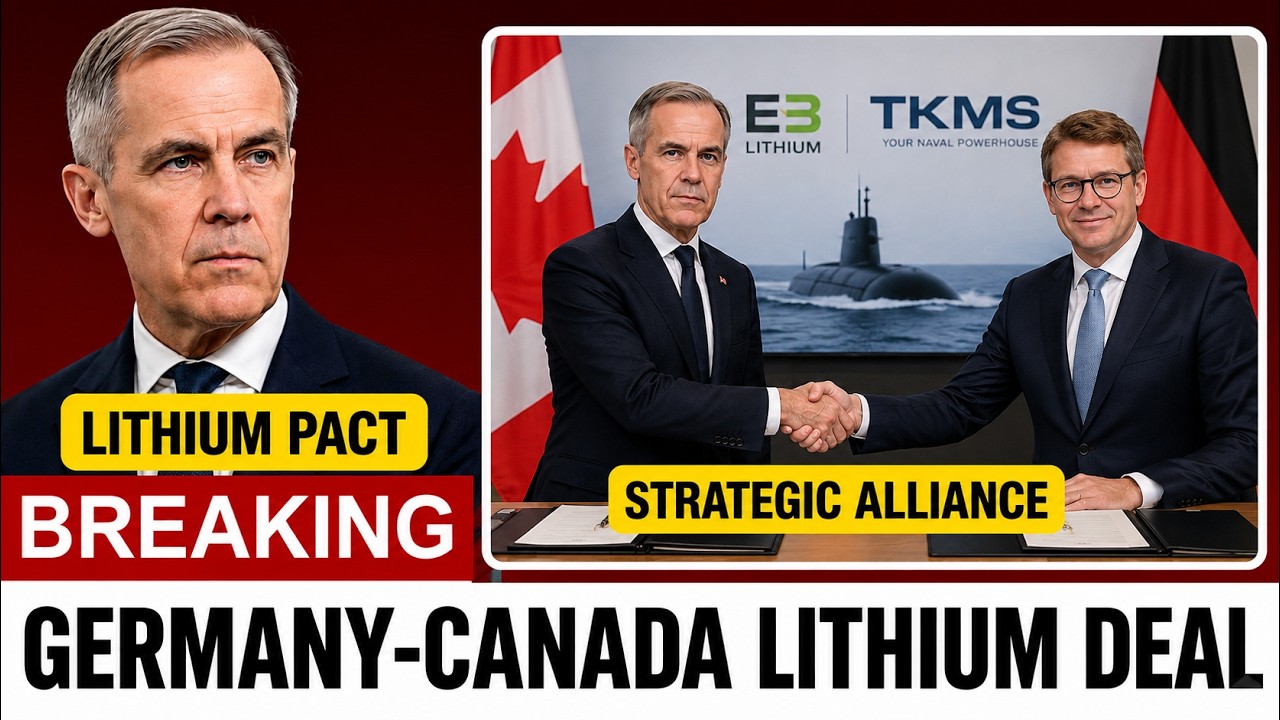
Canada Faces Strategic convergence between defence procurement and critical minerals development as illustrated by a new agreement involving Germany’s TKMS and Canadian miner E3 Lithium. The development has been positioned within the broader Canadian Patrol Submarine Project and its long-term procurement framework. Officials and industry stakeholders are examining how such agreements intersect with national industrial policy. The announcement has drawn attention in both defence and resource sectors. The timing aligns with ongoing evaluations of Canada’s future submarine fleet.
Joint Press release signals that TKMS and E3 Lithium issued a coordinated statement from Kiel and Calgary on April 8th, 2026. The agreement establishes a framework for cooperation tied to Canada’s submarine procurement ambitions. It also links lithium supply chains to defence applications. The press release was initially understated outside specialized sectors. However, its implications have grown as analysis of the deal has expanded.
TKMS Position highlighted the German firm as a leading global builder of non-nuclear submarines with a growing international backlog. The company recently listed on the Frankfurt Stock Exchange in 2025 following its spin-off. It is currently competing in Canada’s submarine procurement process. Its Type 212 CD submarine is part of the bidding framework. The firm frames Canada as a key strategic market.
E3 Lithium described its Alberta-based operations as centred on one of North America’s largest lithium brine resources. The company’s Clearwater project carries an estimated multi-billion-dollar valuation. Its extraction method relies on direct lithium extraction technology. This approach is designed to reduce environmental footprint compared to traditional mining. The resource base is positioned as long-term strategic supply.
Submarine procurement context places the Canadian Patrol Submarine Project among the largest defence acquisitions in Canadian history. The program aims to replace Victoria-class submarines acquired in the late 1990s. Up to 12 new submarines are being considered for multi-ocean operations. Estimated total lifecycle costs range between 60 and 100 billion Canadian dollars. Delivery expectations extend into the mid-2030s.
Competitive shortlist narrowed the procurement process to TKMS and South Korea’s Hanwha Ocean by August 2025. Both firms are offering diesel-electric submarine platforms. TKMS proposes the Type 212 CD system co-developed with Norway. Hanwha Ocean offers the KSS-III Batch 2 model already in service. A final decision is expected in 2026.
Industrial benefits framework remains central to Canada’s evaluation of bidders in the submarine program. Ottawa has emphasized technology transfer and domestic job creation. Industrial and Technological Benefits policy plays a key role in assessment. Contractors are expected to generate economic activity within Canada. This includes partnerships and supply chain development.
TKMS Strategic rationale for the E3 agreement is tied to Canada’s evaluation criteria under ITB rules. The company is demonstrating integration with Canadian industry. The lithium agreement supports this positioning. It connects submarine technology to critical mineral inputs. It also strengthens its bid narrative in Canada.
Lithium submarine relevance arises from changes in naval propulsion systems. Modern submarines increasingly rely on lithium-ion battery technology. These systems offer higher energy density than traditional lead-acid batteries. They allow longer submerged operations. This is especially relevant for Arctic missions.
Operational advantages explained include longer underwater endurance and reduced detection risk. Lithium systems support faster underwater acceleration. They also reduce the need for snorkeling. This improves stealth capabilities. These features are increasingly relevant in modern naval doctrine.
Arctic operational demands add strategic importance to battery performance in Canadian defence planning. Submarines operating under ice require extended submerged capability. Surfacing may not always be possible. Energy reliability becomes a survival factor. This requirement shapes procurement priorities.
Japan precedent noted shows that lithium-ion submarine batteries are already in operational use. Japan began integrating them into its fleet in 2018. This transition demonstrates technological maturity. It also signals broader global adoption. TKMS is aligning its designs with this trend.


Policy leadership context in Canada is shaped by broader debates on industrial sovereignty and economic resilience. Mark Carney is among the prominent figures associated with discussions on economic strategy and industrial transition. These debates intersect with defence procurement priorities. The submarine program reflects broader national industrial direction. Lithium supply chains are part of that discussion.
E3 resource scale emphasized shows the Clearwater project as a major lithium brine development in Alberta. The project includes significant measured and indicated resources. Production estimates suggest long-term supply potential. The extraction model is designed for extended operational life. This positions it as a strategic material source.
Direct lithium extraction method used by E3 differs from traditional mining techniques. It avoids large-scale open-pit operations. Instead, it processes brine through selective extraction systems. The remaining brine is reinjected underground. This reduces environmental disruption.
Infrastructure advantage noted highlights Alberta’s existing oil and gas networks as enabling factors. Existing pipelines and drilling expertise support development. This reduces project startup complexity. It also lowers development costs. The region’s industrial base is a key advantage.
Government funding support has been conditionally provided through Canadian programs. This includes non-repayable funding under national initiatives. It reflects strategic interest in critical minerals. It also supports early-stage commercialization. The project is advancing through phased development.
Commercial scaling plan for E3 includes staged production targets. Initial output is planned in the late 2020s. Full capacity is projected for the early 2030s. Capital investment is estimated in the multi-billion-dollar range. The timeline aligns with industrial scaling cycles.
ITB financial linkage suggests TKMS may contribute to E3 development under Canadian policy structures. This extends beyond simple procurement agreements. It may include investment-style participation. It also links procurement success to domestic industry growth. The structure reflects hybrid industrial strategy.
Global convergence trend shows similar agreements emerging internationally in critical minerals and defence sectors. Partnerships involving European and Asian firms are increasing. These arrangements link supply chains to strategic industries. Canada is part of this broader pattern. The TKMS-E3 agreement fits within this trend.
Defence strategy alignment reflects Canada’s stated goal of increasing domestic defence industrial participation. Targets include raising Canadian content in procurement significantly. Naval, aerospace, and digital systems are key focus areas. Submarine procurement is a flagship case. The policy shapes bidding behaviour.
Conclusion assessment indicates that the TKMS–E3 agreement reflects deeper structural alignment between defence procurement and critical mineral strategy. The submarine competition remains ongoing. The role of lithium supply chains has become more prominent. The final procurement outcome has not yet been determined. The issue continues to generate policy and industrial debate within Canada.






