Manufacturing Losses and Capital Flight Raise New Questions About Canada’s Economic Strategy

New economic data and corporate relocation trends intensify debate over investment, industrial competitiveness and Ottawa’s response to growing pressure from the United States
The closure of manufacturing operations in communities across Ontario has become a focal point in a broader debate about Canada’s economic direction, as new figures on employment, investment and capital flows fuel concerns about the country’s long-term competitiveness.
The shutdown of the BrightDrop facility in Ingersoll drew particular attention because of its impact on a community where industrial employment has long played a central role in the local economy. For many residents, the loss of hundreds of jobs became a visible symbol of wider uncertainty facing Canada’s manufacturing sector.
Similar concerns emerged in other automotive centres. Workforce reductions and production adjustments in Brampton and Oshawa added to anxieties among workers and local businesses already confronting a difficult economic environment shaped by shifting supply chains and international trade tensions.
According to figures cited from Statistics Canada, manufacturing employment declined significantly over the previous twelve months. The reported loss of more than 50,000 positions has intensified scrutiny of federal economic policy and raised questions about how Canada can preserve industrial capacity amid growing global competition.
For affected communities, the debate extends beyond statistics. Families connected to automotive and manufacturing employment have watched plant closures and production cuts reshape local economies, creating uncertainty about future opportunities for younger generations entering the workforce.
The challenges have unfolded against the backdrop of a difficult trading relationship with the United States. Tariffs affecting a range of Canadian exports, including steel, aluminum and softwood lumber, have placed additional pressure on manufacturers already facing rising costs and weaker demand.
Prime Minister Mark Carney has argued that easing certain retaliatory measures offered the best opportunity to restart trade negotiations and stabilize economic relations with Washington. The government has presented the approach as part of a broader effort to protect Canadian jobs and secure long-term market access.
However, some business leaders have questioned whether the strategy has produced sufficient results. Concerns have been raised by companies that continue to face barriers when exporting to the United States while competing against American firms operating within Canada.
A growing focus has also emerged around investment trends highlighted by financial institutions and economic analysts. Business surveys cited in the transcript suggested a deterioration in corporate confidence, with a substantial share of firms reportedly preparing for weaker economic conditions.
At the same time, data referenced from Statistics Canada and economic analysis by TD Economics pointed to significant Canadian investment flowing into American assets. Those figures have become central to arguments that capital is increasingly seeking opportunities outside Canada.
Supporters of that interpretation argue that sustained outflows may reflect concerns about growth prospects, regulatory conditions and long-term profitability. Critics of the government have pointed to those numbers as evidence that investors remain unconvinced by Ottawa’s economic agenda.
Others caution that capital movements can occur for many reasons and that cross-border investment has long been a feature of the highly integrated North American economy. Nevertheless, the scale of the figures cited in recent discussions has attracted considerable political attention.

Particular attention has been directed toward reports of Canadian companies expanding operations in Texas. Examples highlighted in recent discussions include technology, energy and manufacturing firms establishing new facilities or relocating corporate functions south of the border.
The trend has been reinforced by testimony from industry participants and service providers who report increased interest among Canadian businesses exploring opportunities in the United States. For some companies, access to larger markets and lower operating costs are cited as major factors in relocation decisions.
Energy-sector developments have also featured prominently in the debate. Investments by Canadian firms in large-scale American projects have raised questions about whether sufficient incentives exist to encourage equivalent expansion within Canada.
Meanwhile, workforce reductions announced by major employers have heightened concerns about the pace of economic adjustment. Labour representatives and local officials have warned that prolonged uncertainty could have lasting effects on regional economies dependent on industrial employment.
Beyond the immediate job losses, economists and policymakers are increasingly focused on productivity. Data referenced in the transcript suggested that Canada’s per-capita economic performance relative to the United States has weakened over an extended period, becoming a central issue in discussions about national competitiveness.
Those concerns arrive as preparations continue for upcoming reviews related to the Canada–United States–Mexico Agreement. Trade policy observers view those discussions as potentially significant for investment decisions and the future direction of North American economic integration.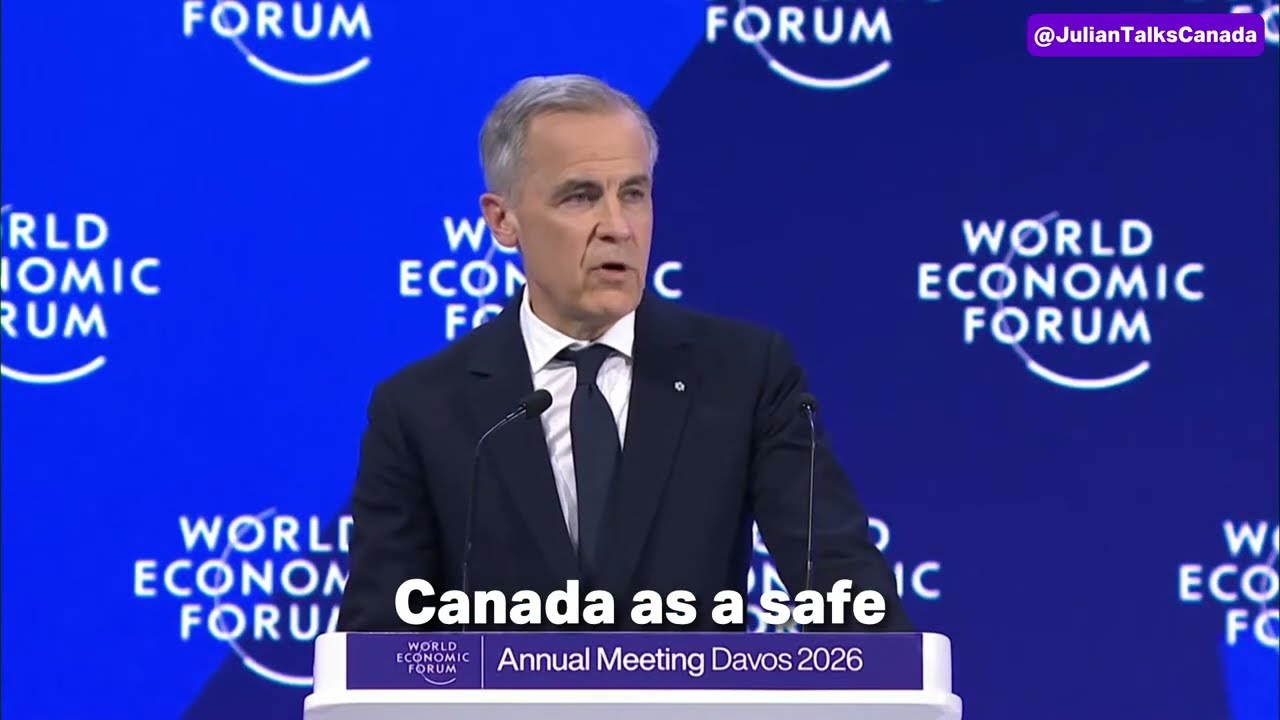
The government’s supporters maintain that major investments in innovation, infrastructure and industrial development will strengthen Canada’s position over time. They argue that economic transitions often involve short-term disruption before longer-term gains become visible.
Critics remain unconvinced, contending that recent employment losses and investment trends suggest deeper structural challenges. They argue that stronger measures may be necessary to retain capital, encourage domestic production and improve productivity growth.
As debate continues, both supporters and opponents of the government’s strategy agree on one point: the stakes are significant. Decisions made in the coming years regarding trade, investment and industrial policy are likely to shape Canada’s economic trajectory for decades.
Whether current developments represent a temporary period of adjustment or evidence of a more profound shift in Canada’s economic position remains the subject of intense political and economic discussion. For communities affected by factory closures and workforce reductions, however, the consequences are already being felt, ensuring that the issue will remain under close public scrutiny.






