
In the quiet boardrooms of sovereign wealth funds and the sterile offices of central banks, a seismic shift is occurring that threatens to reshape the global order more profoundly than any war could.
For nearly a century, the United States has enjoyed “exorbitant privilege,” acting as the world’s default destination for capital. However, data from early 2026 suggests that the default setting has been broken.
We are currently witnessing what experts are calling “The Great Divestment”—a systematic, strategy-led withdrawal of global capital from the United States that has already seen trillions of dollars redirected to more stable, less politically volatile markets.
The Canadian Pivot: A Neighbor Moves Out
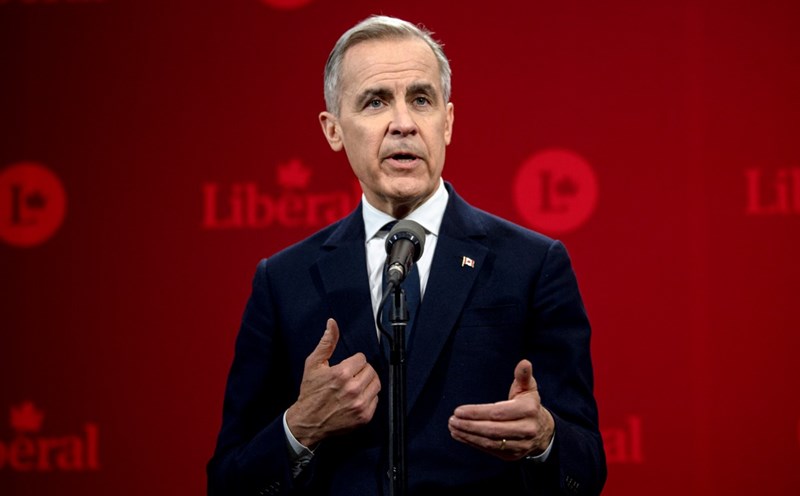
Perhaps the most shocking development in this global retreat is the behavior of Canada. Long considered America’s most reliable and predictable economic partner, Canada has begun a process of “de-risking” that should send shivers through Washington.
In the fourth quarter of 2025, Canadian investors executed a record $20.5 billion divestment of US Treasury bonds. This wasn’t a one-time fluke; it marked three consecutive months of aggressive selling.
By January 2026, Canada’s total holdings of US debt had plunged from $468 billion to $396 billion. This financial retreat is being mirrored by a cultural and consumer-led withdrawal.
In February 2026, car trips from Canada to the US dropped by a staggering 23%, and flight bookings for leisure travel fell by 40%. Nearly a quarter of Canadians have canceled planned trips to the US, resulting in an estimated $4.5 billion loss for the American tourism industry.
This is not accidental. Under the “Third Option” strategy, Canada is actively working to double its non-US exports by 2035.
Prime Minister Mark Carney’s recent landmark agreement with Chinese President Xi Jinping—which reduced tariffs on Chinese EVs and Canadian canola—signals a future where Ottawa looks East rather than South.
With 97% of Canada’s energy exports currently flowing to the US, the plan to pivot crude oil and natural gas toward India represents a fundamental decoupling of the North American energy market.
China’s Methodical Exit
While Canada’s shift is rapid, China’s exit from the US financial system is a “slow bleed” that has reached a critical tipping point. In February 2026, China’s Treasury holdings dropped to $693.3 billion—the lowest level since 2008. This represents a massive 48% drop from its 2013 peak of $1.3 trillion.
China is no longer interested in holding “paper debt” that can be frozen or weaponized by US sanctions. Instead, Beijing is pivoting toward physical commodities and semiconductor self-sufficiency.
China’s gold reserves have risen for 17 consecutive months, reaching over 74 million ounces. Furthermore, by establishing 40 different currency swap agreements—including a 200 billion yuan line with the Bank of Canada—China is building a financial parallel universe that bypasses the SWIFT system entirely.
By late 2024, Renminbi cross-border settlements already accounted for nearly 47% of total global settlements, a number that continues to climb as nations seek to trade without accumulating dollar reserves.
The Gulf States and the Liquidity Shock
The most immediate threat to the US economy, however, may come from the Gulf. Sovereign wealth funds from Saudi Arabia, the UAE, Kuwait, and Qatar collectively hold over $2 trillion in US assets.
Following the regional instabilities of the Iran war, these funds have initiated comprehensive reviews of their American commitments.
The Saudi Public Investment Fund (PIF) has already slashed new US commitments by 70%. Currently, Gulf investors own approximately 40% of prime US commercial real estate segments.
If this $1.5 trillion in capital continues to withdraw, it could trigger a severe liquidity shock, forcing massive asset repricing and causing interest rates to spike.
The Gulf states are no longer content with “geopolitical insurance” through US tech partnerships; they are increasingly tilting their capital toward domestic mega-projects and Asian allocations.
A Fragmenting World
The “Great Divestment” is not a coordinated attack, but rather the collective result of rational actors reassessing US reliability. For the first time in modern history, the US has become the exception to the global trade rule.
While four out of every five nations have seen trade rise as a share of their GDP over the last eight years, the US has seen its share dip to around 25%.
Europe, too, is seeking “sovereignty” away from Washington. France’s $14 billion AI empire is being built specifically as a non-American alternative, while the EU and India have signed the “mother of all deals,” creating a free trade zone of two billion people that excludes the US.
The financial architecture of the world is fragmenting. While the US still possesses the deepest markets and the most liquid assets, it is no longer the only option.
As Washington embraces mercantilist, tariff-fueled policies, the rest of the world is building systems that work without its permission.
The next decade will test whether American financial dominance can survive its own unpredictability. Currently, the data suggests the answer is a resounding “no.”
Capital, always the ultimate coward, is simply following the path of least political risk—and that path is increasingly leading away from America.






