When Power Becomes Performance: Donald Trump and the Erosion of America’s Public Discourse
In the history of American politics, presidents are typically remembered for policies, doctrines, or moments that reshaped the nation. With Donald J. Trump, however, the most defining legacy appears to lie elsewhere: his ability to transform state power into a personal stage, where everything—from international peace efforts and cultural institutions to bathroom renovations—can be pulled into the orbit of his ego.
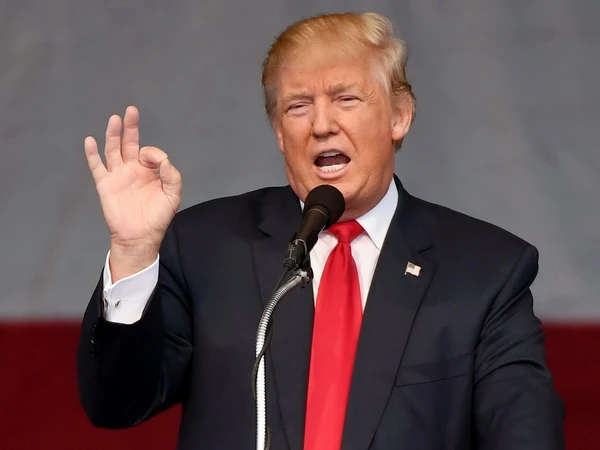
The renaming of the U.S. Institute of Peace, a nonpartisan organization created to study and promote peaceful conflict resolution, into what has mockingly been called the Donald J. Trump United States Institute of Peace and Casino has become a fitting symbol of the Trump era. This is an institution his administration previously defunded and threatened to seize, now allegedly “appeased” by affixing his name to its façade. It is not policy reconciliation; it is performative submission.
The White House as an Extension of the Ego
Trump’s recent press conferences and appearances—from the Kennedy Center to the State Department—have revealed a president increasingly fixated on marble tiles, book-matched stone, and renovation details, rather than inflation, health care, housing, or education. He speaks reverently about replacing tiles in the Lincoln Bedroom in the name of “heritage,” while remaining conspicuously silent on the living legacy of Americans losing health insurance, priced out of housing, or facing rising costs of living.
This is more than misplaced priorities. It represents a reversal of the purpose of power itself. The White House is no longer framed as the command center for governing a nation in crisis, but as a personal construction project—one Trump describes as “relaxing,” as if running the country were a part-time obligation.
Power as a Celebrity Contest
Trump does not merely crave attention; he requires adoration. He compares himself to Jimmy Kimmel, muses aloud about whether he is a better politician or real estate developer, and declares the Kennedy Center board “hot,” ranking it alongside the Supreme Court, the U.S. Senate, and the NFL. These comparisons illuminate nothing except the constant need to keep the spotlight trained on himself.
More troubling, this chaos is not harmless. When Trump boasts that “young women” thank him because they “feel safe” walking around Washington, it signals a deeply personalized and unsettling conception of authority, particularly in a city saturated with National Guard deployments and heightened security.
Truth in the Age of Noise

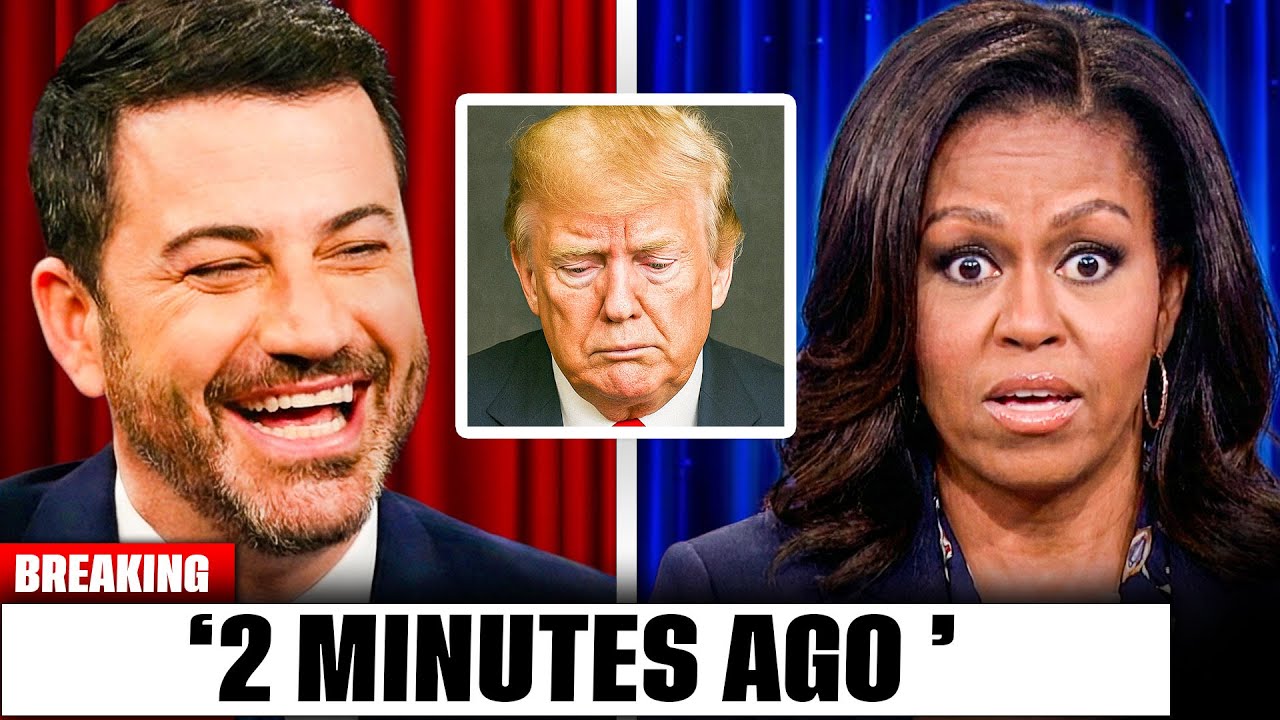
Alongside these spectacles runs a more calculated strategy: flooding the public sphere with disinformation. The viral, entirely fabricated story claiming that Michelle Obama and Jimmy Kimmel “destroyed” Trump on live television in 2025 is a textbook example—no date, no footage, no credible sources, just urgent language and promises to “watch before it disappears.”
The goal is not persuasion but epistemic erosion. When everything resembles propaganda, verifiable evidence loses its power. Truth becomes just another claim, easily dismissed. This is how power evades accountability: not by proving itself right, but by convincing the public that nothing can be proven at all.
Michelle Obama and the Moral Limits of Power
Standing in sharp contrast are the documented, verifiable appearances of Michelle Obama on Jimmy Kimmel Live in 2018 and 2022. Without theatrics or mockery, she articulated a fundamental truth: when someone in power traffics in conspiracy theories, they are not merely attacking political opponents—they are placing real families in real danger.
Trump has never answered that charge. He has not apologized. He has not refuted it. Instead, he has deflected, diminished, and attacked—reflexes of a man who views power as personal armor rather than a moral responsibility.
A Shrinking Democracy
The core issue is not that Donald Trump talks about tiles or claims Sylvester Stallone will be admired “for centuries.” It is that these monologues crowd out the questions that matter most: who has access to health care, who is protected by the law, who can speak truth without fear of retaliation.
When power becomes performance, democracy contracts into an audience. In that audience, applause matters more than facts, loyalty outweighs competence, and fear is exploited as a political prop.
Donald Trump is not merely a controversial president. He is a symptom of an era, one in which “ping ping ping” on the national stage can substitute for serious governance—and where the question is no longer what he will say next, but how long American democracy can endure being treated as an endless reality show.






