The House of Commons resumed its session under a cloud of palpable economic anxiety and fierce political anticipation. The chamber, usually a theater of scripted grievances, quickly transformed into a volatile ideological battlefield. Observers wondered whether the government’s chief economic architect could withstand a relentless, coordinated opposition assault.
At the center of this brewing democratic storm stood Mark Carney, the poised and technocratic figure currently anchoring the government’s embattled economic policy. For months, critics predicted his sophisticated demeanor would crumble under raw populist pressure. Today, however, Carney demonstrated a calculated, unyielding resilience that deeply frustrated his conservative adversaries.
Pierre Poilievre, the sharp-tongued leader of the official opposition, launched a ferocious attack from the opening bell. Poilievre sought to weaponize the palpable economic pain vibrating through Canadian households, weaving a grim tapestry of systemic national collapse. His words were deliberately designed to provoke an emotional, defensive blunder.
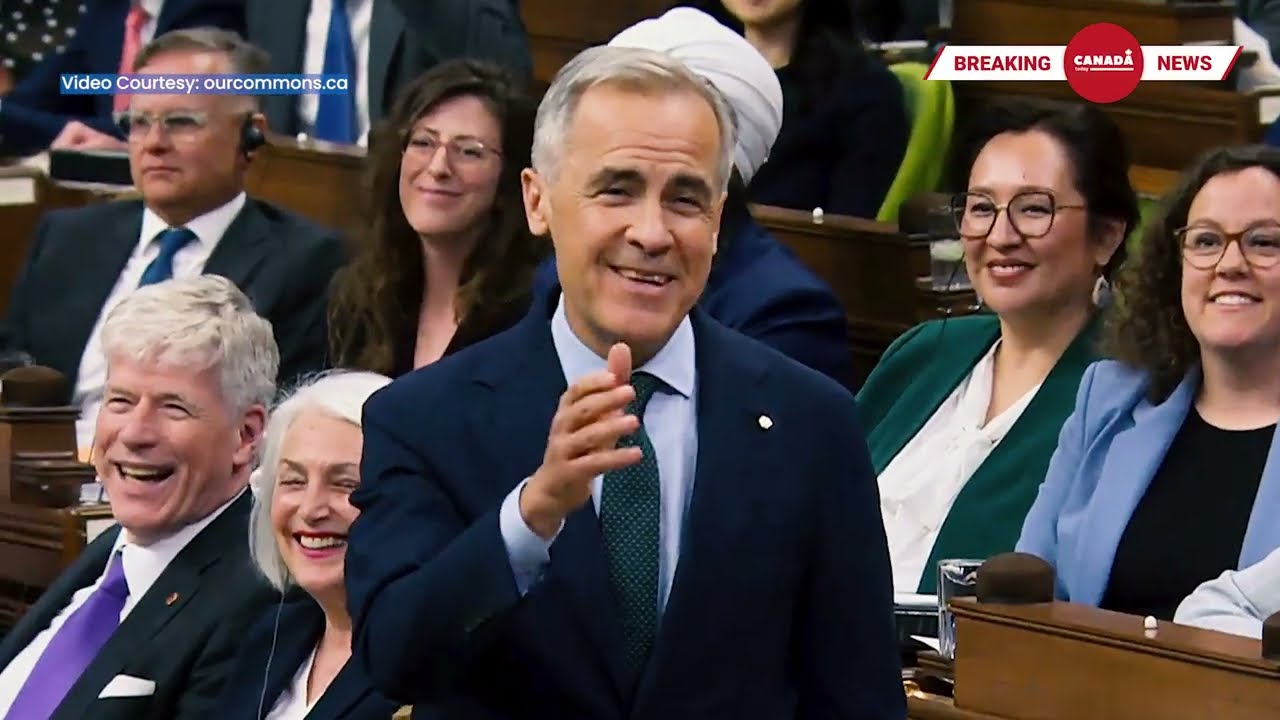
The opposition leader hammered relentlessly on a litany of domestic grievances that have plagued working families recently. He pointed aggressively to soaring gas prices, stubborn inflationary pressures, severe housing stress, and widespread financial anxiety. To Poilievre, these metrics were undeniable proof of a failing, detached liberal administration.
Yet, as the rhetorical arrows flew across the floor, Carney stubbornly refused to lose control of the crowded room. The stark contrast in their political styles became impossible for anyone in the gallery to ignore. While Poilievre projected explosive fury, Carney maintained a calm, almost chillingly professional composure.
Instead of panicking or stumbling over the aggressive line of questioning, Carney systematically reframed the entire economic narrative. He deliberately pulled a volatile conversation away from impending doom and focused firmly back toward rising wages. He anchored his defense in Canada’s long-term competitive position among all G7 nations.
This dramatic exchange was not merely a standard political shouting match between two highly ambitious partisan operatives. It represented a monumental, head-on collision between two entirely different visions of Canada’s future identity. One side chose to amplify deep frustration, while the other desperately tried to project stability.
Poilievre’s strategy relies heavily on channeling the genuine anger of citizens squeezed by global trade wars and inflation. He pointedly reminded the house of the more affordable Harper era when global oil prices were high. Yet, domestic fuel at the Canadian pump remained remarkably cheap for ordinary drivers.
Carney, acting as the prime minister’s chief defender, delivered a sharp, nostalgic counterpunch regarding those specific conservative years. He reminded voters that the previous conservative government historically opposed critical social programs like national subsidized childcare. He argued that modern Canadian families now heavily rely on these essential safety nets.
By shifting the focus, Carney cleverly forced the opposition onto a dangerous, highly speculative defensive footing. The central debate shifted from why current prices are high to what social benefits the conservatives might actually eliminate. This sophisticated rhetorical pivot effectively blunted Poilievre’s carefully constructed populist momentum during the opening round.
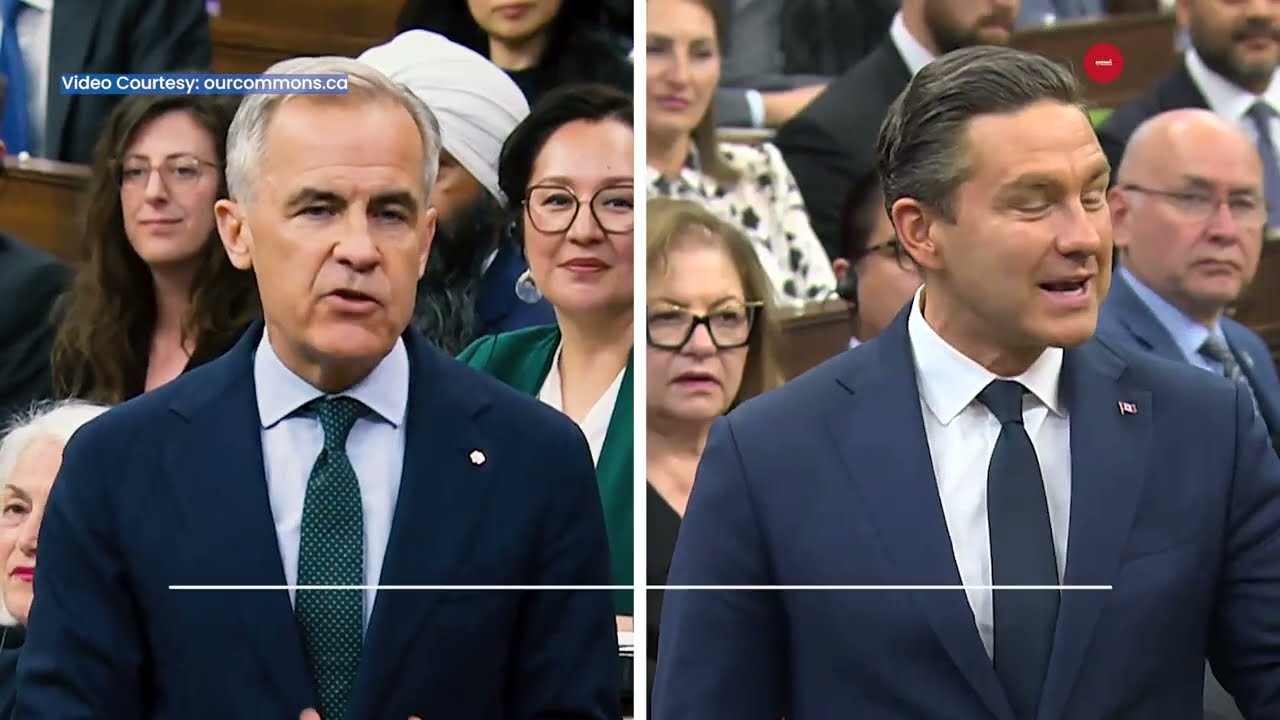
Undeterred, Poilievre quickly doubled down on the painful realities of soaring Canadian household debt and rising delinquencies. He cited recent Equifax data showing that insolvency volumes have skyrocketed to devastating levels not seen since 2009. He demanded to know why millions were missing essential monthly mortgage payments.
Carney responded not like a typical politician cornered by bad news, but rather like an economist under pressure. He cited concrete data showing Canadian wage growth outpaced inflation, and noted female employment exceeded American percentages. He painted a picture of a resilient nation weathering global storms with fiscal responsibility.
The debate grew even more tense when Poilievre introduced a highly sensitive legal controversy regarding Western property rights. He accused the government of instructing federal lawyers to abandon private homeowners in a recent British Columbia court case. He claimed seniors were tossing and turning, fearing for their land.
Recognizing the immense political danger of this property rights narrative, Carney moved aggressively to shut it down completely. He stated unequivocally that the federal government fundamentally disagreed with the provincial court’s unexpected native title ruling. He confirmed an official appeal was launched immediately to protect private property owners.
When Poilievre continued to press the issue using technical legal guidelines, Carney delivered his most effective political counter-response. He openly accused the opposition leader of deliberately inventing new, divisive ways to stoke societal fear. He reframed Poilievre’s entire strategy as a cynical attempt to fracture national cohesion.
This definitive exchange exposed the fundamental chasm between how these two powerful men believe Canada should be governed. Poilievre views his primary mission as exposing structural rot, amplifying public anger, and demanding immediate, sweeping systemic change. He believes the current economic trajectory is utterly unsustainable for regular citizens.
Conversely, Carney’s strategy is built entirely on projecting a sense of reassurance, institutional stability, and forward progress. He wants to convince an anxious electorate that despite immense global pressures, Canada’s foundation remains remarkably solid. He positions himself as the steady hand needed to navigate treacherous economic waters.
Whether voters ultimately accept Carney’s optimistic economic metrics or Poilievre’s dire warnings remains an open question. However, this parliamentary session proved that Carney is an exceptionally difficult target for the opposition to destabilize. His refusal to engage in emotional theatrics denies his enemies the chaos they crave.
International observers, including analysts in Washington and Brussels, are watching this intense political proxy war very closely. The outcome of this ongoing clash will likely dictate Canada’s fiscal policy for the next generation. It positions the nation either toward aggressive market populism or continued technocratic governance.
As the session drew to a close, the energy within the House of Commons remained thick with partisan friction. Neither side achieved a decisive knockout blow, but the lines of domestic political warfare were clearly drawn. The battle for the confidence of the Canadian electorate had entered a dangerous phase.
Outside the parliament buildings, regular Canadians continue to grapple with the daily realities of an expensive world. For them, the high-minded rhetoric of economic resilience must eventually translate into cheaper groceries and affordable housing. They watch the political theater in Ottawa with a mixture of hope and skepticism.
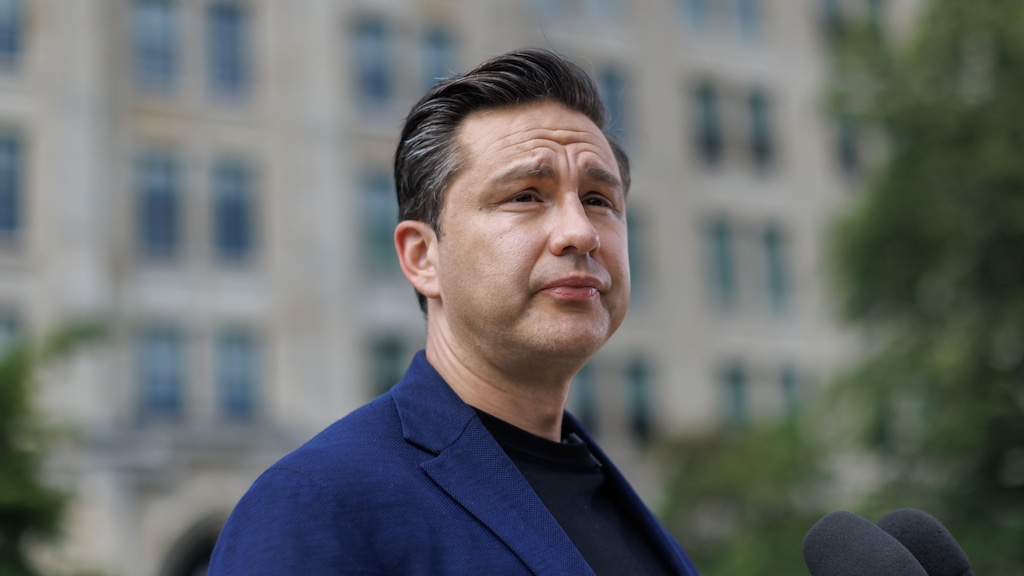
Poilievre’s team feels confident that the cold, hard data of inflation will eventually overwhelm Carney’s polished defense. They plan to keep hammering the government on pocketbook issues, believing that economic pain trumps theoretical G7 comparisons. Their ground game remains hyper-focused on the suburban working-class voter.
Meanwhile, the liberal apparatus is increasingly looking to Carney to redefine their tarnished brand before the next election. His performance today demonstrated that he can command the room and effectively push back against aggressive populist rhetoric. He is rapidly becoming the indispensable shield for a vulnerable government.
The strategic importance of this specific debate cannot be overstated for the future of the Liberal Party. With the prime minister facing low approval ratings, Carney’s prominent role suggests a calculated transition towards economic seriousness. He bridges the gap between traditional liberal social policy and rigorous, global financial management.
Conservative strategists are already adapting their attack lines to better counter Carney’s unflappable, numbers-driven debating style. They realize that standard political insults fail to stick to a man with an international banking pedigree. They must find ways to make his elite background look detached from reality.
This leaves the Canadian public with a fascinating choice between two highly competent, radically different ideological leaders. One offers the raw, vindicating anger of the forgotten class, promising to dismantle failed institutions. The other offers the steady, sophisticated guidance of a global expert determined to protect stability.
As the global economy faces continuing trade chaos and shifting geopolitical alliances, Canada’s internal stability is paramount. The parliamentary fireworks witnessed today are just the beginning of a long, exhausting campaign for the country’s soul. Both leaders know that any slip in composure could prove fatal.
Ultimately, the explosive debate proved that Mark Carney will not back down from a fight he believes in. His performance inside the house has solidified his position as a formidable political heavyweight in modern Canadian history. The opposition now knows they face a truly resilient and dangerous adversary.
The coming weeks will test whether Carney’s calm demeanor can hold under the weight of incoming economic data. If interest rates and housing costs continue to stress families, his theoretical arguments may lose their luster. The real test of his leadership style will happen in the grocery aisles.
For now, the government breathes a sigh of relief, having survived a potent challenge in the house. Carney has shown his colleagues how to stand firm against the populist tide without losing their dignity. The great Canadian political debate of this decade has officially begun, and the stakes are absolute.






