
The Strait of Hormuz crisis may have started thousands of kilometres away from North America — but the political aftershocks are now reaching deep into Washington, Ottawa, and global energy markets.
And according to a growing wave of analysts, commentators, and online speculation, Canada may have quietly emerged as one of the biggest strategic winners.
What initially appeared to be another international energy scare has rapidly evolved into something far larger: a renewed global obsession with energy security, supply chain control, and geopolitical stability.
For years, world powers built their economies around the assumption that global shipping routes would remain open, protected, and predictable.
But the latest tensions surrounding the Strait of Hormuz shattered that confidence almost overnight.
The narrow waterway, one of the most strategically critical energy corridors on Earth, handles a massive portion of the world’s oil exports every single day. Whenever instability threatens the region, global markets react instantly. Oil prices spike. Governments panic. Investors search for safer alternatives.
This time, however, something unexpected happened.
As concerns spread across international markets, political observers noticed that conversations inside policy circles increasingly began shifting toward one country: Canada.
Not Saudi Arabia.
Not Russia.
Not even the United States itself.
Canada.
For decades, Canada was often viewed internationally as a stable but secondary energy power — rich in resources, yet overshadowed by larger geopolitical players.
Now that perception may be changing faster than anyone expected.
Suddenly, Canada’s massive oil reserves, natural gas capacity, and critical mineral wealth are no longer being viewed as merely economic assets. They are being viewed as strategic leverage.
And Washington appears to be paying close attention.

Several analysts argue the crisis exposed a growing vulnerability inside the modern global economy: dependence on unstable overseas supply routes.
The more geopolitical tensions rise internationally, the more valuable politically secure energy suppliers become.
That reality places Canada in an unusually powerful position.
Unlike many major energy-producing nations, Canada offers something global markets desperately crave during periods of instability: predictability.
The country is politically stable.
Its infrastructure is deeply integrated with the United States.
Its energy sector already plays a major role in North American supply chains.
And most importantly, its resources remain enormous.
The implications of that combination are now fueling intense debate online and inside policy discussions alike.
Some commentators believe the Strait of Hormuz tensions may have accelerated a broader shift already taking place behind closed doors — the gradual push toward North American energy independence.
In this scenario, Canada becomes far more than simply America’s friendly neighbour.
It becomes a strategic necessity.
That possibility is precisely why discussions surrounding pipelines, LNG projects, critical minerals, and cross-border infrastructure have suddenly returned to the political spotlight.
Energy security is no longer just about economics.
It is becoming national security.
And moments of international instability tend to expose which countries hold the strongest long-term advantages.
According to several observers, Canada’s advantage lies not only underground in its resources, but geographically as well.
Unlike Middle Eastern shipping routes vulnerable to military escalation, Canada’s energy production remains physically distant from many of the world’s most dangerous geopolitical flashpoints.
That matters enormously during global crises.
Every time uncertainty spreads through international markets, governments begin reassessing where their energy truly comes from — and how secure those supplies actually are.
That reassessment is now creating new political conversations in Washington.
Questions are increasingly being raised about how dependent the United States could become on Canadian energy reliability during future disruptions.
Some analysts even argue American policymakers may have underestimated how strategically important Canada could become in an unstable world economy.
Others caution that many viral claims circulating online remain heavily exaggerated.
Still, even skeptics acknowledge the broader trend is real.
Energy security is once again dominating global geopolitical thinking.
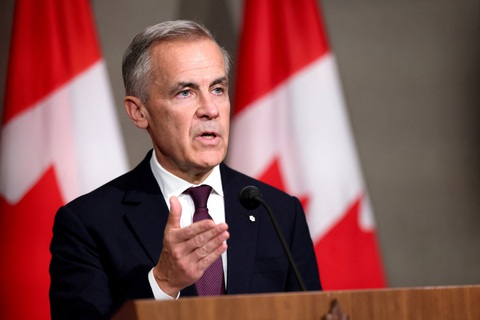
And Canada sits at the centre of that conversation far more than it did only a few years ago.
The online reaction has been explosive.
Social media platforms have become flooded with viral posts calling Canada an “emerging energy superpower,” while others claim the global balance of influence may be quietly shifting.
Some users describe the current moment as a turning point for North America.
Others dismiss the narrative as sensationalism amplified by economic fear and political uncertainty.
But regardless of which side people believe, one fact remains undeniable: global anxiety surrounding energy has returned in full force.
Inflation fears, fuel costs, manufacturing pressure, transportation expenses, and household affordability are all deeply connected to energy markets.
When supply chains become unstable, political consequences follow quickly.
That is why the Strait of Hormuz situation triggered such widespread concern in the first place.
Even the possibility of disruption can send shockwaves through financial systems worldwide.
And in moments like these, countries capable of guaranteeing long-term supply stability suddenly gain enormous geopolitical value.
Canada’s economic relationship with the United States already ranks among the largest and most integrated in the world.
The two nations are deeply connected through trade, manufacturing, energy infrastructure, and resource development.
But recent events have revived questions about whether the balance inside that relationship could slowly evolve over time.
Some political observers believe Ottawa could eventually gain stronger negotiating leverage in future trade and infrastructure discussions if demand for secure Canadian energy continues growing internationally.
That does not mean Canada suddenly replaces American influence.
Far from it.
The United States remains overwhelmingly dominant economically, militarily, and politically across the continent.
However, history repeatedly shows that global crises often reshape alliances, assumptions, and power dynamics faster than expected.
Moments of instability force governments to rethink long-term strategy.
And right now, one of the biggest strategic questions revolves around reliable energy access.
That conversation extends far beyond oil alone.
Critical minerals — essential for batteries, electric vehicles, military technology, and advanced manufacturing — are becoming increasingly important as well.
Canada possesses significant reserves of many of those materials, adding another layer to its growing strategic relevance.
The combination of energy resources, political stability, geographic security, and proximity to the American market creates a position few countries can easily replicate.
That is why analysts believe Washington’s attention toward Ottawa has intensified.
Not because Canada suddenly became a superpower overnight.
But because the global system itself is becoming more unstable.
And in unstable times, dependable partners become dramatically more valuable.
Experts continue warning against overhyping the situation.
There is no evidence of any sudden geopolitical realignment between Canada and the United States.
Nor is there proof that Canada now holds dominant leverage over Washington.
But recent events undeniably revealed how quickly strategic perceptions can change when global crises emerge.
Only months ago, many of these conversations remained largely confined to energy circles and trade specialists.
Now they are exploding across mainstream political discussion.
And the more uncertainty spreads internationally, the more attention Canada appears to receive.
For now, one conclusion seems increasingly difficult to ignore.
After the Strait of Hormuz crisis, Washington started looking at Canada differently.
And the rest of the world may be starting to do the same.






