Australia is once again at the center of a heated national debate after growing arguments online questioned whether migrants who constantly complain about the country should simply leave. What began as a few viral social media posts has now exploded into a much larger conversation about national identity, free speech, gratitude, and what it truly means to become Australian in 2026.
Many Australians argue that people who choose to move to Australia should appreciate the opportunities, stability, and freedoms the country offers. They believe Australia has provided millions of people with safety, jobs, education, healthcare, and a chance at a better life compared to many parts of the world. To them, constant criticism from newcomers can sometimes feel disrespectful toward the nation that welcomed them.
Others strongly disagree with the idea that migrants should remain silent simply because they moved to Australia. They argue that freedom of speech is one of the core values of modern democracy and that migrants have every right to express concerns about housing, racism, inflation, healthcare, wages, or government policy just like anyone else living in the country.
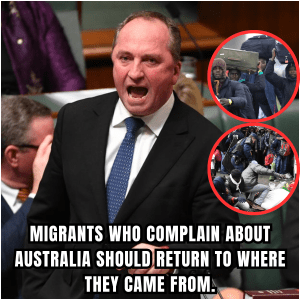
The debate has become especially emotional because Australia itself was built through generations of migration. From post-war European migrants to newer communities arriving from Asia, the Middle East, Africa, and South America, immigration has shaped Australia’s economy, culture, workforce, and identity for decades. Many people now argue that criticizing migrants for speaking out ignores the very history that built modern Australia.
Supporters of stricter attitudes toward migration say the issue is not criticism itself, but the tone and frequency of it. They claim some newcomers spend years attacking Australian culture, traditions, or institutions while continuing to benefit from living in the country. According to this argument, constructive feedback is acceptable, but constant negativity creates resentment among Australians already struggling through a difficult cost-of-living crisis.
At the same time, migrant communities often argue that raising concerns does not mean they hate Australia. Many say the reason they criticize certain issues is precisely because they care about the country and want to contribute to improving it. In their view, patriotism does not require blind loyalty or silence when problems exist.
The timing of this debate is important because Australia is facing growing economic pressure. Housing affordability has become one of the biggest political issues in the country, with rents rising sharply across major cities like Sydney and Melbourne. Inflation, mortgage stress, energy bills, and healthcare costs are putting enormous pressure on both long-term Australians and newer migrants alike.
As economic frustration grows, social tensions often become more visible. Some Australians feel migration levels are too high during a housing shortage, while others argue migrants are unfairly blamed for problems caused by government policy failures, poor infrastructure planning, and corporate pressures. This disagreement has made immigration one of the most emotionally charged issues in Australian politics.
Political commentators say the debate also reflects a larger global trend happening across many Western countries. Nations throughout Europe and North America are increasingly wrestling with questions about national identity, cultural integration, immigration levels, and social cohesion. Australia is now experiencing many of the same arguments seen overseas.
Supporters of stronger national expectations believe migrants should actively embrace Australian values, traditions, and social norms after arriving. They argue that successful multiculturalism depends on integration rather than communities remaining completely separate from broader Australian society. To them, gratitude toward Australia should naturally accompany the opportunities migrants receive.

Critics of that position warn the conversation can quickly become unfair or discriminatory if it crosses into telling migrants they are not allowed to voice concerns. They argue democracy becomes weaker when people are pressured into silence because of where they were born. Many believe migrants can both appreciate Australia and still criticize aspects of life they think need improvement.
Social media has played a massive role in intensifying the debate. Viral videos, short political clips, and emotional online posts often reduce complex social issues into aggressive slogans designed to generate outrage. As a result, many conversations quickly become hostile instead of constructive.
Some migrants have shared stories of working hard, paying taxes, building businesses, and contributing positively to Australia while still being told to “go home” whenever they criticize government policy. Those experiences have fueled anger among people who feel they are being treated as permanent outsiders no matter how much they contribute.
Meanwhile, many Australians born in the country say they feel frustrated when national traditions or values are mocked publicly by people who voluntarily chose to migrate there. They argue criticism should come with perspective and respect for the opportunities Australia still provides compared to many nations facing conflict, instability, or authoritarian governments.
The discussion has become particularly intense around younger generations. Many younger Australians, regardless of background, tend to support broader freedom of expression and multicultural inclusion. Older Australians, however, are often more likely to emphasize assimilation, shared national identity, and preserving traditional cultural values.
Economic pressures have only made these divisions sharper. During periods of prosperity, multicultural debates are often calmer because people feel financially secure. But when housing becomes unaffordable and wages fail to keep up with living costs, social frustrations can easily become connected to immigration and identity politics.
Some analysts believe Australia now faces a difficult balancing act. The country relies heavily on immigration for economic growth, skilled labor, universities, healthcare staffing, and population sustainability. At the same time, governments must maintain public confidence that migration levels remain manageable and socially cohesive.
Others argue the entire debate is being oversimplified. They point out that migrants are not one single group with identical beliefs, experiences, or attitudes. Many migrants themselves strongly support Australian traditions, stricter migration controls, and stronger integration policies. Likewise, many Australians born locally support open multiculturalism and welcome criticism as part of democracy.

The debate has also raised questions about what patriotism actually means in modern Australia. Some believe patriotism means defending the country from criticism and emphasizing loyalty. Others believe patriotism means wanting Australia to improve continuously, even if that requires difficult conversations about policy failures or social problems.
Public frustration toward politics is adding another layer to the issue. Many Australians feel governments have failed to manage housing, infrastructure, migration planning, and economic stability properly over the last decade. As a result, debates about migrants sometimes become proxy arguments for wider anger toward political leadership itself.
Despite the heated rhetoric online, many Australians still support multiculturalism overall. Australia remains one of the world’s most successful multicultural societies in terms of economic integration, social stability, and immigrant participation in public life. Millions of migrants have built successful businesses, careers, and families while contributing enormously to Australian society.
But the current debate shows that questions around identity, gratitude, belonging, and national culture remain deeply emotional. Australians are increasingly asking how a diverse society balances freedom of speech with social cohesion, and whether criticism strengthens democracy or risks dividing communities further.
In the end, the real issue may not be whether migrants should criticize Australia. The deeper question is whether modern Australia can continue maintaining both strong national unity and open democratic debate at the same time. That challenge is becoming more complicated as economic pressure, political polarization, and cultural tensions continue rising across the country.
One thing is certain: this conversation is not disappearing anytime soon. As Australia continues changing socially, economically, and politically, debates over migration, national identity, and freedom of expression are likely to remain at the center of public discussion for years to come.
So now Australians are asking themselves a difficult question. Is criticism from migrants a sign of disrespect toward the country that welcomed them? Or is it simply part of participating in democracy and helping shape a stronger future for everyone living in Australia today?






