The fragile political theater in Bucharest has officially devolved into an aggressive war of words, leaving Romania completely headless for over two weeks. As the government remains frozen, the former coalition partners are trading increasingly toxic insults instead of providing viable structural solutions for the country.
The president of the Social Democratic Party, Sorin Grindeanu, recently launched a scathing personal attack against the interim prime minister, Ilie Bolojan. Grindeanu publicly labeled Bolojan a “political zombie” and declared him “politically impotent,” blaming him entirely for the ongoing administrative deadlock gripping the state.
According to Grindeanu, the Liberal leadership lacks any concrete governing plan, relying solely on anti-PSD rhetoric to sustain its political survival. He argued that building an entire electoral campaign on constant bashing does absolutely nothing to improve the daily lives of hard-working Romanian citizens.
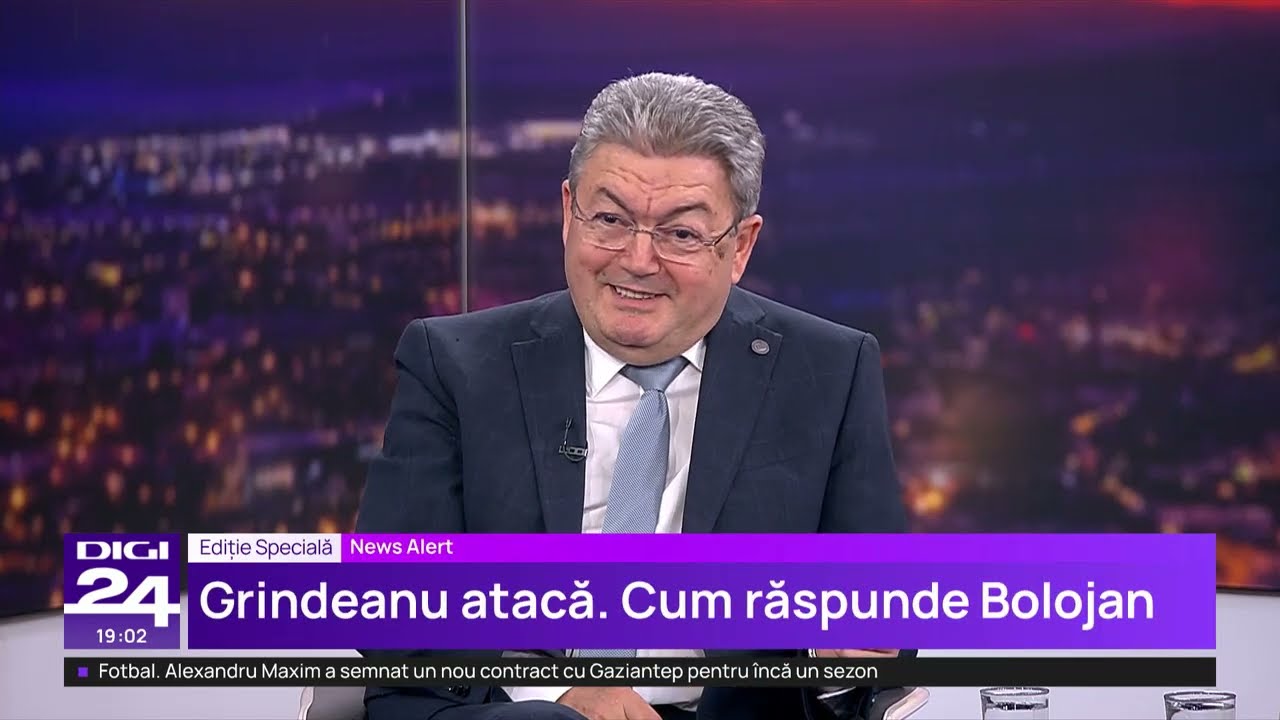
The response from the National Liberal Party was swift and equally unyielding, delivered by the prominent vice-president, Ciprian Ciucu. Ciucu vehemently described Grindeanu’s language as infantile, noting a profound lack of basic decency and institutional respect toward respected state officials.
“A true political zombie is someone whose public trust has plummeted into single digits, well below the ten percent threshold,” Ciucu retorted. He emphasized that, unlike his critics, Ilie Bolojan still enjoys substantial confidence among the population, according to recent sociological data.
Amidst this bitter political crossfire, independent analysts warn that the country is sinking deeper into a catastrophic financial abyss. Romania urgently needs a fully functional, politically backed prime minister capable of implementing tough structural reforms right now to avoid total bankruptcy.
Political analyst Marian Preda pointed out the supreme irony of the Social Democrats initiating a successful motion of no confidence. Preda stated that after bringing down the previous cabinet alongside AUR, the PSD has a fundamental democratic obligation to assume governing responsibility.
Instead of stepping forward, the Social Democrats seem to be fleeing from the burden of governance like the devil from holy water. This strategic cowardice is actively dragging down their poll numbers, as the public grows exhausted with empty political theater and endless finger-pointing.
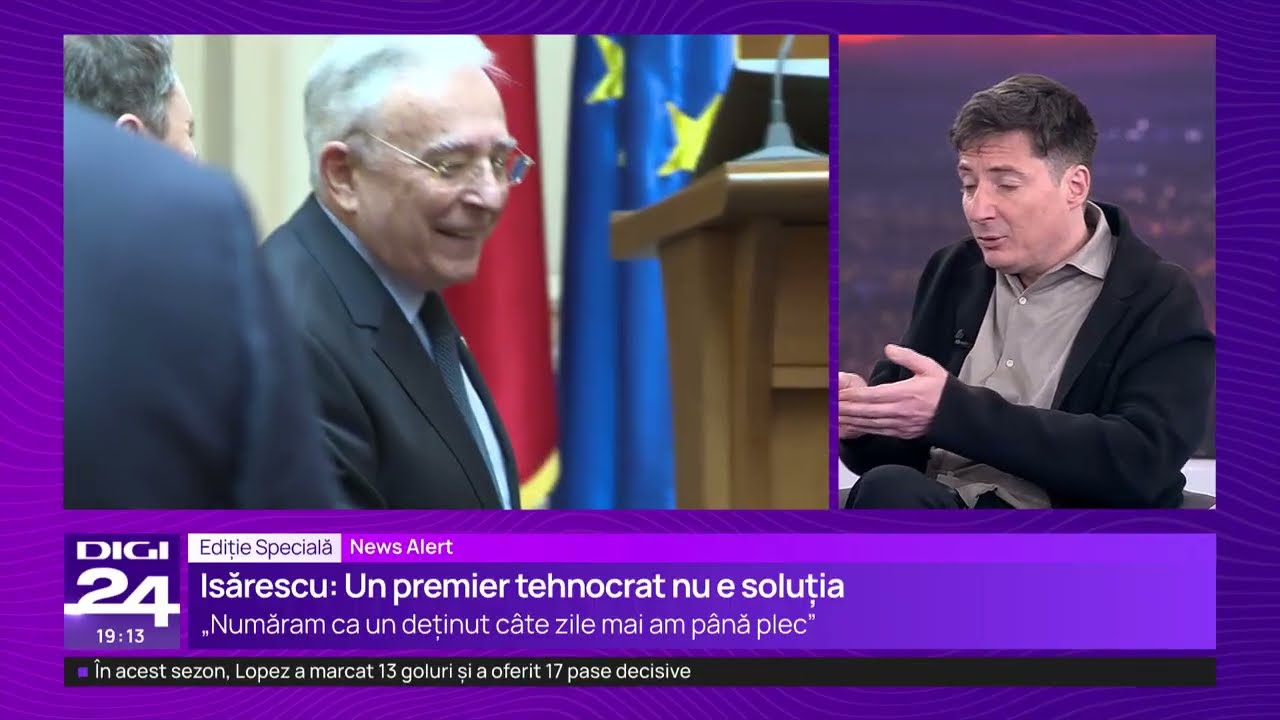
The talk of a technocratic savior has also gained traction, a scenario floating through the offices of President Nicușor Dan. However, this specific path was completely dismantled this week by the long-standing governor of the National Bank, Mugur Isărescu, citing historical precedents.
Isărescu, who served as a technocrat prime minister between 1999 and 2000, shared his bitter, isolating experience at Palatul Victoria. He vividly described counting the days left in his mandate like a literal prison inmate, abandoned by the cold, calculating political class.
“As a prime minister in Romania, you need eyes in the front, the sides, and especially in the back,” Isărescu warned. Without solid political backing in Parliament, any external technocrat will find themselves talking into a complete void, unable to enforce critical economic decisions.
The core issue, as economic expert Andrei Caramitru rightly notes, is the political class’s stubborn, absolute refusal to face macroeconomic reality. Romania is running a massive, unsustainable fiscal deficit that requires immediate spending cuts and the closure of corrupted financial pipelines.
Politicians dream of the golden past when cheap foreign money flowed freely, inflation was low, and the national economy grew smoothly. Today, those resources are completely gone, yet the populist leaders refuse to accept the painful treatment required to heal the state budget.
International rating agencies like S&P and Fitch have already issued severe, final warnings regarding Romania’s highly volatile financial trajectory. If the country fails to implement the strict reforms agreed upon with the European Union, it risks losing its investment-grade status.
The financial stakes are massive, with roughly sixteen billion euros from the SAFE program and vital PNRR funds hanging in the balance. Giving up on these critical European funds simply because parties refuse to govern represents absolute, pure madness for a modern state.
Without the next ten billion euro tranche from the PNRR, the national budget cannot be closed under any realistic scenario. If the political crisis triggers a junk rating, foreign funding will dry up completely, leaving no money for pensions and public salaries.
Governor Isărescu also delivered another grim piece of news today, predicting that inflation will peak at eleven percent this July. This massive surge in prices will heavily penalize ordinary citizens, drastically eroding their purchasing power during a turbulent summer season.
The central bank warned that its projections are strictly tied to a rapid return of political and governmental stability in Bucharest. Furthermore, any prolonged panic could cause a devastating ten percent devaluation of the leu, adding even more fuel to the inflationary fire.
Journalist Ion M. Ioniță explained that Grindeanu’s aggressive outbursts actually mask a deep, paralyzing frustration within the social democratic camp. Their master plan to easily share the state resources in a revived USL-style coalition has completely shattered against unexpected internal resistance.
The local barons are putting massive pressure on the central leadership, demanding a swift return to the national distribution of wealth. Yet, the Liberals refuse to return to the old ways, leaving the PSD stranded without an obvious, mathematically viable parliamentary majority.
A close look at the parliamentary numbers reveals a highly complex, almost impossible equation for a minority Social Democratic government. Even with the Hungarian Democratic Union and various minor factions, the PSD still falls significantly short of the required threshold.
Furthermore, the UDMR has firmly stated it will not support any cabinet that relies on votes from radical, Euroskeptic parties. These rigid mathematical limitations turn the formation of a stable executive into an impossible mission under the current legislative configuration.
In this gridlock, President Nicușor Dan has concluded an initial round of consultations at Cotroceni without announcing a definitive prime ministerial nominee. Critics accuse the president of lacking a proper sense of urgency, letting valuable time slip away during a national crisis.
While countries like Belgium can survive long periods without a formal government, Romania’s vulnerable economy simply cannot afford this luxury. Major infrastructure projects, including crucial highways and railway lines, are currently frozen, waiting for an executive with full constitutional powers.
Given the total deadlock, Marian Preda suggests that snap elections might eventually become the only viable, cleansing solution for the country. Although highly costly and time-consuming, an early ballot would effectively reset the political scene and break the current institutional paralysis.
However, most members of Parliament will fiercely oppose snap elections to protect their comfortable, highly lucrative seats until late 2028. Therefore, the country remains hostage to their personal survival instincts, moving blindly toward a predictable, catastrophic economic wall.
Andrei Caramitru openly questioned why President Nicușor Dan is willingly taking the entire public blame for a crisis he did not cause. He argued that the hot potato should be thrown directly into the lap of the PSD and their tactical allies.
“Sorin Grindeanu caused this massive mess alongside AUR, so he should be officially tasked with finding a working majority,” Caramitru stated. Forcing the instigators of the crisis to negotiate publicly would quickly expose their absolute lack of coherent alternatives for Romania.
Instead, the political class continues to feed the public daily lies on television, completely detached from the harsh reality in the streets. But as history shows, reality always wins in the end, and bread cannot be bought with empty political slogans.
The upcoming weeks will be decisive for the immediate financial survival of the Romanian state and its long-term European integration. Without an immediate, mature political truce in Bucharest, the country faces a severe economic collapse that will spare absolutely no one.






