The meeting was supposed to be routine.
American negotiators arrived believing the numbers were already too attractive for Canada to resist. The proposal had taken months to prepare: long-term supply guarantees, stable refinery access, pricing mechanisms, transportation coordination, and a framework designed to lock North American oil flows together for decades.
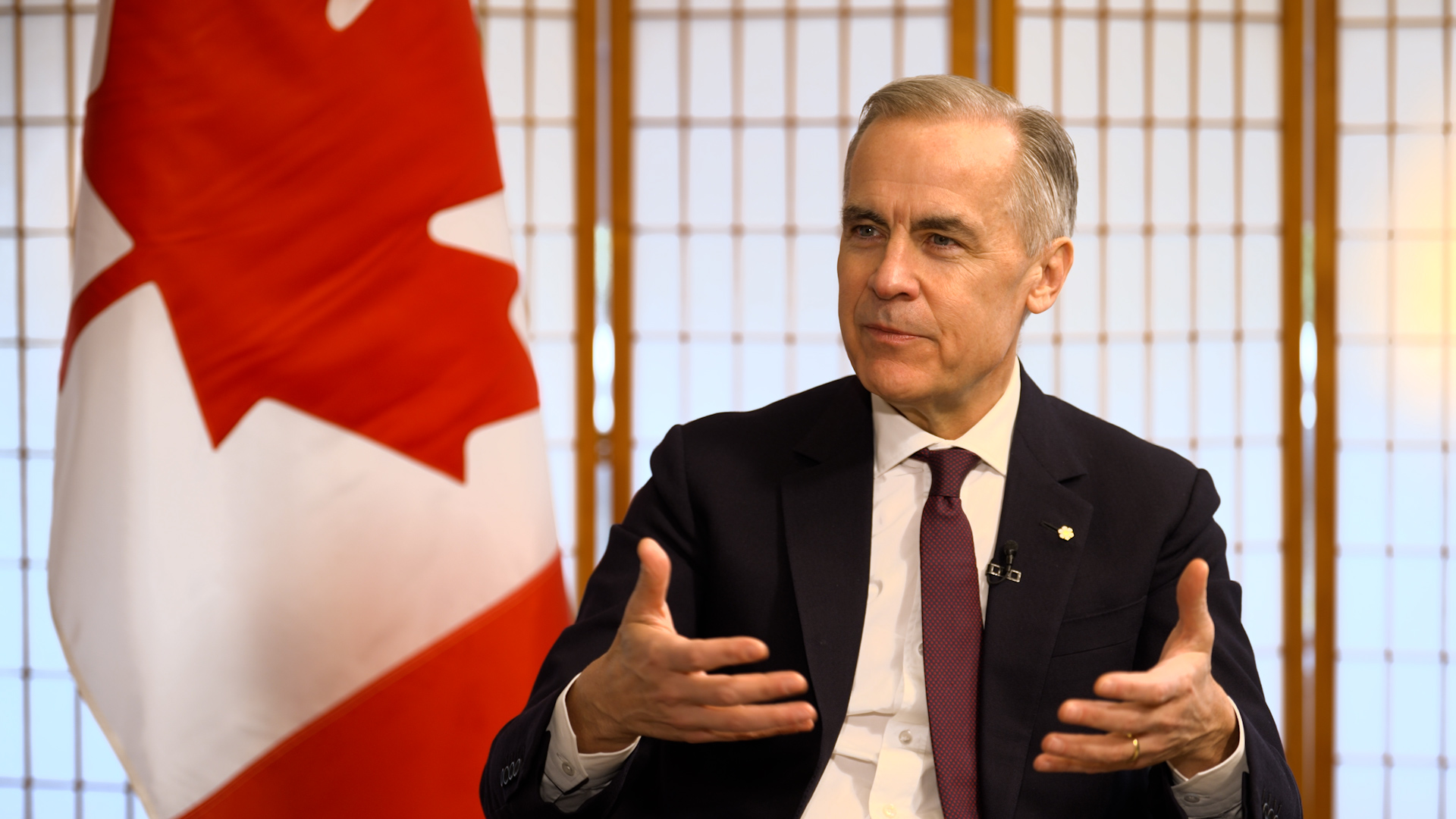
Instead, according to insiders familiar with the discussions, Prime Minister Mark Carney reportedly stopped reading after page seven.
He closed the folder, delivered a short response, and walked away.
What happened next sent shockwaves through energy markets on both sides of the border.
Because this was never just about one pipeline deal.
It was about a realization spreading quietly through Washington, Texas, Alberta, and global oil markets at the same time: Canada may no longer need the United States the way it once did.
For decades, the relationship looked one-sided.
Canada exported crude. America refined it. U.S. buyers dictated prices, infrastructure access, and transportation terms. Canadian producers often had few alternatives because almost every major export route flowed south.
That imbalance gave Washington enormous leverage.
But over the last two years, something changed beneath the surface.
The completion of the Trans Mountain Expansion pipeline transformed Canada’s position almost overnight. The expansion increased capacity to approximately 890,000 barrels per day and dramatically expanded direct access to Pacific export markets.
Before the expansion, Canada had limited ability to bypass U.S. buyers. After it, tankers carrying Canadian crude began leaving the Port of Vancouver for Asia at a pace few analysts expected.

According to the Canada Energy Regulator, exports to non-U.S. markets surged after the project entered service. Canadian crude exports to overseas buyers more than tripled, while marine exports jumped roughly 72% in 2024 alone.
And then came the biggest surprise.
China rapidly emerged as one of the largest buyers of Canadian crude moving through the system. Reuters reported that Chinese imports through the Trans Mountain route rose to around 207,000 barrels per day, compared with only about 7,000 barrels per day before the expansion.
That single shift changed the negotiating psychology entirely.
For years, U.S. refiners assumed Canada had no realistic alternative market for its heavy crude. Suddenly, Asia was competing for those barrels.
That matters because American refineries — especially along the Gulf Coast and in the Midwest — were designed around heavy crude imports.
And Canada supplies a massive portion of them.
In 2024, Canada exported roughly 4.2 million barrels per day of crude oil, with the overwhelming majority still flowing into the United States. Heavy oil accounted for nearly 79% of those exports.
Much of that crude feeds refineries specifically configured for heavier grades that are harder to replace quickly.
For years, U.S. operators benefited enormously from this arrangement. Canadian oil often traded at a discount to global benchmarks, allowing American refiners to buy cheaper crude, process it domestically, and profit from the spread.
But diversification changes bargaining power.
Suddenly, Canadian producers are no longer forced to accept whatever pricing terms the U.S. market offers.
That is exactly why reports of Carney rejecting a major U.S.-backed framework created such anxiety in energy circles.
The fear wasn’t immediate shortages.
The fear was strategic.
Because once suppliers gain options, leverage starts disappearing.
Texas refineries understood the implications almost immediately.
Heavy crude systems cannot simply switch overnight to lighter American shale oil from the Permian Basin. Retooling facilities can take years and cost billions. Industry analysts have repeatedly warned that many Gulf Coast refineries remain structurally dependent on heavy imports from Canada and, historically, Venezuela.
And Venezuela remains politically unstable, sanction-sensitive, and unpredictable.
That leaves Canada in a uniquely powerful position.
The irony is striking.
For decades, Canadians were told their country was economically trapped by geography — that access to the American market was both unavoidable and permanent.
Now geography is starting to work differently.
The Trans Mountain system has effectively opened Canada’s Pacific door.
According to the Canada Energy Regulator, approximately 23 vessels per month have been departing from the Westridge terminal carrying Canadian crude to overseas markets since the expansion entered service.
Meanwhile, Canada’s overall oil production continues climbing.
The country produced a record 5.1 million barrels per day in 2024, making it the world’s fourth-largest crude producer behind only the United States, Saudi Arabia, and Russia.
And additional expansion plans are already under discussion.
Trans Mountain has publicly examined projects that could add another 200,000 to 300,000 barrels per day of capacity in coming years.
Enbridge is also exploring new expansion phases that could move even larger Canadian volumes toward Gulf Coast export hubs and international markets.
That means the balance of power may continue shifting.
Not instantly.
Not completely.
But unmistakably.
The United States still remains Canada’s dominant energy customer by a huge margin. Around 93% of Canadian crude exports still went to the U.S. in 2024.
Yet markets care less about current numbers than future trajectories.
And the trajectory is obvious.
Canada is building optionality.
That optionality weakens Washington’s traditional negotiating advantage.
It also explains why American officials increasingly view Canadian energy diversification with concern rather than indifference.
Because once Asian buyers start bidding directly against U.S. refiners, the economics change fast.
Canadian producers gain pricing power.
Discounts narrow.
Margins shift.
Refineries lose certainty.
Even some Canadian companies have openly acknowledged the benefits already appearing from improved export access.
Imperial Oil said stronger transportation options created structural advantages for the Canadian market after the Trans Mountain expansion entered service.
Suncor similarly highlighted how expanded Pacific access improved market flexibility and export opportunities into Asia and the U.S. West Coast.
This is why the reported pipeline rejection mattered far beyond a single contract.
It symbolized something larger:
Canada is beginning to negotiate like an energy power with alternatives instead of a supplier trapped in one market.
And Washington knows it.
That does not mean the U.S.-Canada energy relationship is collapsing. Far from it.
The two economies remain deeply interconnected. American infrastructure still depends heavily on Canadian crude flows, while Canada still relies enormously on U.S. refining capacity, pipelines, and buyers.
But dependence is no longer moving in only one direction.
That is the real story.
For years, many Americans assumed Canada needed access to the U.S. market more than the U.S. needed Canadian oil.
Now even energy traders in Texas are being forced to reconsider that assumption.
Because when Carney reportedly closed that proposal after seven pages, the message wasn’t simply “no.”
The message was that Canada finally has enough leverage to say it.






