Grover Accuses Gillard of ‘Disastrous Legacy’ Over Sex Discrimination Act Changes
MELBOURNE, Australia — Sall Grover, the embattled founder of the women-only social network Giggle, has leveled her most significant political accusation yet, pointing the finger at former Prime Minister Julia Gillard — Australia’s only female leader — for what Grover calls a “disastrous legacy” stemming from changes to the Sex Discrimination Act.
In a series of interviews and social media posts following her explosive appearance at CPAC Brisbane, Grover has argued that amendments to the landmark legislation made during Gillard’s tenure laid the legal groundwork for what she describes as the erasure of sex-based rights for women.
“Julia Gillard was supposed to be a champion for women,” Grover said in an interview with a conservative podcast. “Instead, she changed the Sex Discrimination Act in ways that opened the door to redefining what a woman is. That is not progress. That is betrayal. And it is a disastrous legacy that Australian women will be dealing with for decades.”
The amendments in question were part of the Gillard government’s 2013 overhaul of the Sex Discrimination Act, which for the first time explicitly included “gender identity” as a protected attribute. The changes were widely celebrated by LGBTQ advocates at the time as a landmark step forward for transgender and gender-diverse Australians.
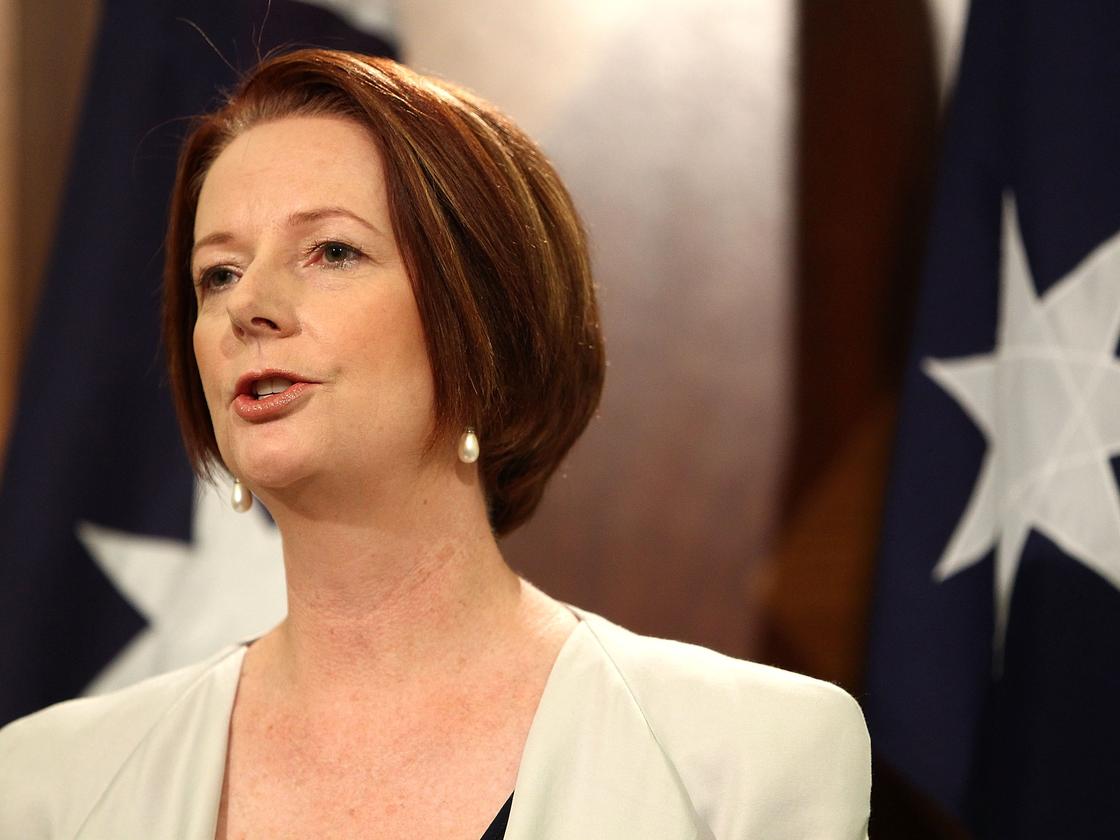
But Grover and other gender-critical feminists have long argued that the 2013 amendments created a legal conflict between sex-based protections and gender-identity-based protections — a conflict that they say has increasingly been resolved in favor of the latter.
“When you put ‘gender identity’ into the same legislation as ‘sex,’ you create a competing set of rights,” Grover said. “And courts and tribunals have consistently ruled that gender identity trumps sex. That means women’s spaces, women’s sports, women’s refuges — all of it is now up for grabs.”
Gillard, who left politics in 2013 and has since pursued a career in international education and global governance, has not directly responded to Grover’s accusations. But a spokesperson for the former prime minister issued a brief statement rejecting the characterization.
“The Sex Discrimination Act amendments of 2013 were designed to protect all Australians from discrimination, including transgender Australians,” the statement read. “Julia Gillard remains proud of that legacy and of her lifelong commitment to women’s rights.”
The exchange has reignited a long-simmering debate within Australian feminism, pitting those who argue that the Gillard amendments were an essential expansion of human rights against those who contend that they inadvertently undermined sex-based protections.
“This is a debate that cuts to the very core of what feminism means in the 21st century,” said Dr. Eleanor Tran, a professor of gender studies at the Australian National University. “For one side, protecting transgender women is an extension of feminist principles. For the other, it is a dilution of those principles. And both sides claim the mantle of Gillard’s legacy.”
The political timing of Grover’s accusation is significant. Gillard, though long out of office, remains a beloved figure within the Labor Party and among many Australian women who remember her as a trailblazer who endured relentless sexist attacks during her time as prime minister. To criticize Gillard is, for many, to cross a sacred line.
“Julia Gillard is not just a former prime minister,” said Tran. “She is a symbol. For Grover to attack her is to attack something that many Labor women hold sacred. That is not accidental. That is strategic.”
Grover, who has become a lightning rod in Australia’s culture wars, appears undeterred by the potential backlash. In her CPAC speech, she referred to Gillard’s government as “a lost opportunity for real feminism.”

“We had our first female prime minister,” Grover said. “And what did she do? She did not strengthen protections for women. She diluted them. She prioritized ideology over biology. And Australian women are still paying the price.”
Supporters of the Gillard amendments have pushed back forcefully. The Australian Human Rights Commission, which advised on the 2013 changes, issued a statement affirming that “protecting sex and gender identity are not mutually exclusive.”
“Individuals can experience discrimination on multiple grounds,” the statement read. “The amendments were designed to ensure that all forms of discrimination are addressed, not to create a hierarchy of protected attributes.”
Transgender advocacy groups have also condemned Grover’s remarks. “This is not a debate about legal technicalities,” said Felicity Marlowe, a spokesperson for Trans Justice Australia. “This is an attack on the very existence of transgender people. Grover is using Julia Gillard’s name to launder anti-trans rhetoric. It is transparent and it is harmful.”
But Grover’s supporters have rallied to her defense, arguing that she is raising a legitimate legal question that deserves public debate. “Why is it controversial to ask what the word ‘woman’ means?” asked one commentator on social media. “That is not hate. That is a question.”
The legal landscape that Grover is critiquing is complex. The Sex Discrimination Act 1984, as amended, now defines “sex” and “gender identity” as distinct protected attributes. In practice, this means that a woman’s complaint about sharing a changing room with a transgender woman could potentially be framed as discrimination on the basis of gender identity if the transgender woman is excluded, or on the basis of sex if the complaining woman is denied a single-sex space.
Courts have not yet definitively resolved how to balance these competing claims. And that ambiguity, Grover argues, is precisely the problem.
“Gillard created a legal minefield,” Grover said. “And now women are stepping on mines every single day. They lose jobs. They lose access to services. They lose their voices. And they are told that this is progress.”
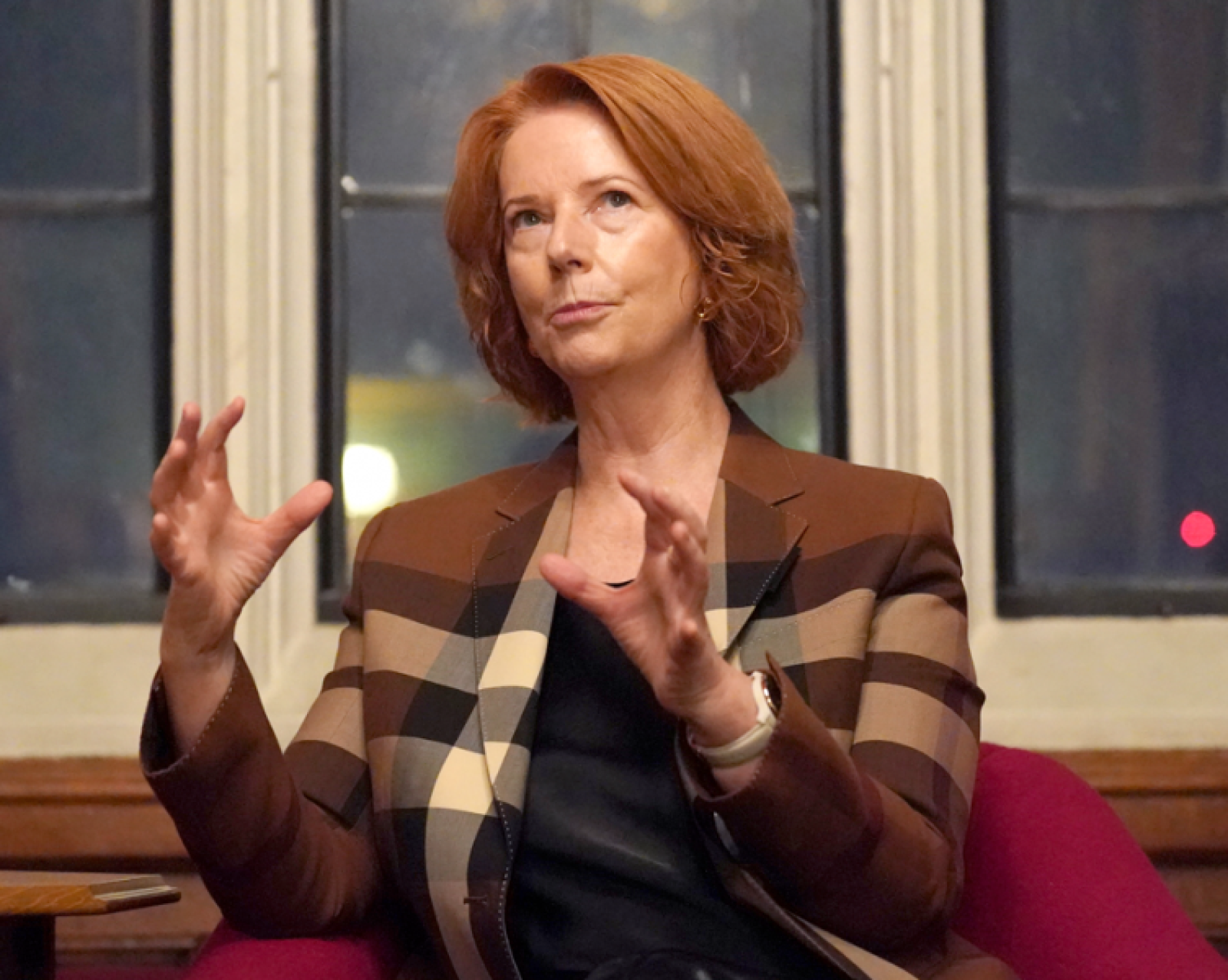
Gillard’s allies have dismissed such claims as alarmist. “The Sex Discrimination Act has been used to protect women for decades,” said a former Gillard advisor who spoke on condition of anonymity. “The 2013 amendments did not remove a single protection. They added protections. That is not a disaster. That is an expansion of human rights.”
The debate has also taken on a generational dimension. Younger feminists, particularly those active on college campuses and in digital spaces, are far more likely to support transgender-inclusive policies. Older feminists, particularly those who came of age during the women’s liberation movements of the 1960s and 1970s, are more divided.
“This is not just a legal debate,” said Dr. Tran. “It is a debate about what feminism is for. Is it for all women, including transgender women? Or is it for a specific, biological definition of womanhood? Those are two very different answers, and they lead to two very different politics.”
Grover, for her part, has shown no willingness to compromise. In a follow-up post on X, she wrote: “Julia Gillard failed Australian women. That is not an opinion. It is a fact. And one day, history will remember her for it.”
That day has not yet arrived. Gillard remains widely respected across the political spectrum, even by many who disagree with her policies. But Grover’s accusation has planted a question that is unlikely to disappear: What does it mean for the country’s only female prime minister to be associated with changes that some women now see as a betrayal?
As the debate continues to unfold, both Grover and Gillard have become symbols — one of resistance, the other of establishment feminism. Their clash is not personal, exactly. It is philosophical. And it is far from over.






