The War the West Is Learning to Ignore
For much of 2022, the war in Ukraine dominated the Western imagination.
Every missile strike on Kyiv became a breaking-news banner. Every speech by President Volodymyr Zelensky felt like a defining moment in the defense of democracy. Television anchors stood in flak jackets outside apartment blocks blackened by Russian rockets. Editorial pages spoke in moral absolutes.
Now, even as Russian strikes intensify again, Ukraine is increasingly fighting for something more elusive than weapons or sanctions: attention.


In recent weeks, Russia has launched some of its heaviest bombardments of Kyiv in months, flattening residential buildings and killing civilians, including children. Ukrainian officials described one recent attack as among the deadliest on the capital this year. (KPBS Public Media)
Yet on many Western front pages, the war no longer leads.
Iran. American politics. Trade disputes. Elections. Financial markets. Domestic violence. Cultural outrage. These stories now push Ukraine lower in the hierarchy of urgency.
It is not that the war has ended.
It is that audiences have adapted to its permanence.
Editors rarely say this publicly, but the economics of attention shape modern journalism as much as ideology does. A war that once shocked readers now competes against an endless stream of crises optimized for outrage, novelty and immediacy.
And war, when prolonged, risks becoming routine.
That reality was acknowledged bluntly in the conversation above by commentators and journalists who have watched Western interest decline in real time. Producers who once requested daily appearances on Ukraine now call less frequently. International desks that once prioritized battlefield updates increasingly chase stories with stronger engagement metrics.
The logic is painfully simple: readers click less on stories they believe they already understand.
Buildings destroyed. Civilians killed. Air raid sirens. Another night in Kyiv.
The tragedy remains immense. But repetition dulls emotional impact.
This is one reason why journalists covering Ukraine increasingly rely on human-scale narratives rather than casualty figures alone. A café owner reopening the morning after a missile strike may generate more attention than statistics about dozens killed overnight.
In media terms, intimacy travels further than abstraction.
But the consequences of declining attention extend far beyond newsroom strategy.
Ukraine’s leaders fear that reduced visibility gradually normalizes Russian violence. If attacks become background noise rather than international emergencies, Moscow gains strategic room to continue the war indefinitely.


Russia insists it targets military infrastructure. Ukrainian officials and independent observers say the reality on the ground often tells a different story.
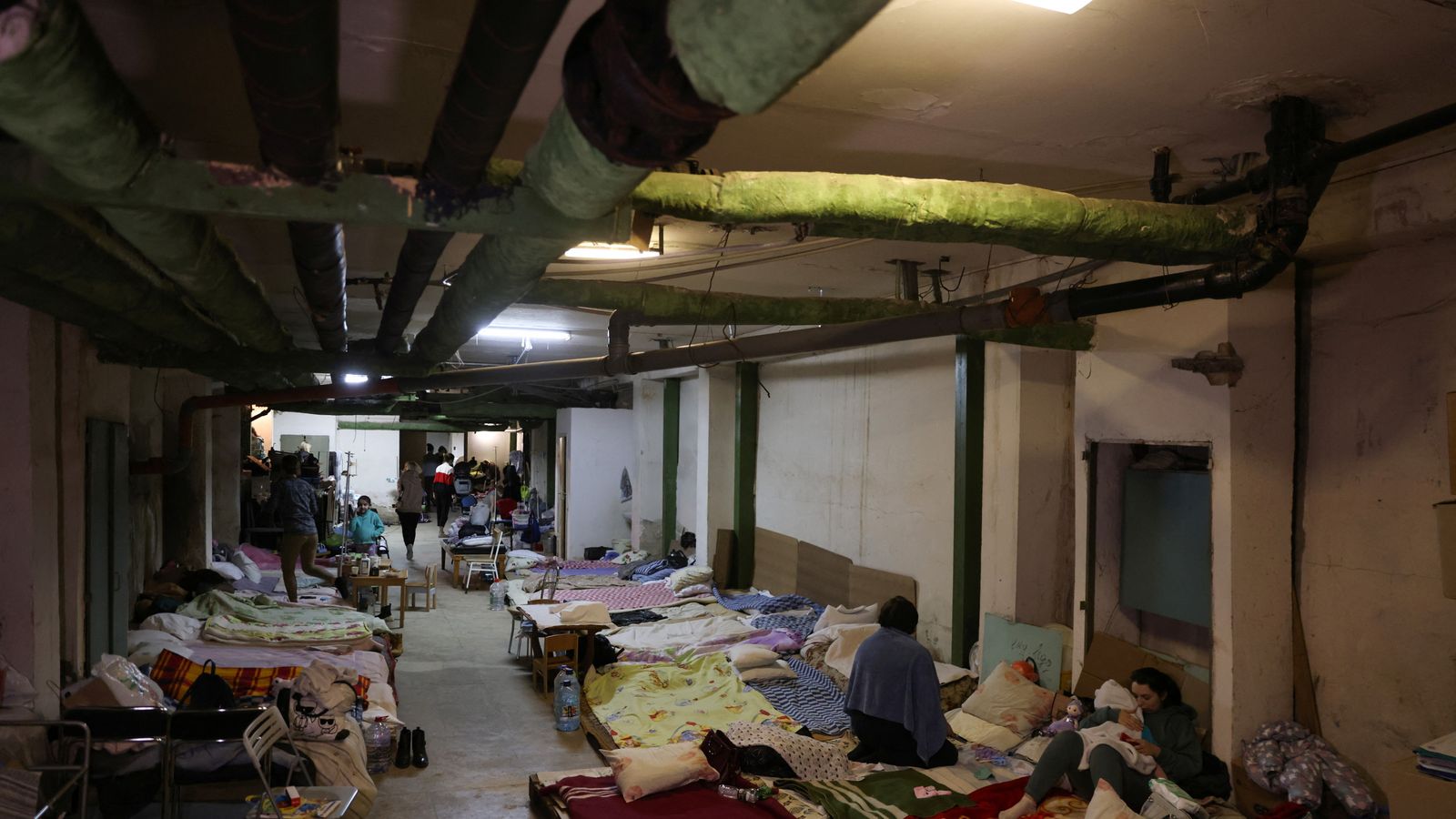
Residential neighborhoods continue to suffer repeated strikes. Rescue workers still dig through rubble for survivors. Civilians still spend nights underground in metro stations and shelters. (RBC Ukraine)
The Kremlin’s broader strategy appears increasingly focused on pressure rather than decisive territorial breakthroughs.
On the battlefield, Russian advances remain costly and uneven. Ukrainian resistance in regions like Donetsk and Zaporizhzhia continues to slow Moscow’s ambitions. Analysts note that while Russia retains significant offensive capacity, it has struggled to translate attritional warfare into transformative gains.
Unable to secure rapid victories, Russia has intensified long-range strikes designed to exhaust Ukrainian society psychologically as much as militarily.
The objective may not necessarily be immediate surrender.
It may simply be erosion.
Erosion of morale. Erosion of infrastructure. Erosion of international patience.
Russian officials have continued to frame peace proposals around territorial concessions Ukraine refuses to accept. Meanwhile, diplomatic efforts increasingly appear stalled.
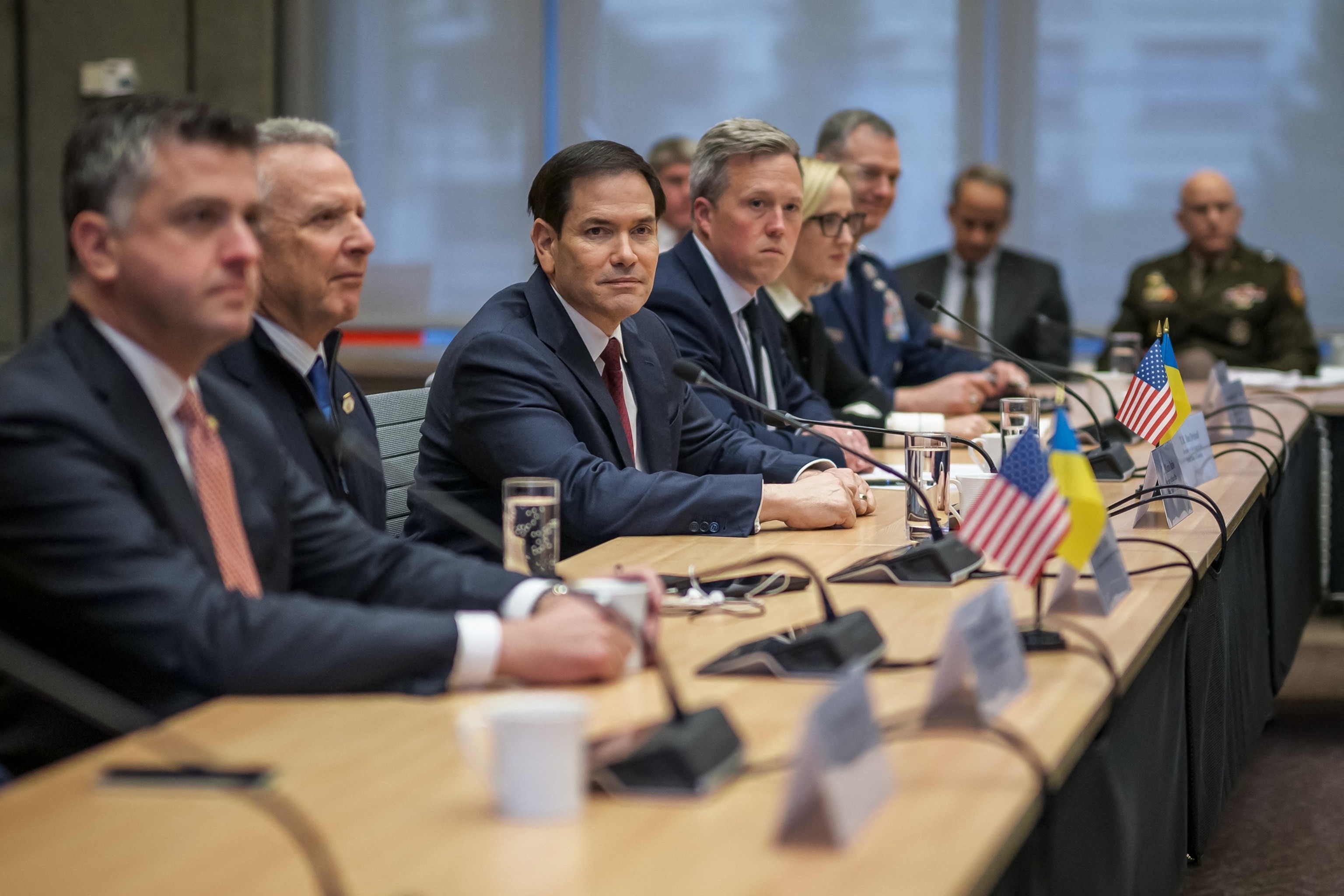
Secretary of State Marco Rubio recently signaled a more restrained American posture, suggesting Washington would no longer aggressively mediate unless both sides demonstrated genuine willingness to negotiate. That shift reflects a broader fatigue inside parts of the American political establishment.
The United States remains Ukraine’s most important military partner, but the political energy surrounding the conflict has undeniably changed.
In 2022, supporting Ukraine was framed as a defining global cause.
By 2026, it competes with a crowded landscape of domestic anxieties and geopolitical distractions.
And then there is China.
For Beijing, the war has evolved into something strategically useful: a prolonged conflict that weakens Russia’s dependence while strengthening China’s leverage over Moscow.


Recent meetings between Xi Jinping and Vladimir Putin projected public unity, but beneath the symbolism lies an increasingly unequal relationship. China possesses the stronger economy, greater industrial capacity and broader strategic flexibility. Russia, isolated by sanctions and drained by war, has become the junior partner.
Western analysts increasingly describe the partnership less as an alliance of equals than as a hierarchy shaped by dependency.
China continues purchasing Russian resources and supplying economic lifelines, but cautiously. Beijing appears determined to benefit from Moscow’s vulnerability without fully inheriting its geopolitical burdens.
That imbalance was reflected in discussions surrounding pipeline agreements and financial support. Despite public declarations of friendship, China has shown limited enthusiasm for deep commitments that would expose it to greater economic risk.
Russia needs China far more than China needs Russia.
The symbolism surrounding recent diplomatic meetings has also drawn attention. Some observers noted the use of “Swan Lake” imagery during high-profile Russian-Chinese encounters — a cultural reference loaded with historical resonance in the post-Soviet world.
During the collapse of the Soviet Union in 1991, state television famously broadcast performances of “Swan Lake” during moments of political crisis and uncertainty.
Today, critics of the Kremlin invoke the ballet as shorthand for eventual systemic collapse.
Whether intentional or not, such symbolism feeds growing speculation about Russia’s long-term trajectory.
Because beneath the patriotic rhetoric and military mobilization, Russia faces mounting structural strain.
Sanctions have damaged industrial sectors. Military stockpiles have been depleted. Recruitment pressures continue to intensify. The war economy sustains production, but often at enormous long-term cost.
Some analysts believe Russia can continue fighting for years.
Others argue the deeper threat lies not in sudden collapse but in gradual hollowing-out: an increasingly militarized state sacrificing future economic stability for short-term wartime survival.
Belarus illustrates part of that danger.
The country’s economy has weakened substantially since the contested 2020 election and subsequent alignment with Moscow’s invasion strategy. Sanctions, emigration and political repression have drained both capital and talent. Opposition leader Sviatlana Tsikhanouskaya’s recent visit to Ukraine symbolized an attempt to reinsert Belarusian democratic opposition into the broader anti-Kremlin narrative.
Yet even supporters acknowledge the opposition movement faces difficult realities after years of exile and repression.
Still, Ukraine sees value in every gesture of solidarity.
President Zelensky has repeatedly urged foreign leaders, journalists and public figures to visit Ukraine directly. The logic is straightforward: proximity counters abstraction.
People who witness destroyed neighborhoods firsthand are harder to detach emotionally from the war.
That may ultimately be Ukraine’s most urgent communications challenge.
Not proving the war exists.
But preventing the world from becoming emotionally accustomed to it.
Because wars do not disappear when headlines fade.
The missiles still fall.
The shelters still fill.
The funerals still happen.
And somewhere in Kyiv, after another night of explosions, someone still opens a coffee shop the next morning — not because the war feels normal, but because survival increasingly requires pretending that it is.






