Canada Pushes Back as Tensions With Trump Administration Escalate Over Trade, Rhetoric and Sovereignty
DAVOS, Switzerland / OTTAWA — A deepening dispute between Canada and the United States has moved beyond trade disagreements into a broader confrontation over diplomacy, sovereignty and political influence, as Canadian leaders reject what they describe as an increasingly coercive posture from President Donald Trump’s administration.
At the center of the latest clash is Prime Minister Mark Carney, whose speech at the World Economic Forum in Davos drew international attention for its emphasis on democratic cooperation, diversified trade partnerships and resistance to economic intimidation. The address was widely interpreted by diplomats and analysts as an implicit rebuke of Washington’s recent tariff threats and unilateral trade measures.
In contrast, President Trump’s own appearance at Davos, delivered remotely, focused on nationalist economic priorities and warnings of steep tariffs on allies who pursued alternative trade alignments. The juxtaposition fueled a narrative, particularly in Europe and Asia, that Canada was positioning itself as a stabilizing counterweight at a moment when U.S. leadership appeared unpredictable.
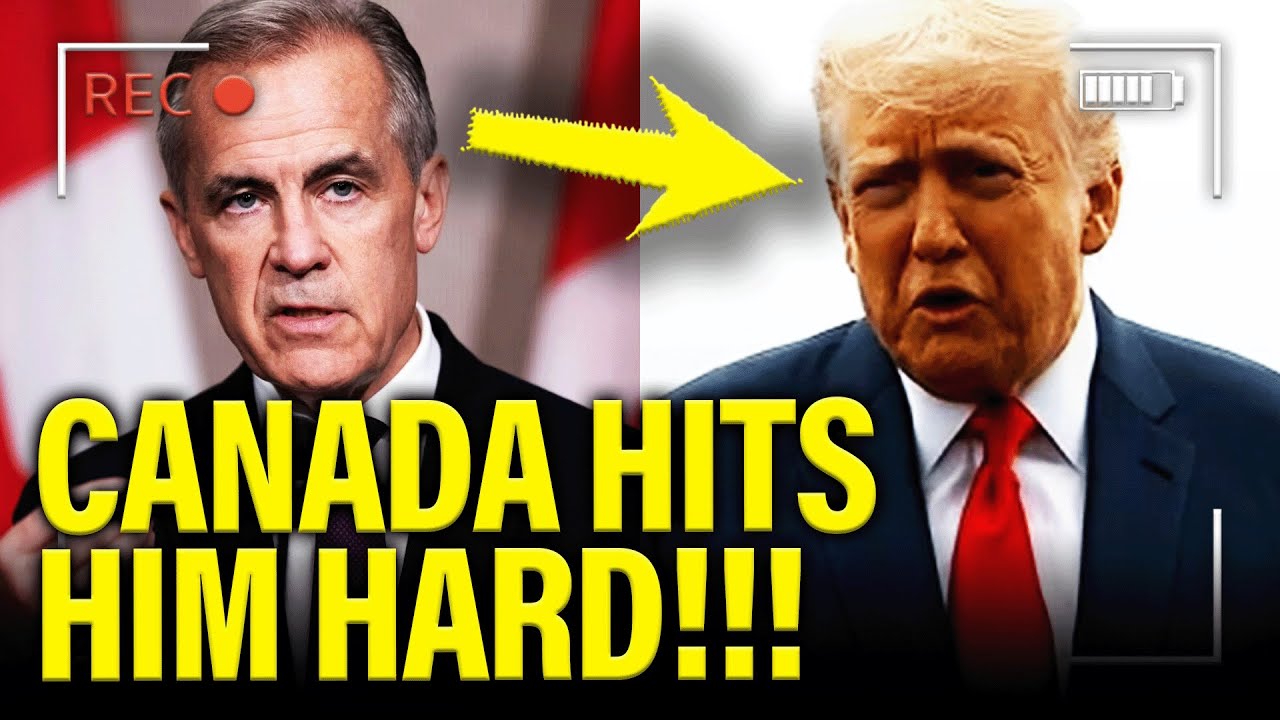
A Disputed Phone Call
The dispute intensified after U.S. Treasury Secretary Scott Bessent told conservative media outlets that Prime Minister Carney had “walked back” or “softened” his Davos remarks during a private phone call with President Trump. According to Bessent, Canada had acknowledged its dependence on the U.S. economy and expressed regret over the tone of its international messaging.
Canadian officials swiftly and publicly rejected that account.
“To be absolutely clear,” Mr. Carney said in Ottawa, “I meant what I said in Davos. Canada recognized early that U.S. trade policy had fundamentally changed, and we are responding constructively — by building at home and by strengthening partnerships abroad.”
Carney confirmed that a call with Trump had taken place and described it as “respectful,” but emphasized that no apology was offered and no policy position was reversed. The public contradiction marked a notable departure from the typical diplomatic practice of allowing competing summaries of private conversations to fade without comment.
Political analysts said the response reflected a calculated decision by Ottawa to assert narrative control rather than allow Washington’s version to harden into accepted fact.
Trade Pressure and National Response
Underlying the rhetorical conflict is a sharp escalation in trade pressure. President Trump has threatened tariffs as high as 100 percent on Canadian goods if Ottawa deepens trade ties with China or moves ahead with independent industrial strategies.
Canadian officials argue that such threats undermine decades of integrated North American supply chains and violate the spirit, if not the letter, of existing trade agreements. Business leaders in both countries have warned that retaliatory measures could raise prices, disrupt manufacturing and damage cross-border investment.
In response, Canada has accelerated talks with the European Union, India and several Asian economies, expanding frameworks for trade in clean energy, advanced manufacturing and digital services. European Commission President Ursula von der Leyen recently described negotiations with Canada and India as “a strategic rebalancing of global trade.”
While Davos has often been criticized as an elite forum, this year’s meetings appeared to carry unusual geopolitical weight, with many governments openly discussing how to reduce reliance on U.S.-centered trade systems.
Controversy Over Alberta
Adding to the tension are remarks by U.S. officials and commentators about Alberta, Canada’s oil-rich western province. In recent interviews, Treasury Secretary Bessent suggested Alberta could be a “natural economic partner” for the United States and referenced public discussion within the province about autonomy and resource development.
Those comments alarmed Canadian lawmakers across party lines, who said any suggestion of encouraging internal divisions crossed a diplomatic red line.
“There is no constitutional or political basis for foreign officials to speculate about Canada’s territorial integrity,” said a senior Canadian government official, speaking on background. “Alberta’s future is a matter for Canadians alone.”
Alberta Premier Danielle Smith, a conservative leader critical of federal energy policies, has not endorsed separatism, though her government has clashed repeatedly with Ottawa. Polls consistently show that while Albertans express frustration with federal policy, support for leaving Canada remains marginal.
Indigenous leaders in the province also issued statements reminding observers that treaty rights predate provincial boundaries and would not be affected by any unilateral political movement.
Accusations of Disinformation
Opposition figures and civil society groups in Canada have warned that rhetoric around Alberta mirrors patterns seen in other geopolitical conflicts, where external actors amplified local grievances to destabilize democratic systems.
“There is a reason Canadians are taking this seriously,” said Charlie Angus, a member of Parliament who has been outspoken about foreign interference. “We’ve seen how misinformation campaigns operate elsewhere. Transparency and unity are essential.”
U.S. officials have denied any intention to interfere in Canada’s internal affairs, describing the remarks as commentary on economic cooperation rather than political influence. Nevertheless, the comments have intensified Canadian public skepticism about Washington’s motives.
A Shift in Global Perception
The episode has contributed to a broader reassessment of U.S. leadership among allies. Several European diplomats privately described Canada as “more predictable” and “institutionally reliable” than the current U.S. administration, particularly on issues of rule-based trade and democratic norms.
That perception has been reinforced by public opinion in Canada. Grassroots boycotts of U.S. goods have gained traction, with Canadian consumers and provincial governments favoring domestic or non-U.S. suppliers in response to tariff threats.
Economists caution that prolonged escalation would harm both economies, noting that Canada and the United States remain each other’s largest trading partners. Still, many argue that diversification has become a strategic necessity rather than an ideological choice.

What Comes Next
Despite the heated rhetoric, both governments have left the door open to negotiation. Officials in Ottawa continue to stress the importance of the U.S.–Canada relationship, while insisting that respect and mutual benefit must guide future engagement.
For President Trump, the confrontation presents a challenge: aggressive pressure tactics that once produced quick concessions now appear to be galvanizing resistance — not only from rivals, but from long-standing allies.
For Canada, the moment represents an opportunity and a risk. By asserting independence on the global stage, Ottawa has earned praise abroad, but must manage economic exposure and internal unity carefully.
As one European diplomat put it in Davos, “The world is watching not just what Canada says, but how the United States responds. This is about more than trade. It’s about what kind of leadership endures.”






