The veteran anchor’s emotional condemnation of the return and rehabilitation of ISIS brides forced an abrupt commercial break and ignited a furious national debate over citizenship and national security.
The morning segment began as it usually does on Sunrise, Channel 7’s flagship breakfast program: a warm welcome, a light-hearted weather report, and a transition into the day’s political news.
But within minutes, the studio descended into a chaos that Australian television has rarely witnessed.
Natalie Barr, one of the country’s most respected and typically restrained journalists, delivered an unscripted, searing monologue on the return of Australian women who had joined the Islamic State group, leaving her co-hosts silent and producers scrambling.
“I never thought the victims would end up helping the people who harmed them,” Barr said, her voice trembling with a controlled fury rarely seen in a morning television setting.
The immediate trigger was a government announcement that four Australian women, who had traveled to Syria in 2015 to join ISIS, had been quietly repatriated with their children and were being granted citizenship.
For weeks, the government had managed the news with little public scrutiny. But Barr, citing leaked departmental documents, revealed that the women had been placed in taxpayer-funded housing and were living in undisclosed locations with round-the-clock security protection.

“It is disgraceful that these people abandoned their own country to join those who wanted to destroy it,” Barr said, turning away from her notes and addressing the camera directly.
Her tone shifted from journalistic detachment to personal anguish. “But even more disgraceful,” she continued, pausing to let the weight of her words settle, “are those who helped them come back, provided them with housing, and allowed them to live in heavily guarded, protected areas.”
The studio fell into a heavy silence. Her co-host, Matt Doran, appeared to reach for a scripted transition, but Barr held up a hand, refusing to yield the floor.
“I don’t understand why we are protecting people who tried to destroy Australia,” she said. “These women made a choice. A deliberate, ideological choice to hate us, to leave us, to side with our enemies. And now they are being rewarded.”
At that moment, viewers saw the screen flicker. The live feed cut to a generic “We’ll Be Right Back” title card with soft elevator music — an abrupt and jarring contrast to the tension that had just erupted.
Inside the studio, according to three production staff members who spoke on condition of anonymity, panic had set in. The director shouted over the intercom for an immediate commercial break, nearly a full two minutes before the scheduled pause.
“It wasn’t just what she said,” one producer later explained. “It was the look in her eyes. We didn’t know what she was going to say next. We had to kill the feed.”
When the program returned eight minutes later, Barr was seated at the far end of the anchor desk, a glass of water in her hand and a noticeably subdued demeanor. The show proceeded with a segment on gardening tips, as if nothing had happened.
But across Australia, the damage — or the revelation, depending on one’s perspective — had already been done.
Within an hour, the hashtag #NatalieBarrWasRight was trending number one on X (formerly Twitter), with over 200,000 posts. Clips of the outburst were uploaded to YouTube, TikTok and Telegram, where they accumulated millions of views.
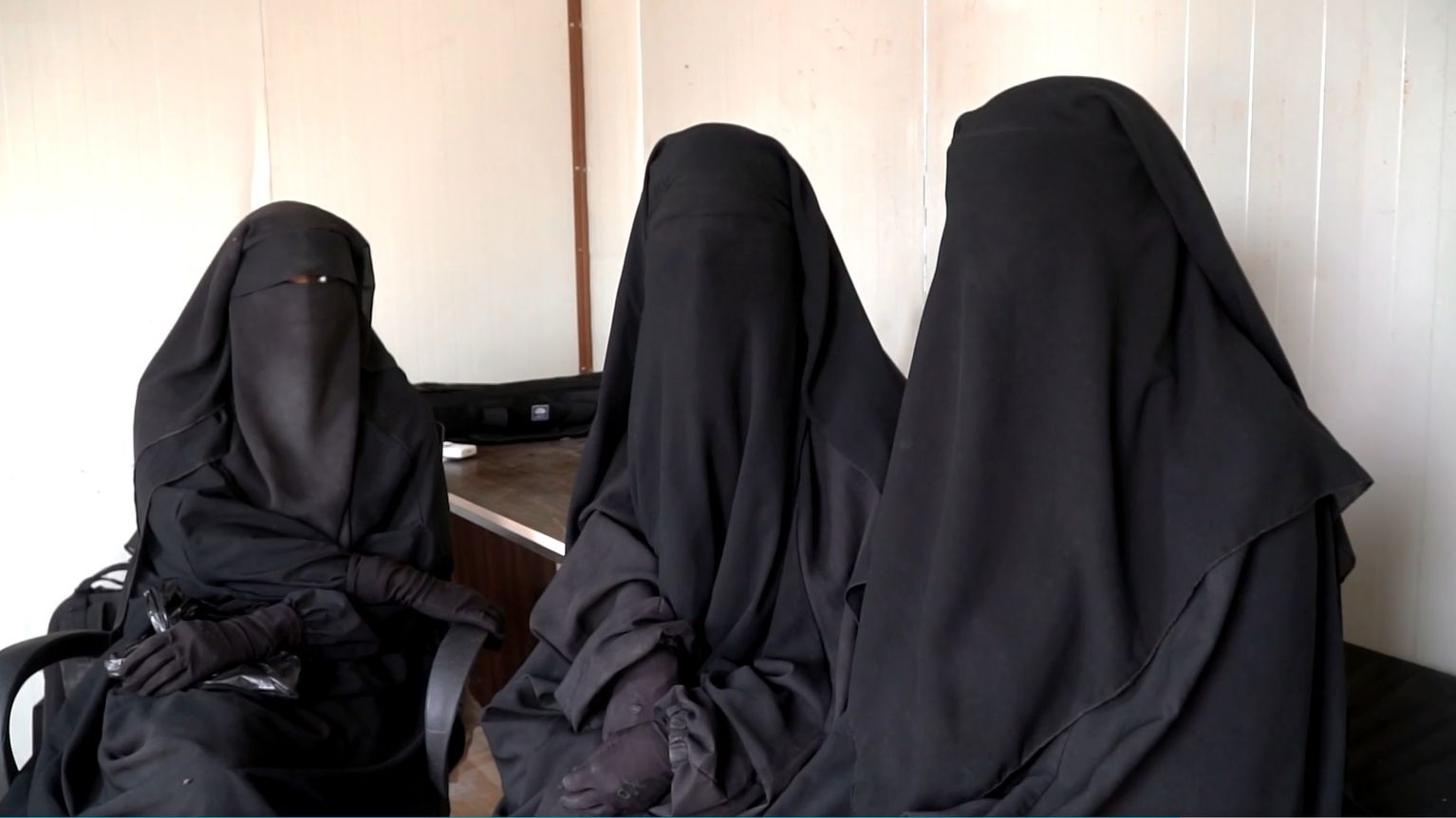
The response was immediate and sharply polarized. conservative commentator Alan Jones praised Barr for “saying what every silent Australian is thinking.” Former Prime Minister Tony Abbott tweeted: “Finally, a journalist with a backbone.”
But others were deeply critical. The Australian Muslim Advocacy Network released a statement accusing Barr of “stoking vigilante hatred” against women and children who may have been victims themselves.
“These women were often coerced, trafficked or married as teenagers,” the statement read. “Natalie Barr’s language is not journalism. It is a dog whistle to extremists at home.”
The controversy cuts to the heart of a longstanding and unresolved national debate. Since the collapse of the ISIS caliphate in 2019, Western governments have struggled with the fate of their citizens held in Syrian camps.
Australia has been one of the most reluctant nations to repatriate. As of early 2026, more than a dozen Australian women and approximately 40 children remain in the Al-Roj and Al-Hol camps in northeastern Syria, according to the Syrian Observatory for Human Rights.
The government’s official position, reiterated by Prime Minister Anthony Albanese in a press conference hours after Barr’s outburst, is that each case is judged individually on national security grounds.
“No one is being handed citizenship as a gift,” Albanese said. “These are heavily vetted, legally complex cases involving Australian children who had no say in their parents’ choices.”
However, internal documents obtained by The Australian last month suggested that the Department of Home Affairs had fast-tracked at least six cases to avoid potential legal challenges from civil liberties groups.
Barr’s reference to “victims helping the people who harmed them” struck a particularly raw nerve. Polling conducted by YouGov in March found that 62% of Australians believe returning ISIS brides should face prosecution, while only 12% support their reintegration without penalty.

But legal experts point out that prosecuting these women is extraordinarily difficult. Evidence gathered from battlefields is often inadmissible. Witnesses are dead or hostile. And the women themselves claim they were never combatants, only wives and mothers.
Dr. Lise Waldek, a counter-terrorism expert at Charles Sturt University, told this newspaper that Barr’s emotional framing, while understandable, risks oversimplifying a legal and moral labyrinth.
“We want these women to be monsters because that makes the story simple,” Dr. Waldek said. “But some of them were 17 years old. Some were abused. Some are completely disillusioned. And some are still dangerous. Sorting them requires cold, patient intelligence work, not television fury.”
Nevertheless, the political fallout was immediate. Immigration Minister Andrew Giles faced a no-confidence motion in the House of Representatives, which failed along party lines but revealed deep fissures within the ruling Labor Party.
Three Labor backbenchers from Western Sydney, an area with a significant Muslim population, privately expressed discomfort with the government’s handling of the repatriations, though they voted with the party.
Meanwhile, the opposition leader, Peter Dutton, seized on Barr’s words like a political lifeline. “Natalie Barr spoke for the nation this morning,” Dutton said in a doorstop interview. “The government is soft on terror. They are putting diplomatic comfort ahead of Australian safety.”
Channel 7 executives remained silent for most of the day, before issuing a brief, carefully worded statement: “Sunrise is a live program that encourages robust discussion. Natalie Barr is a valued journalist who expressed a personal opinion. The decision to cut to break was a routine production call.”
But insiders know it was anything but routine. Barr, who has anchored Sunrise for nearly a decade, was reportedly called into a meeting with network lawyers and senior management immediately after the show ended.
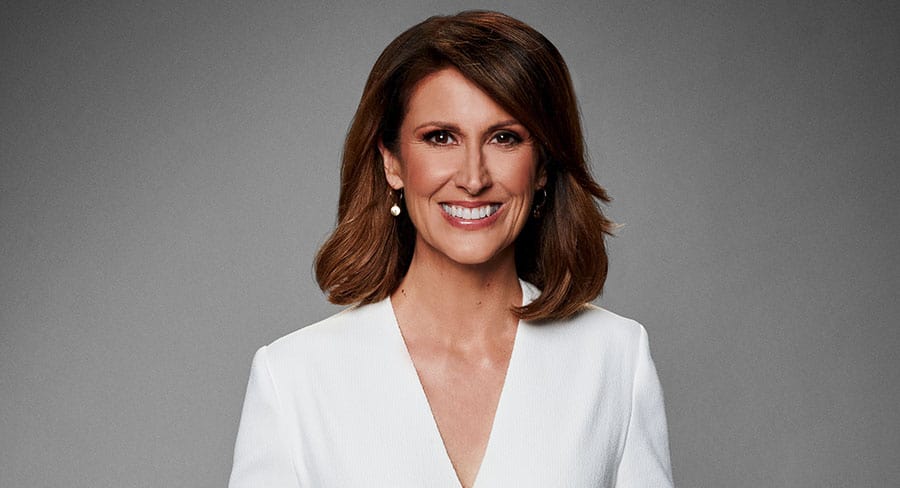
One colleague, speaking off the record, described Barr as “exhausted but unapologetic.” “She’s been sitting on this story for months,” the colleague said. “She watched the government bring these women back in the middle of the night, no press, no questions. She just broke.”
By evening, the debate had evolved beyond Barr herself. The larger question now haunting Canberra and the living rooms of suburban Sydney and Melbourne is whether Australia has lost the will to punish those who once sought its destruction.
As one veteran diplomat, who requested anonymity to speak candidly, put it: “We spent twenty years fighting terrorism abroad only to discover that at home, we can’t even agree on what a terrorist looks like.”
Natalie Barr has not spoken publicly since the broadcast. Her scheduled appearance at a media awards dinner on Friday has been canceled. But her 15 words — the final sentence she managed before the cameras were cut — continue to echo across the national conversation.
“I never thought the victims would end up helping the people who harmed them.”
For millions of Australians, that sentence no longer sounds like hyperbole. It sounds like a question they are not sure they want answered.






