Pauline Hanson’s One Nation could win as many as 59 seats if a federal election were held today, wiping out key seats for Labor and the Coalition, according to a shock new poll.
Research from Redbridge Group and Accent Research shows the result would force Labor into a minority government and take out the Coalition in all but three states and territories, representing a significant shift towards the surging right-wing party.

According to the modelling, One Nation would win between 46 and 59 seats, with a median of 53 as it would swipe 37 seats off the Coalition and 16 seats off Labor.
The biggest surge would be in Queensland, where the party could win up to 21 seats -18 of which have a win probability of 90 per cent or higher.
The Coalition would be left with between seven and 21 seats.
Liberal MP Andrew Hastie would have a 100 per cent chance of losing his Perth seat of Canning, and Opposition Leader Angus Taylor a 98 per cent of losing his seat of Hume, on the outskirts of southwestern Sydney, to a One Nation candidate.
The worst-case simulation shows the Coalition would be left with just seven seats across NSW, Victoria and the Northern Territory, meaning their key strongholds of Queensland and Western Australia would be lost. They would also not retain seats in South Australia and Tasmania.
Meanwhile, the Nationals would have no MPs left, wiping them out of the lower house entirely.
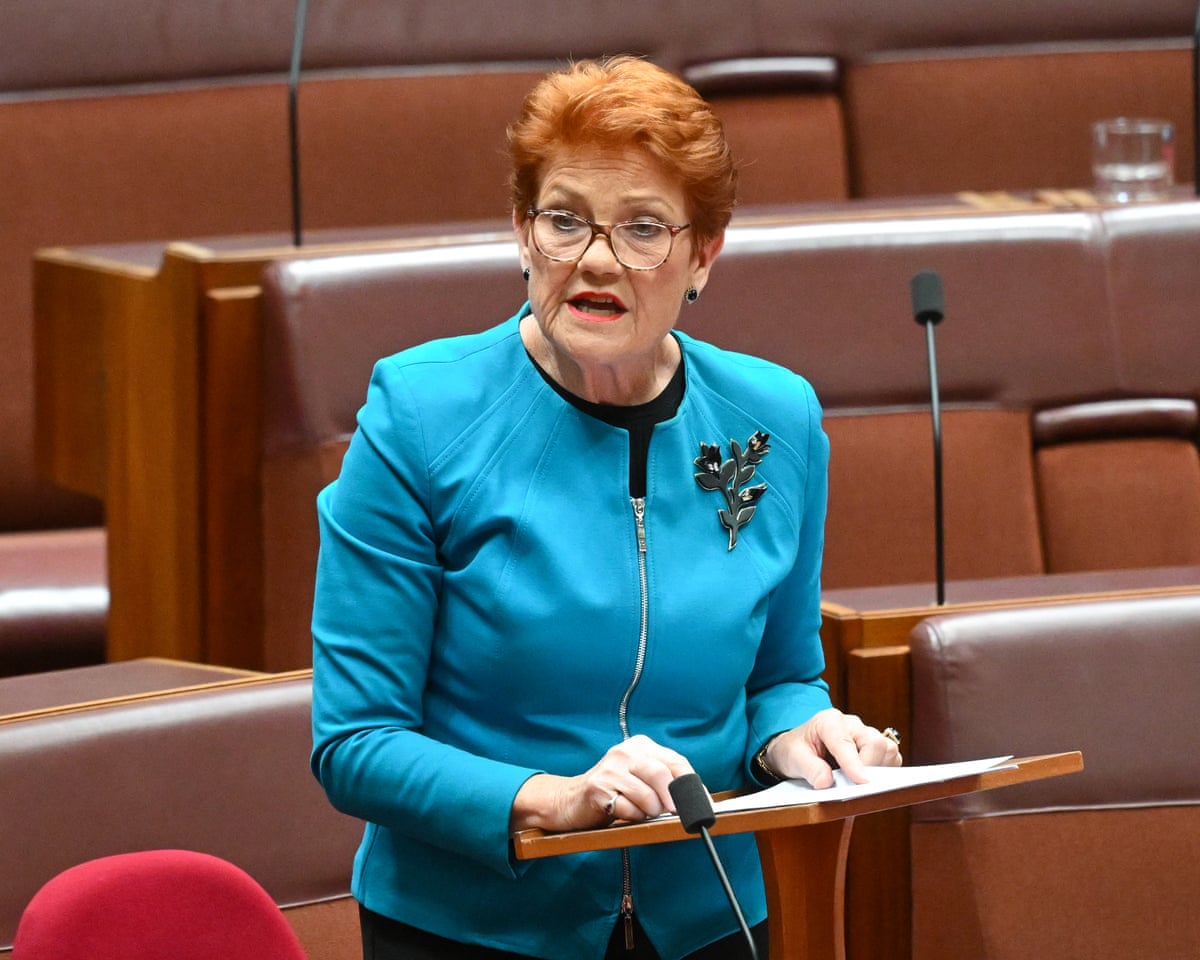
The poll sampled just more than 6000 Australian voters between April 29 and May 14, with most of the research being conducted before the May 12 federal budget.
Ms Hanson told the Australian Financial Review the polling was reflective of the increasing regard for One Nation as a mainstream political party, especially after David Farley’s historic win for the party in the Farrer by-election.
“(Voters) now have a licence to vote for One Nation, it’s not a wasted vote,” she said.
Redbridge director Tony Barry said the One Nation surge would prove a sticking point for Labor’s mission to achieve a majority government at the next election.
“We still don’t know whether One Nation’s vote will run up against some form of a ceiling and where its floor is, but the mood sentiment holding up their vote is underpinned by economic anxiety and frustration with the current political model, which could be enduring,” he told the AFR.
It comes as polling carried out by DemosAU for Capital Brief between May 14 and May 20 showed One Nation’s primary vote had increased to 28 per cent, overtaking Labor on 26 per cent.
They were followed by the Coalition on 23 per cent and the Greens on 13 per cent.
“Others”, including independents, were down to 10 per cent of the primary vote.

Anthony Albanese remained the preferred prime minister at 34 per cent, but Ms Hanson came in at 27 per cent ahead of Mr Taylor on 23 per cent.
DemosAU head of research George Hasanakos said confidence in One Nation primarily rested with Ms Hanson as its leader, but would still poll above 20 per cent if Barnaby Joyce took over the leadership.
“Pauline has a unique appeal to voters beyond those who want the strongest conservative voices,” he said.
“While One Nation’s initial surge was from conservative voters dissatisfied with the Coalition, since the summer One Nation has been attracting general protest voters.
“Barnaby Joyce as a leader seems to be less potent in attracting general protest voters, however his appeal still retains conservative voters in general.”






