MANCHESTER UNITED EYE MATEUS FERNANDES AS MIDFIELD REBUILD INTENSIFIES UNDER TRANSFER SCRUTINY
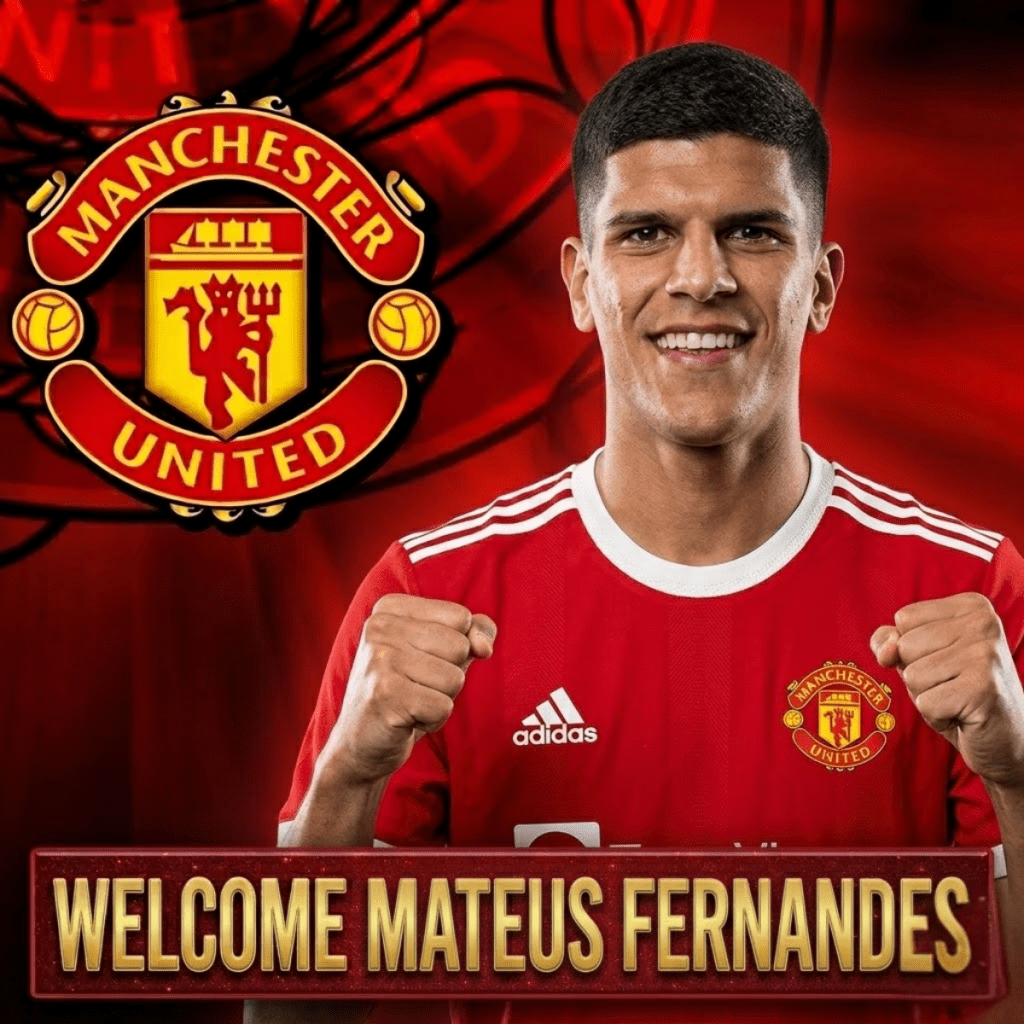


MANCHESTER UNITED’S MIDFIELD RESTRUCTURING HAS PLACED MATEUS FERNANDES AT THE CENTRE OF STRATEGIC DISCUSSIONS AS THE CLUB SEEKS LONG-TERM BALANCE AND TECHNICAL CONTROL IN THE ENGINE ROOM OF THE TEAM.
Manchester United’s ongoing squad rebuild continues to place heavy emphasis on midfield reinforcement, with internal discussions focusing on profiles capable of adding energy, creativity and tactical discipline. The name of Mateus Fernandes has emerged prominently within this evolving recruitment framework.
The Portuguese midfielder, currently with West Ham United FC, is viewed as a modern midfield option capable of operating in high-intensity systems. His development has attracted attention due to his composure under pressure and adaptability across different midfield roles.
United’s interest reflects a broader structural shift towards younger, more dynamic midfielders who can support both progression and defensive transition phases. Fernandes is being assessed within this context rather than as a short-term solution.
Analytical reports within the club highlight his pressing ability, spatial awareness and willingness to operate between lines. These attributes are considered valuable in a Premier League environment increasingly defined by transition speed and tactical flexibility.
West Ham’s reported relegation situation has added a financial and strategic dimension to the potential transfer market movement. Squad restructuring under such pressure often accelerates exits of key players, increasing availability across multiple positions.


Manchester United’s recruitment structure has been closely monitoring these developments, identifying Fernandes as a potential market opportunity. The valuation dynamics are expected to shift depending on West Ham’s financial flexibility and squad retention strategy.
Competition for midfield profiles of this type is expected to intensify during the transfer window, with multiple clubs tracking similar players. United’s positioning in this race is therefore being carefully managed to avoid bidding escalation.
Internally, Fernandes is also admired for his connection to Bruno Fernandes, whom he has reportedly referenced as an influence. This psychological and cultural link is viewed as a subtle but relevant factor in adaptation potential.
The club’s broader recruitment policy continues to prioritise players capable of integrating into evolving tactical structures under pressure. Fernandes is being evaluated not only on current performance but also on long-term developmental trajectory.
As discussions progress, Manchester United’s decision-making process remains aligned with balancing immediate squad needs and sustainable squad evolution, particularly in midfield areas that have lacked consistency.
MIDFIELD RESTRUCTURING AND TACTICAL PROFILE ASSESSMENT


The technical profile of Mateus Fernandes is being analysed within Manchester United’s evolving midfield framework, where control, pressing resistance and transitional intelligence are key requirements for recruitment approval.
His ability to operate under pressure in central areas has been highlighted as a significant factor, particularly in systems requiring quick ball progression from deep positions into attacking zones.
Coaching assessments suggest he offers versatility across multiple midfield roles, allowing tactical flexibility in both possession-based and counter-pressing structures.
This adaptability is increasingly important for United, who have struggled at times to maintain midfield stability across different match phases and opposition styles.
The recruitment department is also assessing his decision-making speed, especially in congested midfield zones where Premier League intensity often exposes technical limitations.
From a tactical perspective, Fernandes is seen as a player capable of linking defensive and attacking phases, a role United have been attempting to refine since restructuring their midfield core.
Internal discussions reportedly emphasise his pressing discipline, which aligns with modern high-block systems requiring coordinated movement and structured defensive transitions.
The scouting perspective also notes his ability to maintain positional awareness during counter-attacking sequences, reducing vulnerability during turnovers in advanced areas.
However, analysts within the game caution that adaptation to elite-level tempo remains a key consideration before final recruitment decisions are made.
Manchester United’s coaching structure continues to evaluate whether his development curve aligns with immediate Premier League demands or longer-term integration plans.
TRANSFER DYNAMICS AND MARKET PRESSURE BUILDING


The potential movement of Mateus Fernandes into Manchester United’s squad structure is increasingly shaped by market dynamics influenced by club performance and financial positioning across the league.
West Ham’s situation has introduced a layer of urgency into discussions surrounding squad retention and player valuation, particularly for emerging talents with resale potential.
Manchester United are understood to be assessing timing as a critical factor, balancing early negotiation advantages against broader squad priorities across multiple positions.
The club’s recruitment model increasingly focuses on identifying players before their market valuation peaks, particularly in competitive Premier League environments.
Fernandes’ profile fits this strategic approach, offering both developmental upside and immediate squad depth potential depending on tactical deployment.

Competition for midfield reinforcements remains a key challenge, with several clubs monitoring similar profiles across Europe, increasing the complexity of negotiation strategies.
United’s internal recruitment discussions are also influenced by existing squad structure, where midfield rotation has lacked consistency and long-term balance.
The decision-making process is therefore not purely financial but deeply tactical, assessing how Fernandes could integrate into evolving system requirements.
The player’s stylistic profile is considered suitable for progressive midfield structures, particularly those requiring high work rate and positional discipline.
Ultimately, the transfer situation remains fluid, with multiple variables shaping potential outcomes in the coming weeks.
CONCLUSION: STRATEGIC MIDFIELD DECISIONS WILL DEFINE UNITED’S LONG-TERM IDENTITY


The pursuit of Mateus Fernandes reflects Manchester United’s broader attempt to recalibrate their midfield structure around younger, tactically adaptable profiles capable of sustaining long-term performance levels.
His evaluation highlights ongoing questions around squad balance, consistency and the club’s ability to build a coherent tactical identity under competitive Premier League pressure.
From a strategic standpoint, the transfer debate underscores the importance of recruitment alignment with managerial expectations and systemic requirements within the squad.
Manchester United’s midfield planning continues to evolve, with emphasis placed on players who can contribute across multiple phases of play rather than isolated roles.
Fernandes represents a profile that fits modern structural demands, but adaptation to elite-level intensity remains a critical factor in final assessments.

The club’s long-term project remains closely tied to recruitment efficiency, where each midfield addition is expected to contribute to a clearer tactical identity.
However, consistency remains an unresolved issue, with United still searching for stable midfield partnerships capable of sustaining performance across an entire season.
The potential addition of Fernandes would therefore be measured not only in talent terms but also in structural fit within the broader system.
As discussions continue, the situation remains open-ended, reflecting the complexity of modern Premier League squad building and competitive recruitment environments.
Ultimately, the narrative surrounding Fernandes and Manchester United is less about immediate resolution and more about the direction of the club’s long-term footballing philosophy.






