Minnesota Attorney General Accuses Trump Administration of Obstructing Investigations Into ICE Killings
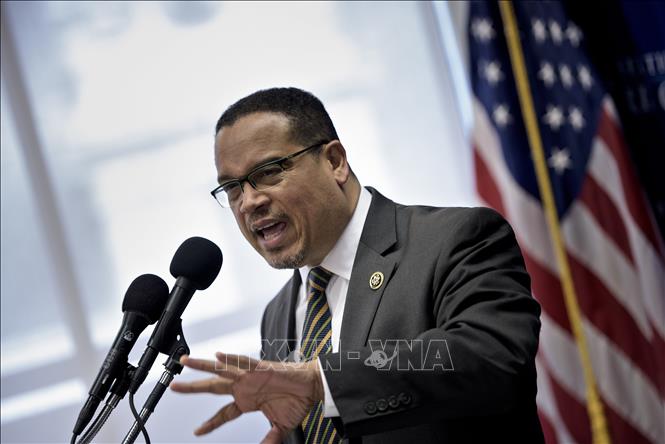
MINNEAPOLIS — Minnesota Attorney General Keith Ellison accused the Trump administration on Tuesday of actively obstructing state investigations into the fatal shootings of two Minnesota residents by federal immigration officers, escalating a confrontation between state and federal authorities that has raised profound constitutional and civil rights questions.
The deaths of Renee Good and Alex Prey, both killed in separate encounters with Immigration and Customs Enforcement officers in Minneapolis, have ignited widespread outrage and protests across Minnesota and beyond. At the center of the controversy is the federal government’s refusal to allow state investigators access to key evidence, crime scenes, and internal records — a stance Mr. Ellison described as unprecedented and deeply alarming.
“We are doing everything in our power to conduct a full and complete investigation,” Mr. Ellison said in an interview, emphasizing that his office had already secured court orders to preserve evidence and prevent its alteration. “There is no legitimate basis for the federal government to claim it is not investigating these deaths while simultaneously denying the state access to evidence.”
The Department of Homeland Security has not publicly released details about the officers involved, nor has it committed to a joint investigation with Minnesota authorities — a departure from long-standing practice in fatal use-of-force cases involving federal agents. The Justice Department’s Civil Rights Division has likewise declined to participate, according to Mr. Ellison.
A Breakdown of Federal-State Cooperation
Legal experts say the standoff represents a significant breakdown in federal-state cooperation. Traditionally, fatal encounters involving law enforcement trigger parallel investigations, with state prosecutors examining potential criminal liability while federal authorities assess civil rights violations.
Instead, Minnesota officials say they have been forced to pursue evidence through court orders and public submissions. The Minnesota Bureau of Criminal Apprehension has established evidence portals to collect videos, photographs, and eyewitness accounts from the public — material that Mr. Ellison stressed is essential but insufficient on its own.
“Prosecution is not a matter of pressing play on a video,” he said, drawing on his experience leading the successful prosecution of former Minneapolis police officer Derek Chauvin in the murder of George Floyd. “If you want convictions, you have to do it right, and that requires full access to evidence.”
The federal government’s refusal has prompted an exodus of career prosecutors from the U.S. Attorney’s Office in Minnesota. Mr. Ellison said he was aware of roughly ten Justice Department officials who resigned after the administration declined to investigate Ms. Good’s death. Several former DOJ lawyers have since joined state service, continuing a pattern seen during earlier transitions in the Trump presidency.
Accusations of a Cover-Up
Mr. Ellison went further, asserting that the administration’s conduct amounted to a cover-up — a charge echoed widely across progressive media outlets and amplified on social platforms such as X, TikTok, and YouTube, where footage of the shootings and masked ICE operations has circulated extensively.
Senior administration officials, including President Trump, Vice President JD Vance, and Homeland Security Secretary Kristi Noem, have publicly characterized the victims as “domestic terrorists,” statements critics say prejudge the cases and undermine the presumption of innocence.
“When top officials publicly exonerate the shooters before any investigation and then block access to evidence, a reasonable person would call that a cover-up,” Mr. Ellison said. “If they disagree, they can prove us wrong by opening the files.”
The administration has not responded directly to those accusations.
Masked Agents and Public Accountability
The controversy has been further inflamed by ICE’s decision to withhold the identities of the officers involved, citing concerns about doxxing and safety. Mr. Ellison dismissed that rationale as “nonsense,” noting that police officers nationwide routinely identify themselves through badges, nameplates, and marked vehicles.
“This is about legitimacy,” he said. “When officers hide their faces and names, they are not practicing constitutional policing. They are eroding public trust.”
Civil liberties groups have echoed those concerns, warning that masked, unidentified federal agents create conditions ripe for abuse — and even impersonation. In recent weeks, local authorities have reported incidents of individuals posing as ICE officers, exploiting the normalization of anonymity in enforcement operations.
Broader Constitutional Stakes
Beyond the individual cases, Minnesota has launched a civil lawsuit against the federal government, arguing that the Trump administration is violating the Tenth Amendment by effectively commandeering state resources through aggressive ICE deployments.
Mr. Ellison warned that the expansion of ICE operations — from dozens of agents to thousands — risked turning immigration enforcement into a paramilitary force answerable only to the president.
“These agents are not accountable to local communities, sheriffs, or governors,” he said. “They resemble a praetorian guard, deployed to pressure states into compliance by force rather than law.”
Legal scholars have noted that such claims echo long-standing debates over federalism, executive power, and the use of law enforcement as a political tool — themes that have dominated legal commentary since Mr. Trump’s return to office.
Fear of Escalation
State officials are also concerned that the violence surrounding ICE operations could be used to justify extraordinary federal measures, including the invocation of the Insurrection Act — a law that allows the president to deploy military forces domestically.
“They provoke the unrest and then cite it as justification for escalation,” Mr. Ellison said. “Local authorities are capable of maintaining order. This is about power, not public safety.”
The administration has not indicated plans to invoke the act, but the possibility has been widely debated in political media and legal circles.
A Long Road Ahead
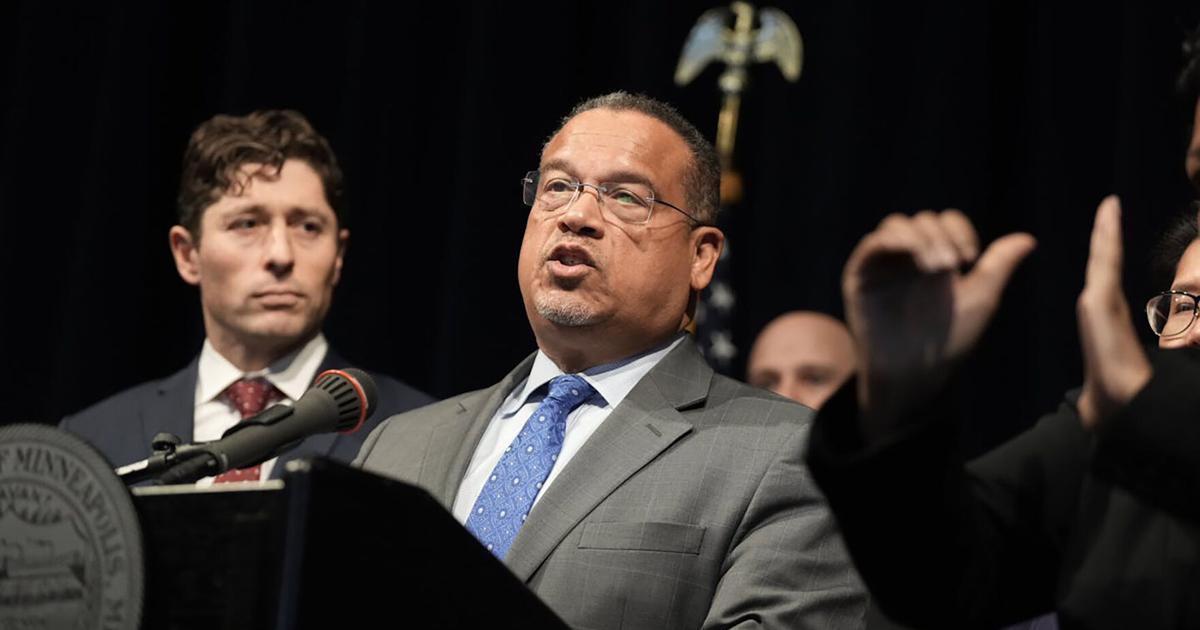
Despite the obstacles, Mr. Ellison insisted that Minnesota would pursue accountability relentlessly and lawfully.
“No one has ever accused me of being reluctant to pursue justice,” he said. “But justice is not rushed. It is built carefully, so it lasts.”
For families of the victims and communities demanding answers, that promise offers some measure of resolve — even as the battle between state sovereignty and federal authority enters increasingly uncharted territory.






