Republican Rifts Deepen as Trump Faces Blame Over Minneapolis Shooting and Foreign Policy Rebellion
WASHINGTON — What began as a deadly encounter in Minneapolis has widened into something far more destabilizing for President Donald Trump: an open, multi-front fracture inside his own party, touching immigration enforcement, executive power, and foreign policy — the very arenas where Republican unity has traditionally been strongest.
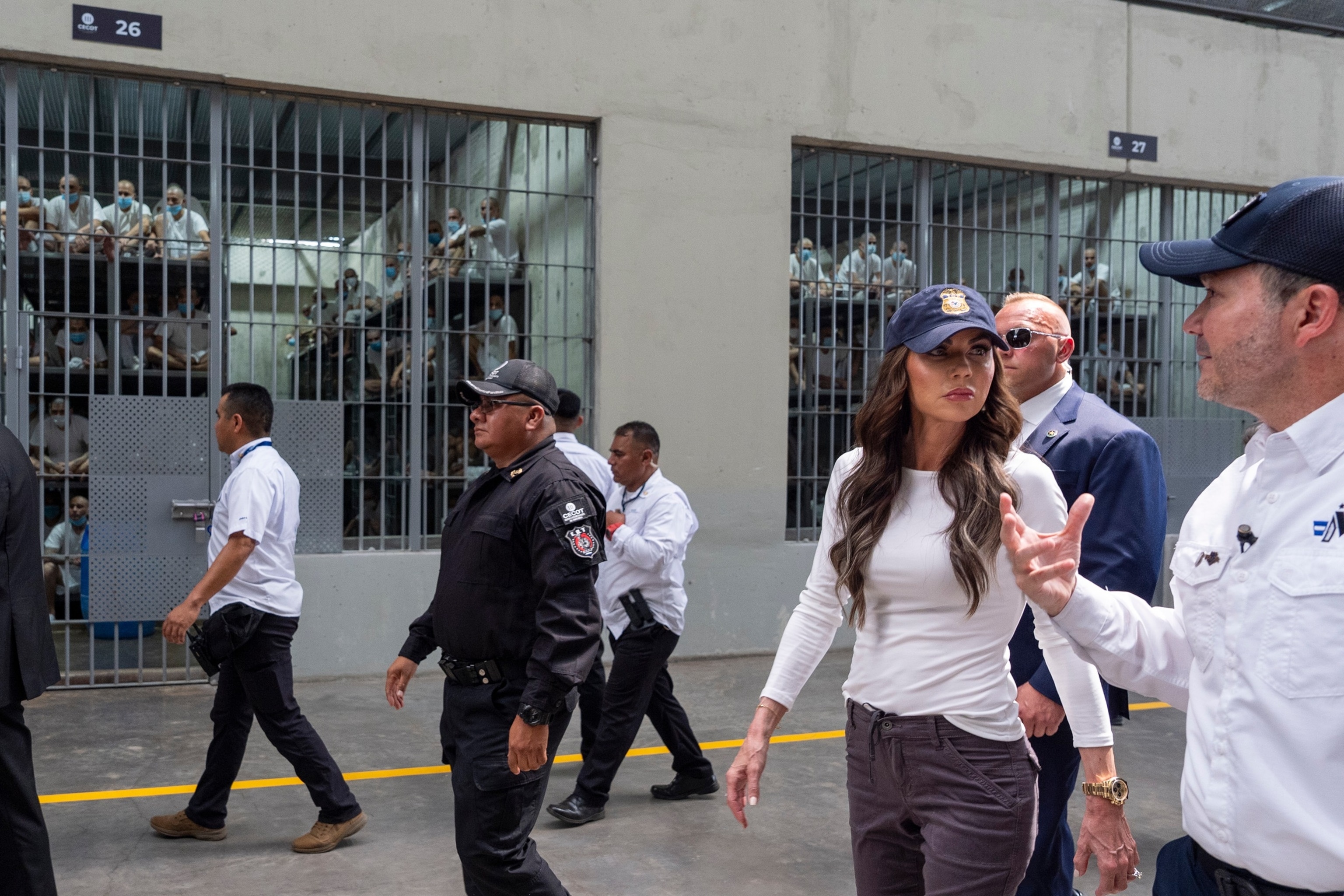
At the center of the immediate controversy is the fatal shooting of Alex Prey, a civilian killed during a federal enforcement operation. In the hours that followed, senior administration officials offered sharply worded characterizations of the victim that were later contradicted by publicly released video footage.
Homeland Security Secretary Kristi Noem described Prey as a “domestic terrorist,” while White House adviser Stephen Miller labeled him a “would-be assassin.” Both claims unraveled as video circulated widely on social media and was later broadcast by major television networks, showing Prey unarmed and not posing an imminent threat.
The fallout has been swift. Ms. Noem now faces bipartisan calls to resign, including from several Republican lawmakers who privately concede the department’s public response damaged its credibility. Mr. Miller, in a rare public retreat, has acknowledged that federal agents may have breached operational protocols — protocols he himself helped design.
Yet the Minneapolis episode has proven to be less a contained scandal than a catalyst, accelerating a broader political reckoning already underway within the Republican Party.

A President Searching for Someone to Blame
Inside the administration, the response has devolved into what multiple current and former officials describe as a “blame carousel.” According to people familiar with internal discussions, Ms. Noem has pointed to guidance from the White House. Mr. Miller, in turn, has directed scrutiny toward Customs and Border Protection. Agency leaders argue they were executing orders shaped by political pressure from above.
The president himself has struck a carefully calibrated public tone, telling reporters that tensions in Minneapolis would “de-escalate a bit.” Privately, however, advisers say Mr. Trump has expressed anger that the episode has distracted from his broader agenda and emboldened critics inside his own party.
That internal discontent has been building for months — and it is now spilling into legislative action.
Republicans Break Ranks on War Powers
On January 8, the Senate delivered one of the clearest signs yet of Republican defiance. Fifty-two senators, including five Republicans, voted to advance a War Powers Resolution requiring congressional approval before any U.S. military action in Venezuela.
Among them was Josh Hawley, a lawmaker closely aligned with Mr. Trump on most issues. In a statement accompanying his vote, Mr. Hawley argued that “Congress must reclaim its constitutional role in decisions of war and peace.”
The vote was not symbolic. It represented a direct challenge to Mr. Trump’s longstanding view that the presidency should wield expansive unilateral authority in foreign affairs.
Equally significant was the support of Susan Collins, a centrist Republican facing re-election in a politically competitive state. Her vote underscored a calculation many Republicans in swing states are now making: that visible independence from Mr. Trump may be electorally safer than unwavering loyalty.
The president responded angrily, attacking Ms. Collins on social media and openly encouraging a primary challenge. Ms. Collins, in a pointed reply to reporters, suggested the president appeared willing to risk losing her seat to a Democrat rather than tolerate dissent.
For many Republicans, that response crystallized a growing concern — that Mr. Trump’s emphasis on personal loyalty is increasingly at odds with the party’s broader electoral interests.
Healthcare, Greenland, and the Expansion of the Revolt
The rebellion has not been confined to foreign policy. A day after the War Powers vote, 17 House Republicans joined Democrats to extend Affordable Care Act subsidies, defying both party leadership and the White House.
Lawmakers from swing districts said the decision reflected political reality. “My constituents want stability in their healthcare,” one Republican representative said privately. “This isn’t ideological for them.”
Meanwhile, several Republican senators have openly criticized the president’s renewed rhetoric about acquiring Greenland, with Roger Wicker cautioning that threats of tariffs or territorial acquisition would damage relations with European allies.
Taken together, these actions form a pattern: Republican lawmakers distancing themselves from positions they believe are unpopular with moderate voters, even at the cost of presidential ire.
Midterms Loom Large
With the 2026 midterm elections approaching, Republican strategists say the stakes could not be higher. Polling shows declining enthusiasm for aggressive foreign intervention and sustained public support for healthcare subsidies — particularly among independents.
“Trump still dominates the base,” said a Republican strategist who advises multiple Senate campaigns. “But the base doesn’t decide purple races. Swing voters do.”
That reality has placed lawmakers in an increasingly untenable position. Support the president too closely, and risk alienating moderates. Break ranks, and invite retaliation from the White House.
Mr. Trump has made clear which side he favors.
A Party at an Inflection Point
What distinguishes the current moment is not a single vote or scandal, but the convergence of many. Immigration enforcement, executive power, healthcare, alliance management — all are now points of visible Republican disagreement with the president.
“This isn’t a one-off,” said a former senior GOP aide. “It’s a stress fracture running through the party.”
As the midterms draw closer, few expect the tensions to ease. If anything, more lawmakers are likely to assert independence, calculating that survival depends less on presidential favor than on persuading skeptical voters at home.
For Mr. Trump, the challenge is stark. His ability to command party unity — once his greatest political strength — appears to be slipping. And in a divided Congress, that erosion could shape not only the midterm elections, but the remainder of his presidency.






