The dramatic headline “TRUMP’S DAY IMPLODES: CANADA DROPS A SUDDEN BOMBSHELL” captures the escalating tensions between the United States and Canada in early 2026, amid President Donald Trump’s aggressive trade policies and territorial rhetoric. While no single cataclysmic “bombshell” from Canada literally imploded Trump’s day on a specific date, the rapid-fire developments—particularly around Trump’s 100% tariff threat over Canada’s China dealings, Prime Minister Mark Carney’s defiant stance post-Davos, and broader alliance fractures—created shockwaves in Washington. This article explores the chain of events, insider reactions, and geopolitical implications of this fast-escalating clash.

In late January 2026, U.S.-Canada relations reached a boiling point. President Trump, fresh into his second term, had already imposed layered tariffs on Canadian goods—starting at 25% in early 2025, escalating to 35% on many items—to address trade deficits, border security, and fentanyl flows. These measures disrupted integrated supply chains under the USMCA (formerly NAFTA), hitting Canadian exports like steel, aluminum, autos, and agriculture hard. Canada responded with calibrated countermeasures but largely de-escalated by removing most retaliatory tariffs by late 2025, keeping exemptions for USMCA-compliant goods.
The latest flashpoint erupted on January 24, 2026, when Trump posted on Truth Social threatening **100% tariffs** on all Canadian imports if Canada pursued a trade deal with China. He accused Prime Minister Mark Carney of turning Canada into a “Drop Off Port” for Chinese goods evading U.S. duties, warning that “China will eat Canada alive, completely devour it.” This came after Canada negotiated targeted agreements with Beijing on issues like canola exports and electric vehicles, which Trump initially seemed to tolerate before reversing course dramatically.
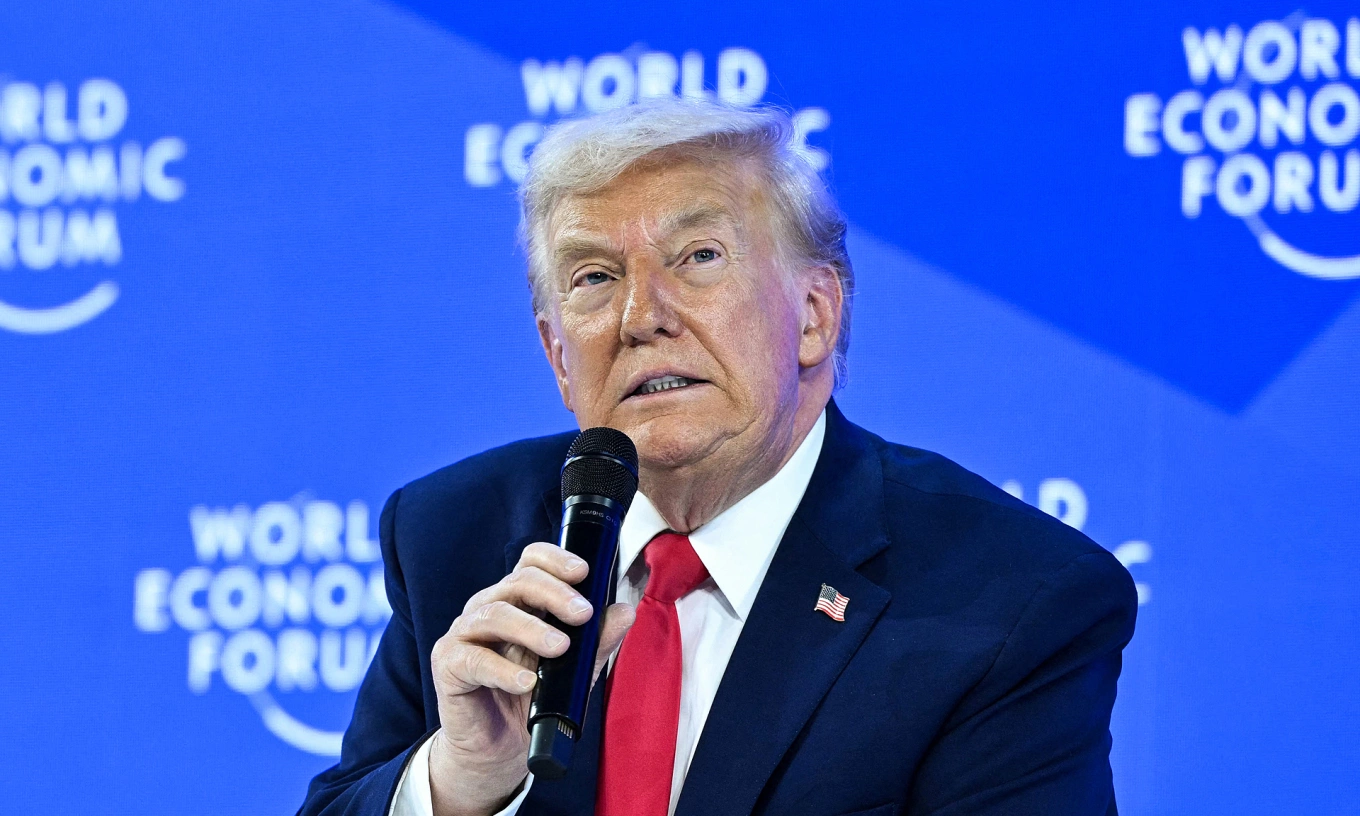
Carney, a former Bank of England governor turned prime minister, refused to back down. In interviews and press conferences, he clarified that Canada had **no plans for a full free-trade agreement** with China—only rectifying specific issues from prior years. He interpreted Trump’s threats as negotiation posturing ahead of the looming USMCA review. Carney stood firm on his January 20 Davos speech at the World Economic Forum, where he declared a “rupture” in the global order under Trump’s influence and urged “middle powers” to chart independent paths. Returning home, he bluntly told reporters he “meant what I said” in Davos during a tense phone call with Trump, rejecting White House claims that he had walked back his remarks.
The fallout rippled through Washington. Insiders described panic in trade and national security circles, with fears that blanket 100% tariffs would spike U.S. inflation—raising costs for everyday goods like lumber, oil, vehicles, and food staples heavily sourced from Canada. Economists warned of supply-chain chaos, higher consumer prices, and retaliation that could hurt American exporters. Allies froze: NATO partners quietly distanced themselves amid Trump’s Greenland takeover threats and expansionist maps (including altered images showing U.S. flags over Canada, Greenland, and Venezuela). European leaders echoed Carney’s call for diversification away from an “unreliable” U.S. partner.
In Ottawa, the mood shifted to quiet defiance and strategic pivoting. Carney’s government accelerated trade diversification toward Asia and Europe, bolstered Arctic security investments, and emphasized NATO contributions to counter perceptions of weakness. Public sentiment in Canada surged patriotic: polls showed widespread distrust of Trump, boycotts of U.S. products (especially alcohol), and reduced cross-border travel. Some provinces modeled hypothetical defense scenarios against U.S. aggression, though dismissed as contingency planning.
Trump’s inner circle appeared caught off-guard by Carney’s unyielding response. Treasury Secretary Scott Bessent publicly urged Carney to stop “virtue signalling” and focus on Canadians’ needs, but the prime minister rebuffed it as misrepresentation. Trump’s repeated jabs—calling Carney “Governor” and Canada ungrateful—only hardened positions, evoking memories of his first-term tactics but now against a more assertive neighbor.
This power clash highlights deeper fractures. Trump’s “America First” vision—tariffs as leverage, territorial musings, disdain for multilateralism—collides with Canada’s push for sovereignty and alliances beyond the U.S. orbit. The USMCA hangs in limbo, with experts predicting a “zombie” agreement staggering on amid uncertainty rather than renewal or collapse.
As of late January 2026, no 100% tariffs have been imposed, and Carney downplays the threats as bluster for upcoming talks. Yet the damage is real: eroded trust, economic uncertainty, and a northern border once taken for granted now a frontline in a broader realignment. Washington scrambles to contain the fallout, while Ottawa quietly builds resilience. What began as trade friction has ignited a geopolitical contest Trump may not have anticipated—one where quiet moves north of the border prove more disruptive than any bombastic announcement.






