Trump’s Tariff Strategy Faces Growing Pressure as Legal Challenges and Canadian Diversification Reshape Bilateral Relations

A series of developments unfolding across Ottawa and Washington over a 48-hour period has intensified debate over the future of Canada–United States economic relations, raising fresh questions about the durability of the Trump administration’s tariff strategy and the evolving balance of leverage between the two countries.
The first signal emerged quietly but drew immediate attention inside diplomatic circles. Peter Hoekstra, the United States ambassador to Canada, abruptly cancelled a scheduled appearance at the Canada Strong and Free Networking Conference in Ottawa after being recalled to Washington for urgent meetings with White House officials.
The cancellation came roughly one hour before Hoekstra was expected to appear on stage, forcing organizers to revise the program without warning. No additional explanation was publicly provided beyond references to urgent consultations in Washington.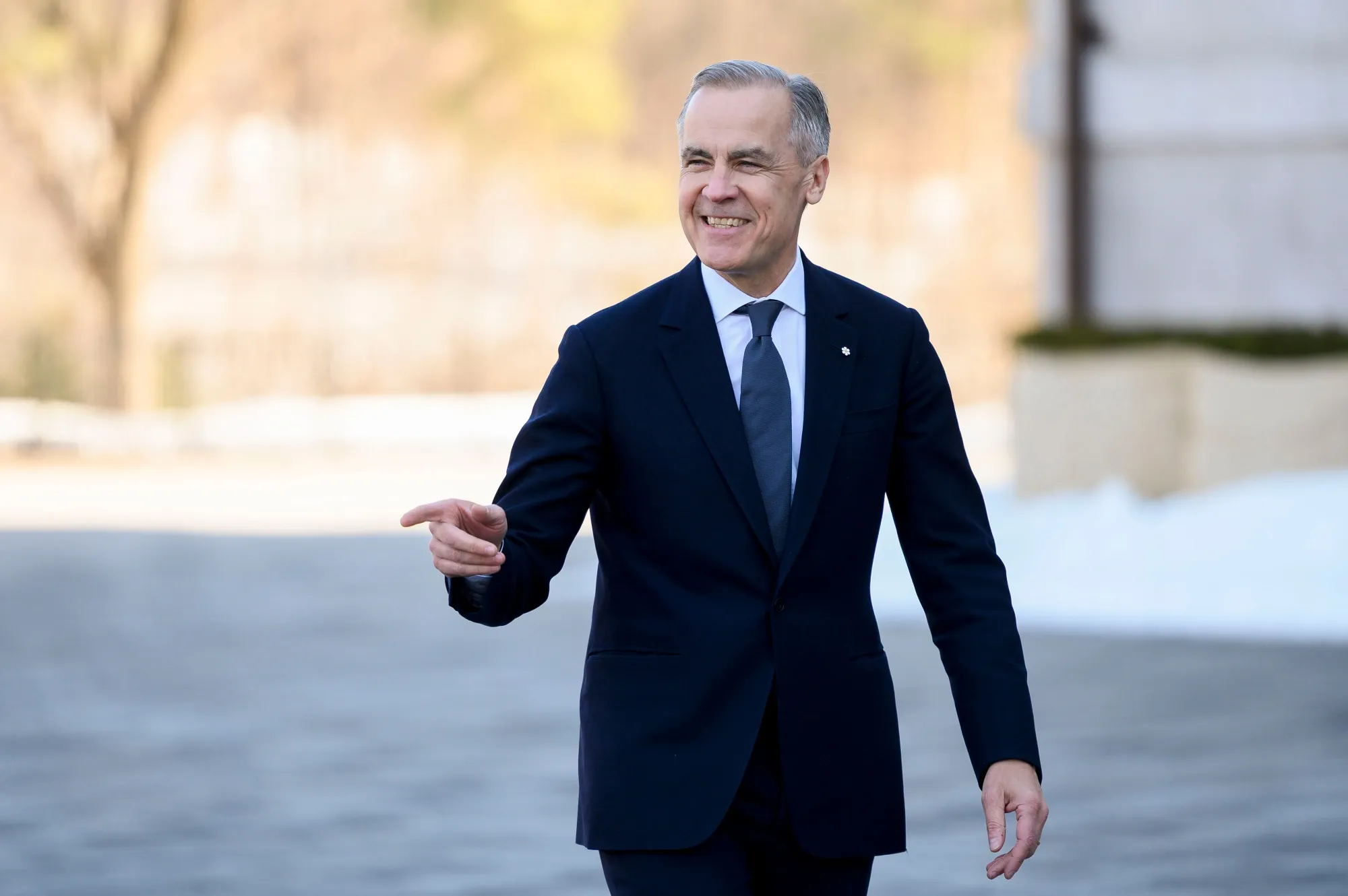
In diplomatic practice, such last-minute recalls are rarely treated as routine scheduling adjustments. Senior envoys are generally pulled from major public engagements only when governments require immediate strategic coordination or reassessment of unfolding developments.
The timing of Hoekstra’s departure became especially notable because it coincided with two other significant developments affecting Canada–US relations.
On the same day, the US Court of International Trade issued a divided ruling that introduced new legal uncertainty surrounding key elements of Donald Trump’s tariff framework targeting Canada.
Although the court stopped short of immediately dismantling the tariff regime entirely, the decision weakened the legal standing of Section 122 of the Trade Act of 1974, one of the principal mechanisms underpinning the administration’s broader trade pressure strategy.
Legal analysts noted that the ruling may not produce immediate policy reversals, particularly given the likelihood of appeals. However, the judgement nonetheless created a significant opening for future legal challenges and altered perceptions surrounding the administration’s authority over unilateral trade measures.
For businesses operating across the Canada–US border, the implications extend beyond the courtroom itself.
Cross-border manufacturers, exporters, and investors increasingly face uncertainty over future tariff structures, supply chain costs, and long-term market access conditions. Economists warn that prolonged uncertainty can delay hiring decisions, stall capital investment, and complicate expansion planning across multiple industries dependent on integrated North American production systems.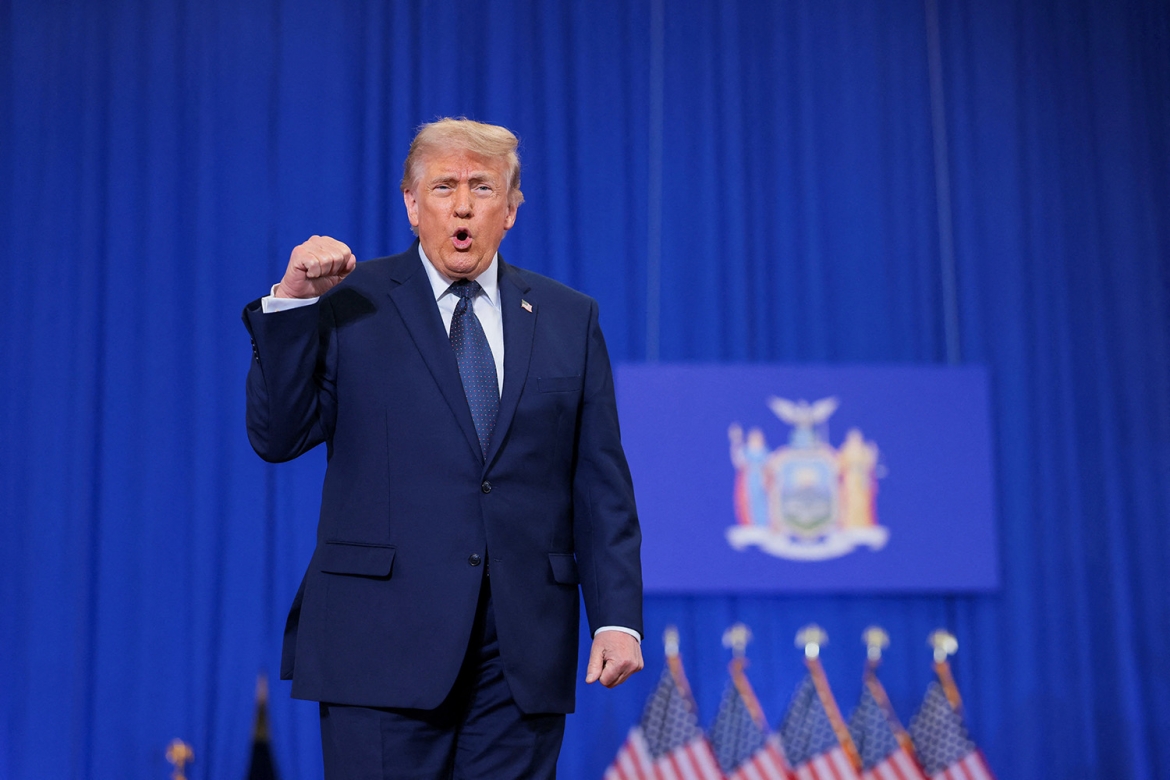
At nearly the same moment the legal ruling emerged, Prime Minister Mark Carney appeared before reporters in Mirabel, Quebec, to announce what officials described as the largest commercial aircraft order in Canadian history.
The agreement involves a reported $19 billion purchase of 150 Airbus A220 aircraft by AirAsia, representing a major boost for Canada’s aerospace sector and a highly visible demonstration of Ottawa’s efforts to strengthen international commercial partnerships beyond the United States.
Standing before cameras at the Mirabel facility, Carney used the moment not only to celebrate the economic significance of the deal, but also to deliver a broader political message regarding Canada’s strategic direction amid continuing trade tensions with Washington.
The Prime Minister described American tariffs as “unjustified,” a carefully chosen term that drew attention among diplomats and market observers alike.
Political analysts noted that Carney’s language departed from the more cautious vocabulary often used during trade disputes between allied nations. Rather than framing the disagreements as unfortunate or temporary complications, the wording suggested a direct challenge to the legitimacy of the tariff strategy itself.
Observers familiar with Carney’s background as former governor of both the Bank of Canada and the Bank of England emphasized that his public communications are typically deliberate and highly calibrated.
That background has reinforced perceptions that Ottawa’s messaging strategy is increasingly designed not merely to manage tensions with Washington, but to redefine the broader terms of the relationship.
Carney also reiterated that Canada remains open to deeper economic integration with the United States under what he referred to as a potential “Fortress North America” framework.
At the same time, however, he emphasized that Canada would continue pursuing alternative trade relationships, international partnerships, and domestic industrial investment if such integration proves unattainable under current political conditions.
That dual message appears central to Ottawa’s current strategy. Canada is presenting itself as willing to preserve close cooperation with Washington while simultaneously demonstrating that it is no longer exclusively dependent on American economic goodwill.
Government officials argue that diversification efforts are already moving beyond rhetoric. New investment arrangements, trade discussions, and industrial partnerships have increasingly become part of Ottawa’s broader economic planning during the past two years.
The federal government has additionally introduced substantial financial support measures aimed at industries most vulnerable to tariff-related disruption.
Programs announced in recent months include a reported $500 million regional support initiative for steel, aluminum, and copper sectors, alongside a new $1 billion lending facility through the Business Development Bank of Canada.
Economists say the scale and structure of those programs indicate that Ottawa expects prolonged trade uncertainty rather than a rapid political resolution.
Governments generally do not construct extensive multi-sector support frameworks for disputes expected to disappear within a single fiscal quarter. The measures instead suggest that policymakers anticipate sustained pressure affecting manufacturing, resource industries, and export-oriented communities.
For Canadian workers and businesses, the dispute has increasingly become more than a diplomatic disagreement between governments.
The consequences are felt directly through fluctuating input costs, delayed investment decisions, uncertain export conditions, and growing instability surrounding long-established supply chains that link factories and industries across both countries.
Meanwhile in Washington, the legal vulnerabilities exposed by the court ruling appear to have complicated calculations surrounding the administration’s trade strategy.
If the tariff framework ultimately faces deeper judicial scrutiny at higher levels of the American legal system, the White House could confront significant constraints on its ability to continue using executive trade powers in their current form.
Several political and legal observers now see three broad possibilities emerging from the situation.
The first scenario involves recalibration and renewed negotiation, where mounting legal pressure and Canada’s diversification efforts push both governments toward a revised framework for economic cooperation.
The second possibility is quieter but potentially more damaging over time: continued low-level escalation without formal resolution, allowing uncertainty and financial costs to accumulate gradually across industries and regions on both sides of the border.
A third scenario centers on the courts themselves. Should higher judicial authorities issue broader rulings limiting executive tariff powers, the entire structure of the current pressure campaign could require fundamental reassessment.
What remains increasingly clear is that the assumptions underpinning Washington’s approach toward Canada may be evolving faster than many policymakers anticipated.
For decades, American administrations largely operated on the belief that Canada’s economic dependence on the United States would ultimately constrain Ottawa’s strategic flexibility.
Recent developments, however, suggest Canada is attempting to challenge that assumption through diversification, industrial investment, and expanded international partnerships.
Whether those efforts prove sufficient to permanently alter the balance of leverage remains uncertain.
But the combination of legal setbacks, diplomatic recalibration, and visible economic diversification has undeniably introduced new complexity into a relationship long considered among the most stable bilateral partnerships in the world.
As tensions continue to unfold, both governments now face growing pressure to determine whether the future of North American economic cooperation will be defined by confrontation, recalibration, or a prolonged period of strategic uncertainty.






