When Comedy Became a Civic Act
By the fall of 2025, the line between entertainment and power in the United States had grown perilously thin. What unfolded on September 23, during the return of Jimmy Kimmel Live!, was not merely a late-night television moment but a revealing snapshot of a political culture under strain—one in which satire, dissent and even laughter had become contested terrain.
:max_bytes(150000):strip_icc():focal(1001x465:1003x467)/Jimmy-Kimmel-Love-Gala-022325-01-e759112c0ceb424cb037e9485ab2f665.jpg)
In the span of a single week, former President Donald J. Trump’s orbit produced a cascade of unsettling headlines. John Kelly, his former chief of staff, reiterated warnings that Mr. Trump had expressed admiration for Adolf Hitler and contempt for American service members killed in combat. The former president appeared in public slurring his words, stumbling through remarks and fueling renewed concerns about his mental acuity. He continued to promote the hard-line Project 2025 agenda, a blueprint that critics say would consolidate executive power at the expense of democratic norms.
At the same time, Mr. Trump lashed out—again—at the press. ABC News became a target after Jimmy Kimmel Live! aired criticism of how Trump allies exploited the assassination of conservative activist Charlie Kirk. Within days, the Federal Communications Commission chairman, Brendan Carr, a Trump appointee and a principal author of Project 2025’s FCC chapter, publicly suggested that ABC affiliates could face license challenges. Two major broadcast groups temporarily pulled Kimmel’s show. Mr. Trump celebrated the move on social media.
The episode bore the hallmarks of something more than a ratings dispute. It looked, to many observers, like government pressure designed to chill speech. ABC denied coordination with the White House, but the timing—and Mr. Trump’s own posts boasting that the show was “cancelled”—suggested otherwise.
After nearly a week of public backlash, protests and industry pressure, ABC reinstated Kimmel. But the return episode carried an unmistakable edge. Kimmel abandoned his usual monologue rhythms and spoke plainly about the stakes. “This show is not important,” he told viewers. “What’s important is that we live in a country that allows us to have a show like this.”
Then came the moment that turned satire into exposure.
Kimmel announced that FCC Chairman Carr had agreed to appear remotely. The screen cut to what appeared to be Carr’s office in Washington—only for viewers to realize that the man on screen was Robert De Niro, dressed in a dark suit and channeling his iconic mob persona. In a gravelly voice, De Niro’s Carr explained that “speech ain’t free no more,” joking that praise for the president was free while criticism would cost “by the word.”
The joke landed because it felt uncomfortably close to reality.

By staging the FCC chairman as a literal mob boss, Kimmel and De Niro did something unusually effective: they made the subtext explicit. The threat that critics had warned about—that regulatory power could be wielded to punish dissent—was suddenly visible, absurd and unmistakable. Laughter, in this case, sharpened rather than softened the point.
The broader context made the moment resonate even more. In Minnesota, the Trump administration was facing growing outrage over the killing of Alex Prey and Renee Nicole Good, civilians whose deaths during Border Patrol operations had sparked protests and allegations of a federal cover-up. Rather than addressing those deaths directly, Mr. Trump spent the weekend railing online about a new “beautiful ballroom” project at the White House and threatening media outlets. His allies fanned out across Sunday talk shows, offering defenses that critics said betrayed hostility toward both the First and Second Amendments.
Against that backdrop, comedy became a form of civic resistance. Kimmel’s show was watched by more than 26 million people across platforms, many of whom saw not just a skit but a warning about how power operates when unchecked: intimidation dressed as regulation, censorship reframed as accountability, loyalty demanded as patriotism.
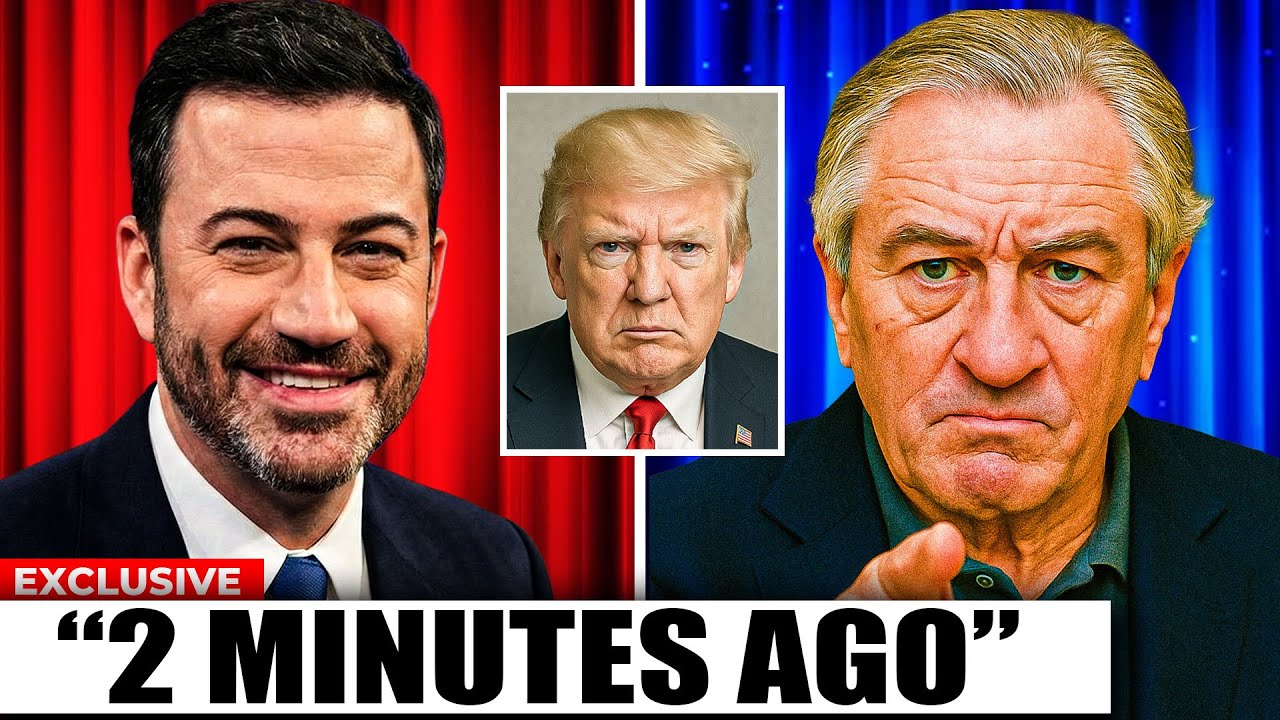
Mr. Trump has long used ridicule and threats as political tools. What the Kimmel–De Niro segment demonstrated is that those tools lose potency when exposed. Authoritarianism depends on fear and silence. Satire, when it refuses to flinch, can puncture both.
In the end, the episode was less about a comedian’s job than about a democratic principle. In countries where leaders cannot be mocked, comedians are jailed or worse. In the United States, the ability to laugh at those in power has been a quiet guarantor of freedom. On that September night, laughter did not trivialize the danger—it illuminated it.






