NEW YORK — Stepping directly into the historic inner sanctum of American finance, Canadian Prime Minister Mark Carney delivered a sophisticated, rhetorically charged address to the Economic Club of New York, systematically challenging the protectionist economic philosophies of Donald Trump while framing Canada as the hemisphere’s ultimate bastion of sovereign predictability.
The high-stakes speech, delivered before an elite assembly of international investors and corporate executives, arrived at a critical historical juncture, as Washington increasingly utilizes punitive tariffs and aggressive political rhetoric to fundamentally pressure its northern neighbor, hoping to force major concessions on long-standing continental trade and energy agreements.
Instead of projecting diplomatic vulnerability or seeking traditional appeasement, Carney aggressively inverted the conventional bilateral narrative. He presented a newly assertive, self-reliant Canada that is actively adapting to what he characterized as a profound global rupture—a systemic geopolitical fragmentation driven primarily by the shifting policies of the United States.
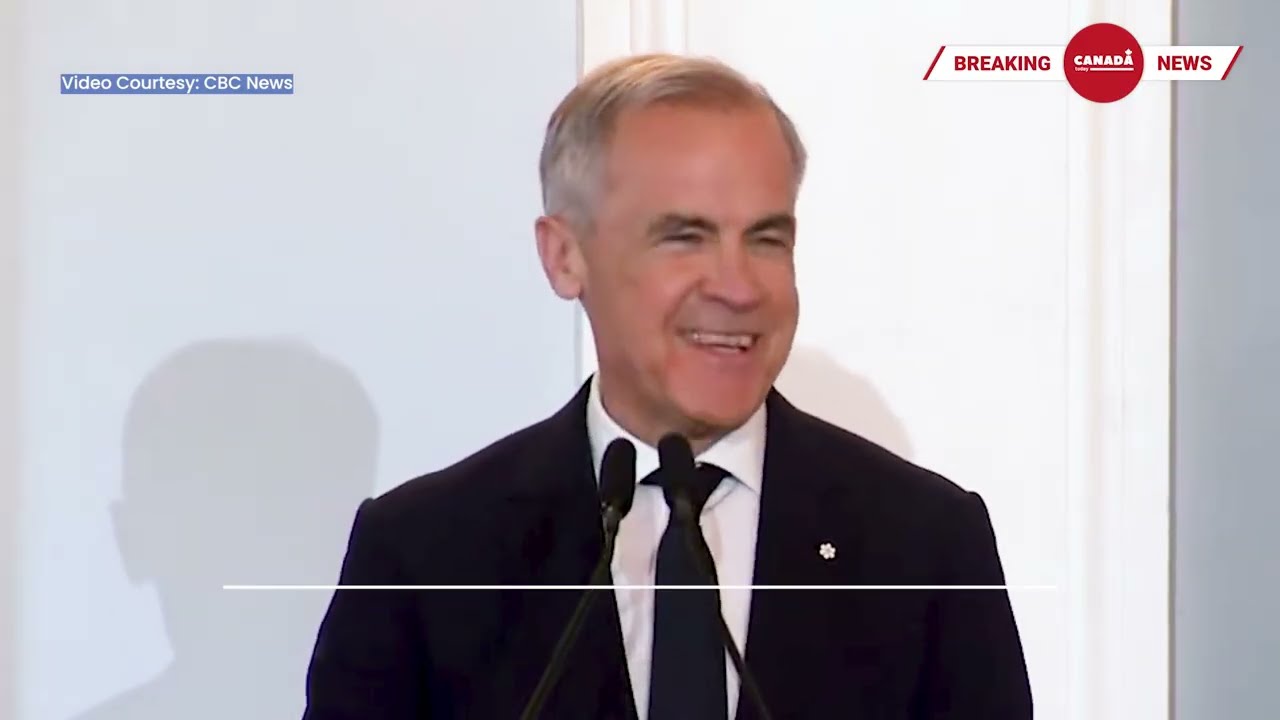
The Prime Minister’s thesis struck at the core of contemporary market anxieties, arguing that in an era relentlessly defined by political instability and arbitrary executive transactions, international capital will instinctively migrate toward rule-of-law regimes that offer institutional transparency, long-term fiscal discipline, and unyielding regulatory predictability.
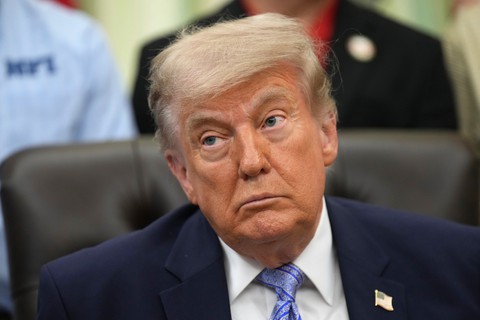
“Nostalgia is not a strategy,” Carney pointedly observed, delivering a thinly veiled philosophical critique of the Trump administration’s economic isolationism. He argued that nations attempting to manually recreate the industrial landscapes of the past risk completely missing the technological, ecological, and structural realities defining the global future.
To validate this vision before Wall Street’s most discerning allocators, Carney paraded a series of aggressive domestic economic reforms implemented during his first year in office, designed specifically to capture global supply chains fleeing both Asian choke points and increasingly erratic American regulatory landscapes.
Ottawa has systematically slashed corporate tax rates on income, capital gains, and new business investments, while introducing a sweeping productivity super-deduction. This fiscal framework grants Canada the most competitive tax rate for new investment within the G7, falling significantly below the statutory baseline of the United States.
Furthermore, the Canadian government is actively catalyzing one trillion dollars in targeted capital investment over the next five years, focusing explicitly on energy infrastructure, transport networks, digital architecture, and defense capabilities, backed by the most significant regulatory fast-track permitting reforms enacted in several generations.
Carney confidently detailed Canada’s rapid ascension as an unassailable energy superpower, projecting that the nation will export nearly fifty million tons of liquefied natural gas annually by 2030, with concrete infrastructure plans to double that specific capacity over the subsequent decade to satisfy soaring Asian market demand.
Simultaneously, Canada is advancing an ambitious pipeline corridor designed to transport at least one million barrels of low-emission Alberta crude oil per day to vital Pacific ports, while pioneering large-scale carbon capture technology and constructing the G7’s very first operational small modular nuclear reactor.
In a bid to permanently decouple Western technology sectors from adversarial geopolitical monopolies, Ottawa has secured fifty-six critical mineral agreements with more than ten allied sovereign nations over the past year, unlocking eighteen billion dollars in fresh capital to exploit vast domestic reserves of lithium, cobalt, and copper.
To power the ballooning demands of continental artificial intelligence infrastructure, Canada is doubling its domestic electricity grid, adding one hundred sixty gigawatts of new capacity to a system that already boasts the lowest production costs in the G7 and the second-lowest carbon emission profile in the OECD.
This domestic industrial expansion is being deliberately matched by an aggressive diversification of international alliances abroad. The Carney administration has successfully executed more than twenty independent economic and security pacts across five continents within the last twelve months, dramatically reducing historical reliance on the American marketplace.
The underlying strategic objective is to build a highly resilient, diversified export economy wherein non-US trade volumes are on track to double over the next decade, insulated from Washington’s shifting political whims by a dense, legally binding web of multilateral global partnerships.
Carney reminded the Wall Street audience that Canada currently commands the strongest fiscal position in the G7, a structural advantage recently reinforced by a disciplined ten percent reduction of the federal civil service and a twenty percent cut in external consultant expenditures, stabilizing operational spending growth below two percent.
These austere fiscal realities have yielded tangible market dividends; foreign direct investment into Canada is currently running at twice the historical rate of its nearest G7 peer, with international indexes recently ranking the country as the single most attractive global jurisdiction for large-scale infrastructure deployment.
Yet, the core of Carney’s message transcended mere macroeconomic statistics, centering instead on an intangible institutional asset. In a fragmented global economy where arbitrary transactions are rapidly replacing enduring diplomatic alliances, the Prime Minister argued that Canada has successfully earned the world’s most valuable commodity: trust.
“Trust is Canada’s most valuable commodity,” Carney stated, drawing a sharp, unspoken contrast with the unpredictable, tariff-driven foreign policy mechanics emanating from the White House. He asserted that while international corporations can tolerate taxation and environmental regulation, they cannot survive prolonged, structurally institutionalized political uncertainty.
Transitioning directly to the complex bilateral relationship, Carney sought to dismantle the zero-sum trade logic often championed by protectionist factions in Washington, arguing that a more independent, economically formidable, and militarily capable Canada is ultimately an indispensable asset to the national security of the United States.
He systematically reminded American business leaders of their own deep economic interdependence, noting that Canada remains far and away the largest single customer for American manufactured goods, purchasing more combined exports from the United States than China, Japan, and the Federal Republic of Germany combined.
The industrial supply chains binding the two democracies are profoundly integrated; approximately seventy percent of all Canadian exports function as essential intermediate inputs for American automotive plants, residential construction, aerospace manufacturing, and heavy machinery sectors, generating hundreds of billions in domestic US value-add.
In the critical domain of continental energy security, Canada provides the United States with an uninterrupted supply of reliable baseline electricity, ninety-nine percent of its total natural gas imports, and an astonishing sixty percent of the crude oil refiners require to fuel American industrial production.
Carney utilized the specific example of aluminum production—which he cleverly described as literal electricity captured in an ingot—noting that Canadian metallurgical exports to the United States effectively deliver the clean energy equivalent of ten Hoover Dams directly into the American industrial Heartland.
With the United States facing unprecedented domestic power constraints due to the exponential electrical demands of advanced AI data centers, the Prime Minister questioned whether it was economically logical for Washington to waste precious domestic gigawatts attempting to duplicate Canada’s clean smelting capacity.
Furthermore, Canada’s immense geological endowments position the country as the most reliable, secure partner to fulfill America’s defense manufacturing requirements, stabilize agricultural supply chains through potash production, and provide the specialized uranium necessary to fuel the next generation of carbon-free civilian nuclear power.
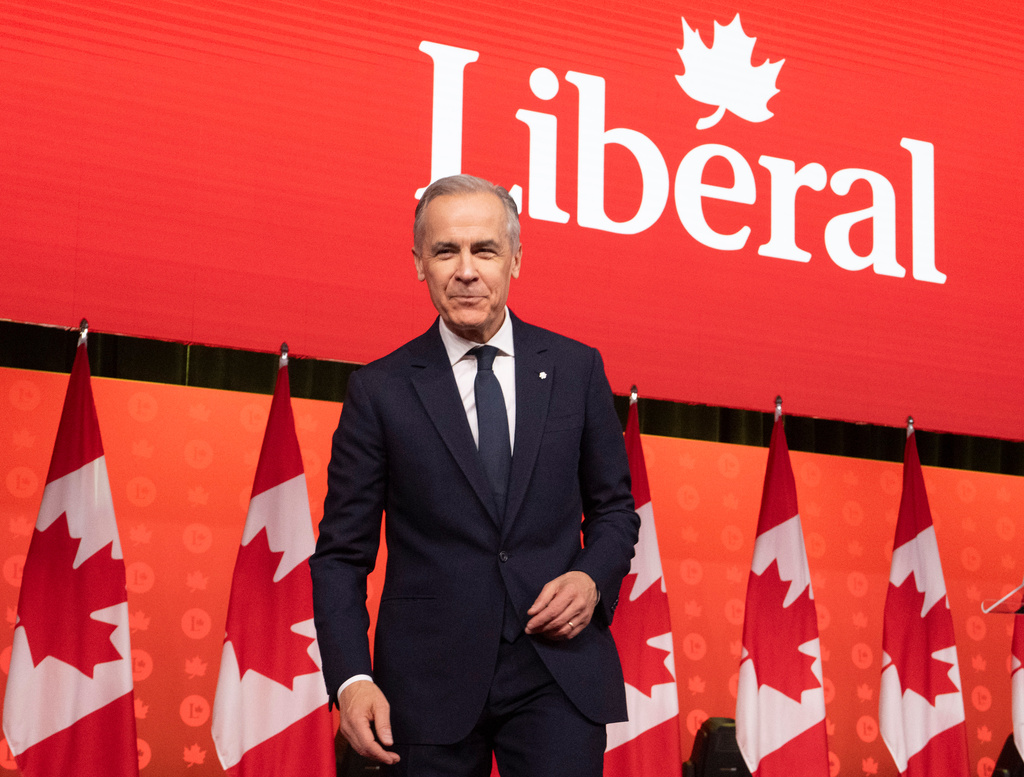
The address ultimately functioned as an invitation for a reimagined, mature continental partnership—one that abandons outdated rhetorical coercion in favor of a targeted, sector-specific collaboration designed to collectively confront intense global competition in advanced aerospace, cyber defense, quantum computing, and artificial intelligence.
Carney’s strategic posture reflects an emerging consensus within Ottawa that Canada cannot simply sit idly by and passively react to shifting political currents in Washington, but must proactively forge its own autonomous path through deliberate industrial policy and diversified international security arrangements.
The speech concluded with a gracious acknowledgement of the United States’ upcoming two hundred fiftieth anniversary, praising America’s foundational values of liberty, justice, and openness, while firmly maintaining that the future belongs to nations that remain predictable, principled, and radically open to the wider world.
The immediate audience reaction inside the financial capital was overwhelmingly positive, culminating in a sustained standing ovation from an investment community increasingly weary of global trade volatility, supply chain disruptions, and the persistent threat of retaliatory international tariff wars.
Ultimately, Mark Carney’s New York intervention demonstrated that economic pressure only succeeds when an interlocutor fractures under the strain. By showcasing absolute institutional confidence, robust economic growth numbers, and alternative global alliances, Canada proved it has successfully adapted to the era of global rupture.






