For generations, Canada and the United States have operated as two of the closest allies in the modern world — economically intertwined, militarily connected, and politically aligned across nearly every major global conflict.
But under Prime Minister Mark Carney, a dramatic shift now appears to be underway.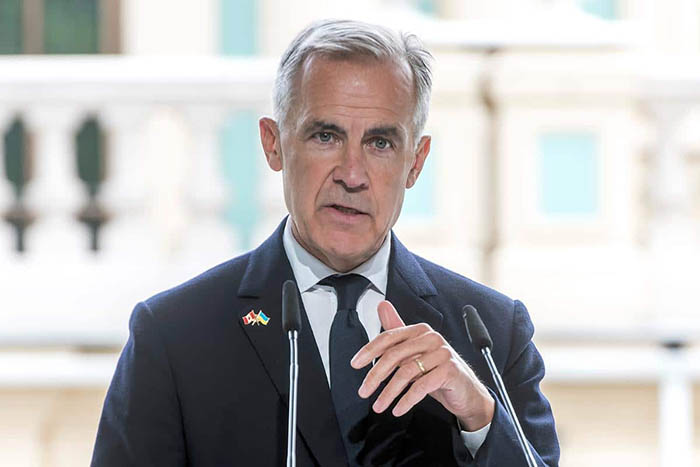
Behind the scenes, Ottawa is increasingly signaling that Canada can no longer afford to depend so heavily on Washington alone. And the change is not merely diplomatic symbolism or temporary political theater. According to government insiders, policy analysts, and European officials, Canada is actively building a long-term strategy designed to diversify its alliances, deepen ties with Europe, and reduce strategic dependence on the United States.
The timing is no coincidence.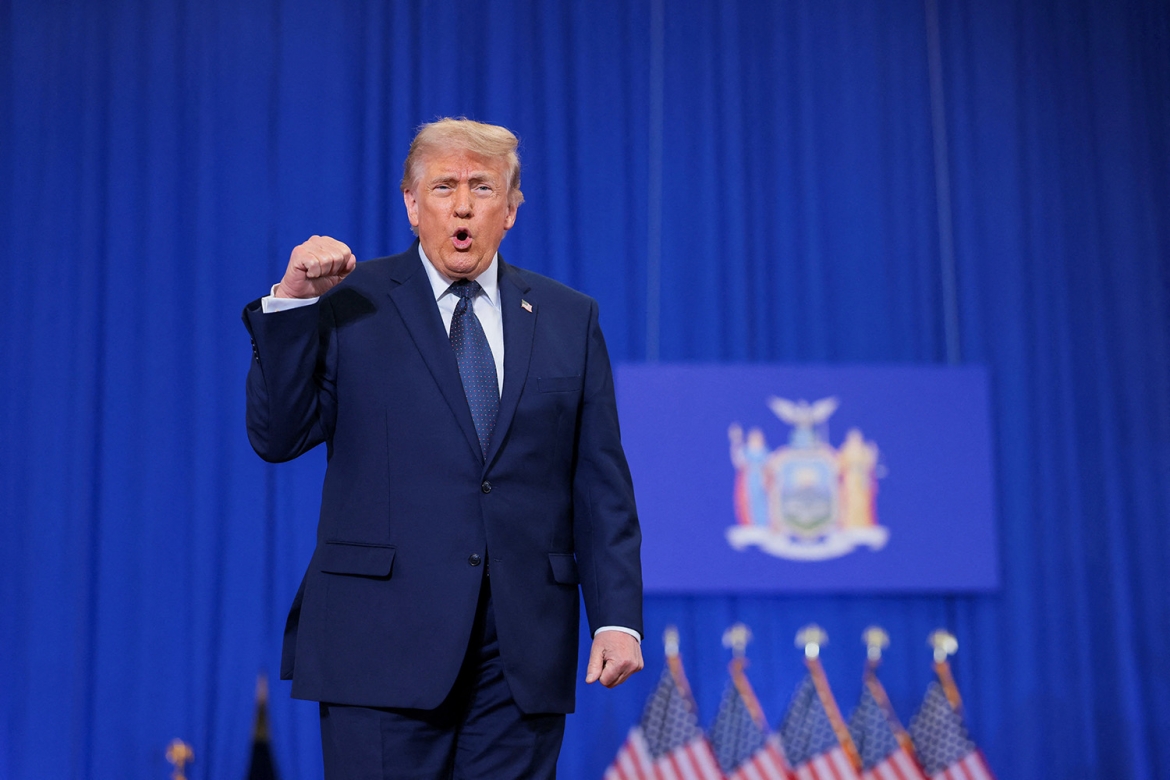
Relations between Canada and President Donald Trump have become increasingly strained amid growing disputes over tariffs, trade threats, defense spending, industrial policy, and broader concerns about American political unpredictability.
For many Canadian policymakers, Trump’s return to power has revived old fears about whether the United States can still be treated as a fully reliable long-term partner.
That concern is now reshaping Canadian foreign policy in ways that could redefine the Western alliance itself.
At the center of this transformation stands Mark Carney, the former central banker turned prime minister who has quickly developed a reputation as one of the most globally minded leaders Canada has produced in decades.
Unlike previous Canadian leaders who largely focused on managing the relationship with Washington above all else, Carney appears determined to position Canada as a more independent geopolitical actor capable of balancing relationships across multiple centers of power.
Europe has become the obvious starting point.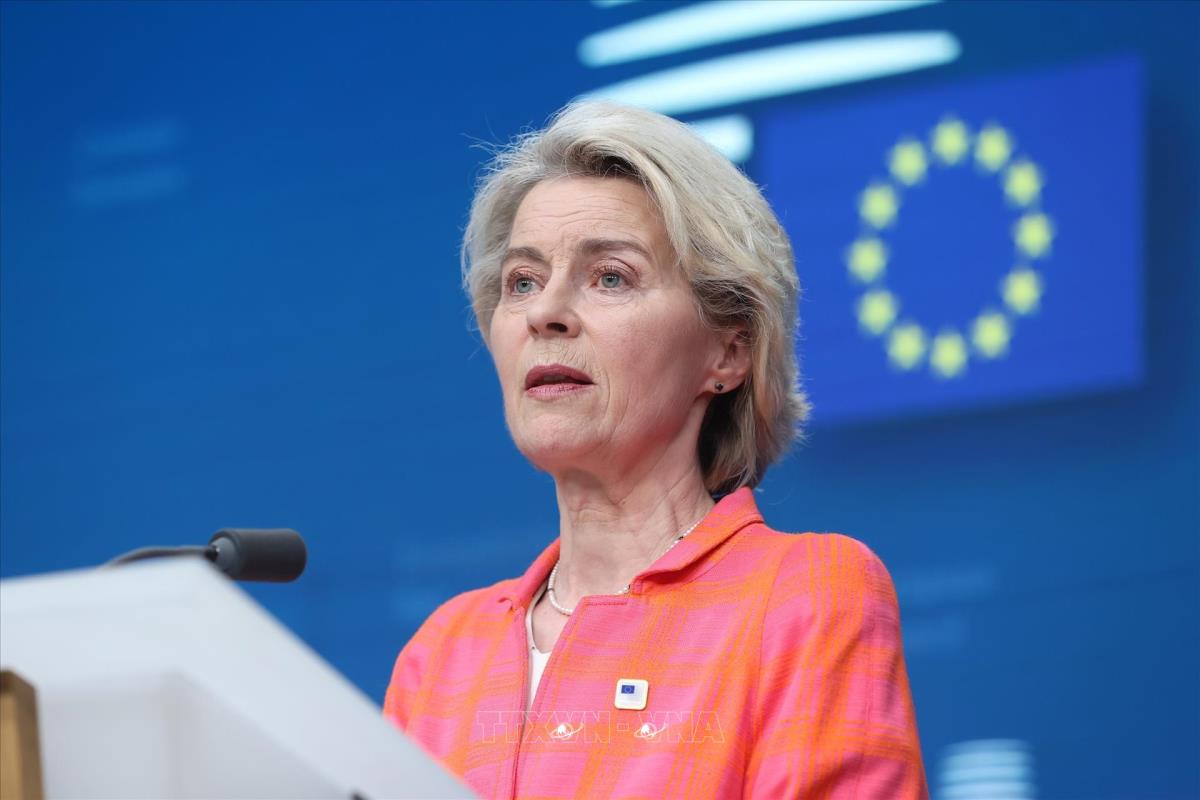
Over recent months, Canadian officials have intensified discussions with governments in Britain, France, Germany, and other European powers regarding expanded cooperation in defense manufacturing, artificial intelligence development, critical minerals, energy security, cybersecurity, and advanced technology infrastructure.
What once looked like ordinary diplomatic engagement is now beginning to resemble something far more ambitious.
One of the clearest signs of this shift emerged through growing scrutiny of Canada’s planned purchases of American-made F-35 fighter jets.
The F-35 program has long symbolized North American military integration. Built by U.S. defense giant Lockheed Martin, the stealth fighter represents one of the most expensive and strategically important weapons systems in the Western alliance.
But under Carney, Canadian officials have reportedly begun reviewing whether continued dependence on large-scale American procurement programs aligns with Canada’s future strategic goals.
That review immediately triggered alarm among some U.S. defense analysts and political figures.
For decades, Canada has functioned not only as a military ally but also as a deeply integrated customer within the American defense ecosystem. Canadian participation helps sustain manufacturing supply chains, joint operational planning, NORAD coordination, and broader strategic interoperability.
Any serious reconsideration of that relationship could carry enormous geopolitical implications.
Supporters of Carney’s approach, however, argue that the world itself is changing too rapidly for Canada to remain locked into Cold War-era assumptions.
They point to Trump’s repeated tariff threats against Canadian industries, public criticisms of NATO allies, and increasingly transactional approach toward international partnerships as evidence that Ottawa needs a backup plan.
From their perspective, dependence itself has become a strategic vulnerability.
That logic appears to be driving Canada’s expanding outreach to Europe.
French officials have reportedly expressed interest in deeper industrial cooperation with Canada, particularly in aerospace, green energy technologies, and AI research. Germany, meanwhile, sees Canada as a critical partner in securing long-term access to strategic minerals essential for advanced manufacturing and energy transition projects.
Britain remains perhaps Canada’s most politically natural European partner due to historical ties, intelligence cooperation, and military alignment.
Taken together, these relationships could form the foundation of a far broader Canadian strategy: building a multi-polar network of alliances that reduces reliance on any single power center.
The implications extend far beyond trade.
Artificial intelligence has become one of the most important areas of cooperation under discussion. Canada already holds a globally respected position in AI research, with major institutions in Toronto, Montreal, and Vancouver playing influential roles in machine learning development.
European governments increasingly view AI not just as a technological race, but as a strategic security issue.
Cooperation with Canada could help Europe strengthen democratic alternatives to both American tech dominance and Chinese state-controlled AI models.
Natural resources represent another critical piece of the puzzle.
Canada possesses enormous reserves of lithium, cobalt, nickel, uranium, rare earth elements, and other minerals essential for batteries, semiconductors, defense systems, and renewable energy infrastructure.
European countries are aggressively searching for reliable suppliers outside China and politically unstable regions.
That gives Canada extraordinary leverage.
Carney appears to understand that leverage better than most previous Canadian leaders.
Rather than viewing Canada primarily as America’s northern economic partner, his government increasingly frames the country as a strategic global supplier capable of influencing future industrial and technological systems.
Still, the transition carries serious risks.
The United States remains overwhelmingly Canada’s largest trading partner by a massive margin. Millions of jobs across both countries depend on deeply integrated supply chains spanning automotive manufacturing, agriculture, energy, aerospace, banking, and technology sectors.
No realistic scenario exists in which Canada simply “replaces” the United States economically.
Even Carney’s allies acknowledge that.
Instead, the strategy appears designed around gradual diversification rather than sudden separation.
The objective is not abandoning America.
It is reducing vulnerability.
That distinction matters enormously.
Canadian officials understand that geography alone guarantees the United States will remain central to Canada’s economy and security indefinitely. But many now believe Ottawa needs greater flexibility in a world becoming more unstable, fragmented, and politically unpredictable.
Trump’s leadership style accelerated those concerns dramatically.
His previous tariff battles with Canada shocked many Canadian policymakers who had long assumed the bilateral relationship operated on stable institutional foundations immune from sudden political pressure.
Instead, they watched Washington impose tariffs on Canadian steel and aluminum while repeatedly threatening broader trade retaliation.
For many inside Ottawa, the lesson was impossible to ignore.
Even close allies can become unpredictable under shifting political conditions.
That realization appears to have fundamentally reshaped Canadian strategic thinking.
European leaders have noticed.
Several European diplomats reportedly view Canada as an increasingly valuable middle power capable of helping bridge transatlantic divisions while contributing to a more balanced Western coalition.
The idea of distributed leadership inside the Western alliance — rather than overwhelming dependence on Washington — has quietly gained momentum in some European policy circles.
Carney’s approach aligns closely with that vision.
Rather than openly confronting the United States, he seems to be pursuing a softer form of strategic repositioning: strengthening alternatives without directly declaring independence from American leadership.
But Washington is unlikely to ignore the shift forever.
Some American commentators already accuse Canada of benefiting from U.S. security guarantees while drifting politically toward Europe. Others argue Ottawa risks undermining NATO cohesion by questioning traditional defense procurement arrangements and promoting more autonomous policy frameworks.
At the same time, many analysts believe the U.S.-Canada relationship remains far too interconnected to experience any genuine rupture.
NORAD cooperation, intelligence sharing, Arctic security coordination, border management, and integrated energy infrastructure all create powerful incentives for continued partnership regardless of political disagreements.
Still, even subtle shifts can matter historically.
Canada’s evolving strategy may ultimately reflect a broader reality now confronting many Western countries: the post-Cold War world built around unquestioned American dominance is changing.
China’s rise, Europe’s push for greater strategic autonomy, technological disruption, AI competition, energy insecurity, and growing geopolitical fragmentation are forcing allies to rethink old assumptions.
Carney appears determined to ensure Canada adapts early rather than late.
Whether that vision succeeds remains uncertain.
Building stronger ties with Europe sounds attractive politically, but turning diplomatic ambition into real economic and strategic diversification will require years of investment, coordination, and careful balancing.
There are also domestic political risks.
Critics inside Canada warn that distancing the country from Washington could damage trade relationships, weaken military integration, and create unnecessary tensions with Canada’s most important ally.
Others believe the strategy is not only necessary but overdue.
To supporters, Carney is finally acknowledging a truth many governments avoided for years: excessive dependence on any one country — even a friendly ally — carries long-term strategic dangers.
That debate is now becoming one of the defining geopolitical questions facing Canada’s future.
And for Washington, the most unsettling part may not be Canada’s growing relationship with Europe itself.
It may be the realization that one of America’s closest allies is beginning to imagine a future where U.S. leadership is no longer the unquestioned center of the Western world.
If that mindset spreads further across Europe and other allied nations, the global balance of power inside the democratic alliance system could gradually begin to change.
Not through a dramatic rupture.
But through a slow, deliberate redistribution of influence.
And Mark Carney may have just signaled that Canada intends to be part of that transformation.






