NATO’s Sweden Places $4 Billion Bet on European Defense — and Washington Gets Nothing
The announcement came on a Tuesday morning from the deck of a Swedish corvette docked in central Stockholm. There were no fireworks, no dramatic press conferences with Pentagon officials. Just Prime Minister Ulf Kristersson, standing before the cameras, delivering a quiet bombshell.
Sweden would spend $4.25 billion on four advanced naval frigates. The contractor would not be an American defense giant. It would be France’s Naval Group.
The decision, described by Kristersson as Sweden’s largest military investment since the 1980s, triples the country’s air defense capacity and represents a major strategic commitment as NATO’s newest frontline member .
But for Washington’s defense establishment, the message was unmistakable: Europe is no longer automatically buying American.
The frigates in question are the French Defense and Intervention (FDI) vessels, a 4,000-ton design already in service with the French Navy and on order for Greece . The selection was not made in ignorance of American alternatives. It was made despite them.
Sweden evaluated bids from three contenders: France’s Naval Group, a joint offer from Britain’s Babcock and Sweden’s own Saab, and Spain’s Navantia . The United States, notably, was not even a finalist.

According to defense analysts, the FDI design’s maturity, its expected delivery schedule starting in 2030, and the possibility of cost-sharing with other European operators tilted the balance away from any potential American offering .
“This is not just about warships,” said Tomas Ries, a defense analyst at the Swedish Defence University. “This is about Sweden making a statement that its future defense partnerships are European first. The United States is still an ally, but it is no longer the only option.”
The frigates will be armed with a mix of European missiles, including the Aster 30 for ballistic missile defense and CAMM-ER missiles, both produced by the Franco-Italian consortium MBDA . Swedish systems, including Saab’s RBS 15 anti-ship missile and Giraffe 1X radar, will also be integrated .
Not a single major component will come from the United States.
The timing of the announcement only deepened Washington’s unease. It came just weeks after the Biden administration warned European allies against adopting “Buy European” clauses in defense procurement .
In February, the U.S. State and Defense Departments issued a joint statement opposing any changes to the EU’s defense procurement directive that would “limit the ability of U.S. industry to support or otherwise participate in EU member state national defense procurements” .
The Trump administration at the time went further, threatening to review all waivers to “Buy American” laws if Europe moved to lock out U.S. firms . “Protectionist and exclusionary policies that strong-arm American companies out of the market are the wrong course of action,” the U.S. statement read .

Sweden’s decision suggests that European capitals are ignoring that warning.
Behind closed doors in Washington, fears are growing that the loss of this $4 billion contract is not an isolated incident but the leading edge of a larger trend. European defense spending is surging, driven by Russia’s war in Ukraine and the perceived unreliability of future U.S. security guarantees .
But that spending is increasingly flowing toward European contractors. Since 2022, Rheinmetall has gained 1,316 percent in market value. Leonardo has risen 412 percent. Rolls-Royce’s defense division has grown 290 percent. Dassault, BAE Systems, Thales, and Safran have all more than doubled .
In contrast, major U.S. defense contractors have seen comparatively modest gains of 30 to 60 percent over the same period . Four European defense companies now rank among the global top ten by market capitalization .
The transatlantic gap is no longer just about spending levels. It is about where the money is going.
Sweden’s commitment to European defense procurement extends beyond the frigate deal. The government has also announced a SEK 5.3 billion ($580 million) investment in drone and military space capabilities, with contracts expected to go to European suppliers . BAE Systems Bofors, the Swedish subsidiary of the British defense giant, recently acquired a local precision mechanics supplier to strengthen its European supply chain .
Sweden’s fiscal framework now explicitly accommodates defense borrowing. An agreement among eight political parties allows for up to SEK 300 billion in debt-financed defense spending through 2034, with a goal of reaching NATO’s 3.5 percent of GDP target by the end of the decade .
“The Baltic Sea has never in the modern era been as exposed, questioned and contested as it is now,” Kristersson said from the deck of the HMS Härnösand . The frigates, he added, would make the region “considerably safer.”
But for whom? And at whose industrial expense?
NATO Secretary General Mark Rutte has consistently warned European leaders not to delude themselves about defense autonomy. “Without the US, the continent cannot defend itself,” he said in January . The alliance remains structurally dependent on American intelligence, air power, and nuclear deterrence.
Yet European strategic autonomy is not an all-or-nothing proposition. As analysts at the NATO Association of Canada have noted, “when aligned with transatlantic priorities, it can reinforce collective defense and strengthen burden-sharing” . The danger arises only when European procurement becomes “an institutional alternative to NATO” rather than a complement to it .
Sweden’s frigate purchase falls somewhere in the ambiguous middle. The ships will be fully NATO-compatible. They will patrol Baltic waters alongside American, German, and Danish vessels. They will strengthen the alliance’s eastern flank at a moment when Russian aggression shows no sign of abating.
But they will also deepen Europe’s indigenous industrial base, creating a self-reinforcing cycle: the more Europe builds its own weapons, the less it needs to buy from the United States, and the less it buys, the more capacity it develops to build even more.
The Pentagon has taken notice. In its formal comments on the EU’s proposed defense procurement reforms, the Department of Defense warned that European preference “would undermine European rearmament and weaken NATO interoperability and readiness” .
Some analysts see that warning as self-serving. The United States has long maintained its own “Buy American” policies, which lock out European competitors from billions of dollars in defense contracts. European preference, by this logic, is not protectionism but parity.
“The US is openly pursuing a ‘Buy American’ policy,” noted a recent analysis in Militär Aktuell. “To date, Europe has imported significantly more military equipment from the USA than vice versa” .
Indeed, the imbalance is stark. EU arms exports to the United States are negligible compared to the flow of American weapons into Europe. The F-35, Patriot missiles, and a host of other American systems dominate European arsenals .
Sweden’s frigate deal will not change that imbalance overnight. But it signals a shift in mentality: European governments are no longer content to be permanent customers of American military hardware.
The first FDI frigate is scheduled for delivery in 2030, with one vessel expected each year thereafter . By that time, Sweden plans to be spending 3.5 percent of its GDP on defense, one of the highest rates in NATO .
Between now and then, more decisions like this will follow. Sweden has already committed to accelerating its drone and space programs. Other European nations are watching closely.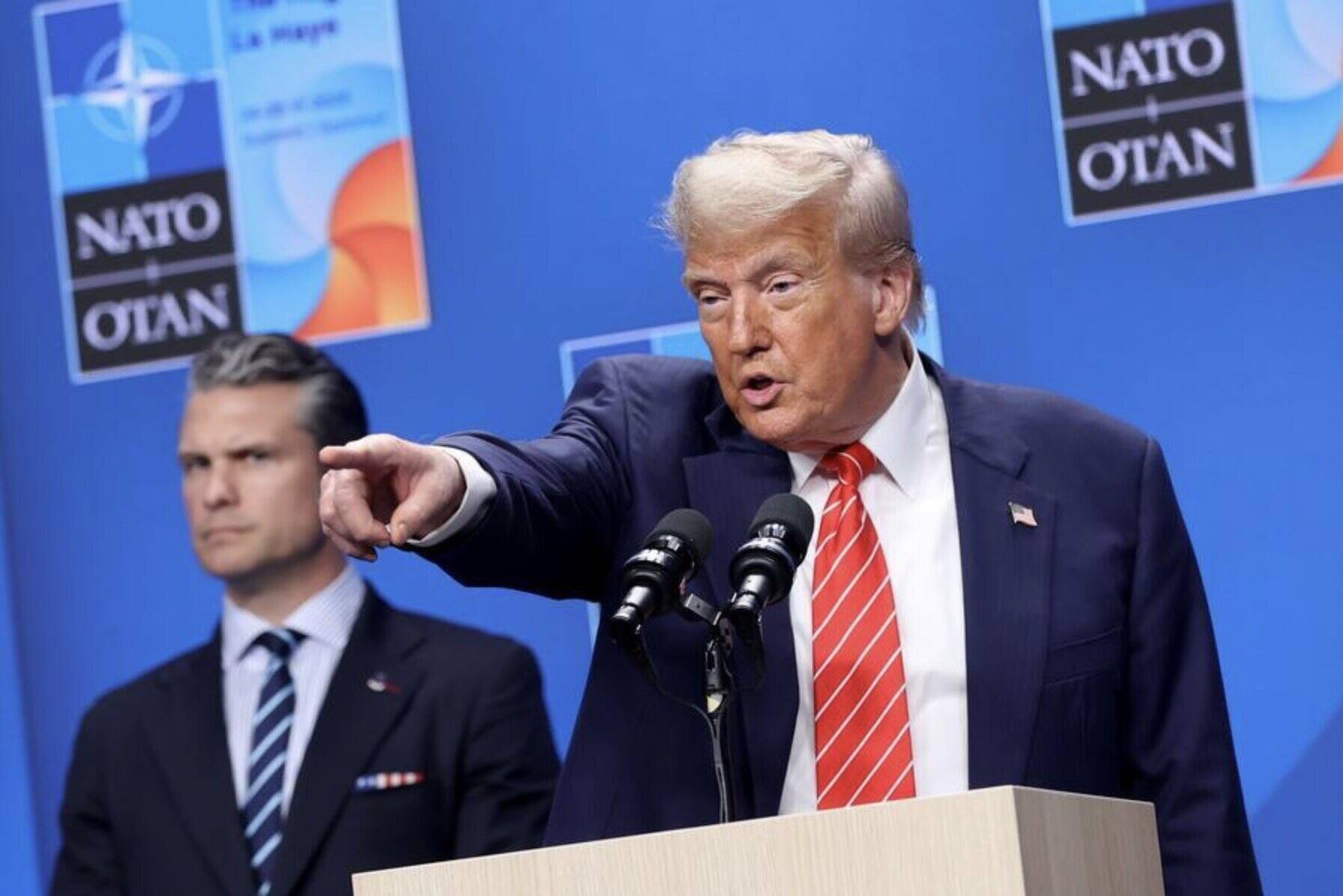
Did Sweden just expose the beginning of a massive shift away from U.S. military dependence? Perhaps not the beginning — European strategic autonomy has been discussed for decades. But it may be the most concrete, financially significant, and symbolically charged step yet.
The Pentagon’s worst nightmare is not a single lost contract. It is a cascade. And in Stockholm harbor, on a spring morning, the first domino has fallen.
As one senior European defense official, speaking anonymously, told this newspaper: “We are not leaving NATO. We are not abandoning the United States. But we are building our own capacity because we have learned that we cannot assume America will always be there. That is not anti-American. It is simply prudent.”
Whether Washington sees it that way will determine the future of the transatlantic defense relationship for decades to come.






