U.S. Panics as Canada Quietly Joins Europe’s Defense System — 80% Access Rights, America Suddenly Locked Out
The announcement came without fanfare, buried in a routine government press release on a slow news day. But its implications are anything but routine.
Canada has formally joined the European Union’s Security Action for Europe (SAFE) program, a €150 billion defense loan mechanism designed to accelerate military procurement across the continent . The terms of the agreement, negotiated quietly over the past year, grant Canadian defense firms preferential access that no other non-European nation enjoys .
Under the SAFE framework, Canadian content can comprise up to 80% of the total value of any procurement conducted under the program — a dramatic increase from the standard 35% cap imposed on other third countries . In exchange, Ottawa will pay an initial €10 million participation fee, a sum analysts describe as remarkably low for access to such a vast capital pool .
For Washington, the message could not be clearer: Canada is diversifying away from American military dependence, and doing so with astonishing speed.
“The days of our military sending 70 cents of every dollar to the United States are over,” Prime Minister Mark Carney declared at the Liberal Party’s national convention in Montreal last month, drawing a standing ovation from delegates .
That statement was not campaign rhetoric. It was a strategic directive. And the SAFE agreement is its first major legislative manifestation.
The timing has only deepened Washington’s unease. Just days before the Canadian announcement, the United States revealed it was “pausing” its participation in the Permanent Joint Board on Defence (PJBD), the 86-year-old bilateral consultative body that has symbolized the bedrock of U.S.-Canada military cooperation since 1940 .
Elbridge Colby, the U.S. Under Secretary of Defense for Policy, took to social media to explain the decision. “Canada has failed to make credible progress on its defense commitments,” Colby wrote on X. “We can no longer avoid the gaps between rhetoric and reality” .
Behind closed doors, however, the reaction has been far more alarmed. According to multiple sources within the Pentagon and the U.S. defense industry, the SAFE agreement caught Washington off guard.
“This is not just about a few contracts,” a senior U.S. defense official told this newspaper, speaking on condition of anonymity. “This is about Canada structurally embedding itself in Europe’s defense-industrial system. That is a permanent shift, not a temporary adjustment.”
The SAFE program is one pillar of the EU’s larger Readiness 2030 Plan, an €800 billion initiative to transform European military capabilities by the end of the decade . By securing privileged access, Canada has positioned itself as the only non-European nation integrated into this emerging architecture .
Under the agreement, Canadian defense firms will receive treatment equivalent to that accorded to European companies, ensuring non-discriminatory access to SAFE-financed procurement opportunities . Canadian companies can bid on European contracts as if they were domestic EU entities, and Canada can utilize low-interest SAFE loans to finance its own military modernization .
The implications for major U.S. contractors are significant. For decades, American defense giants have treated Canada as a reliable export market, protected by geography and the deep integration of the two countries’ militaries. That assumption is now in jeopardy.
Canada’s defense procurement decisions in recent months underscore the trend. In a move widely interpreted as a rebuke to American suppliers, Ottawa announced the acquisition of Swedish-made Saab Global Eye early-warning aircraft, passing over the American Boeing E-7 Wedgetaid that was also under consideration . The project is reportedly worth CAD $5 billion .
Carney has also ordered a review of Canada’s commitment to the F-35 fighter jet program, exploring alternatives such as Saab’s Gripen . Canada has already purchased 16 of Lockheed Martin’s F-35s and paid for components of another 14, but the review has left the program’s future uncertain .
“It’s a telling example that Canada has yet to make a decision on whether to have a full fleet of F-35 fighter jets,” said Independent Senator Donna Dasko, a member of the Senate National Security and Defence Committee . “I think that’s deliberate. It’s another way of indicating that we may be pulling back from the arrangements with the U.S.”
The SAFE agreement’s 80% content allowance is particularly significant because it effectively grants Canadian firms preferential treatment over other non-European competitors. As the NATO Association of Canada noted in a detailed analysis, this positions Canada to seek negotiated exemptions from the standard 35% non-EU content cap that applies to other third-party nations .
In practice, this means that a Canadian company bidding on a SAFE-financed contract can contribute up to four-fifths of the product’s value, with only 20% required to come from European sources. That threshold is low enough to make Canadian participation highly attractive to European prime contractors.
The agreement also recognizes established European and defense standards, including those established through NATO Standardization Agreements, ensuring that Canadian equipment will remain interoperable with both American and European forces .
But the deeper strategic implication is the one that worries Washington most. As the NATO Association of Canada put it, Canada is becoming “the central connector between North American and European defence structures” . By integrating fully into both NORAD and the European defense framework, Ottawa gains negotiating power that it has never before possessed.
“This dual integration strengthens Canada’s negotiating power by allowing it to contribute European industrial capacity to North American security arrangements, rather than relying solely on American protection for our national security,” the analysis noted .
That is a polite way of saying that Canada now has options — and the United States knows it.
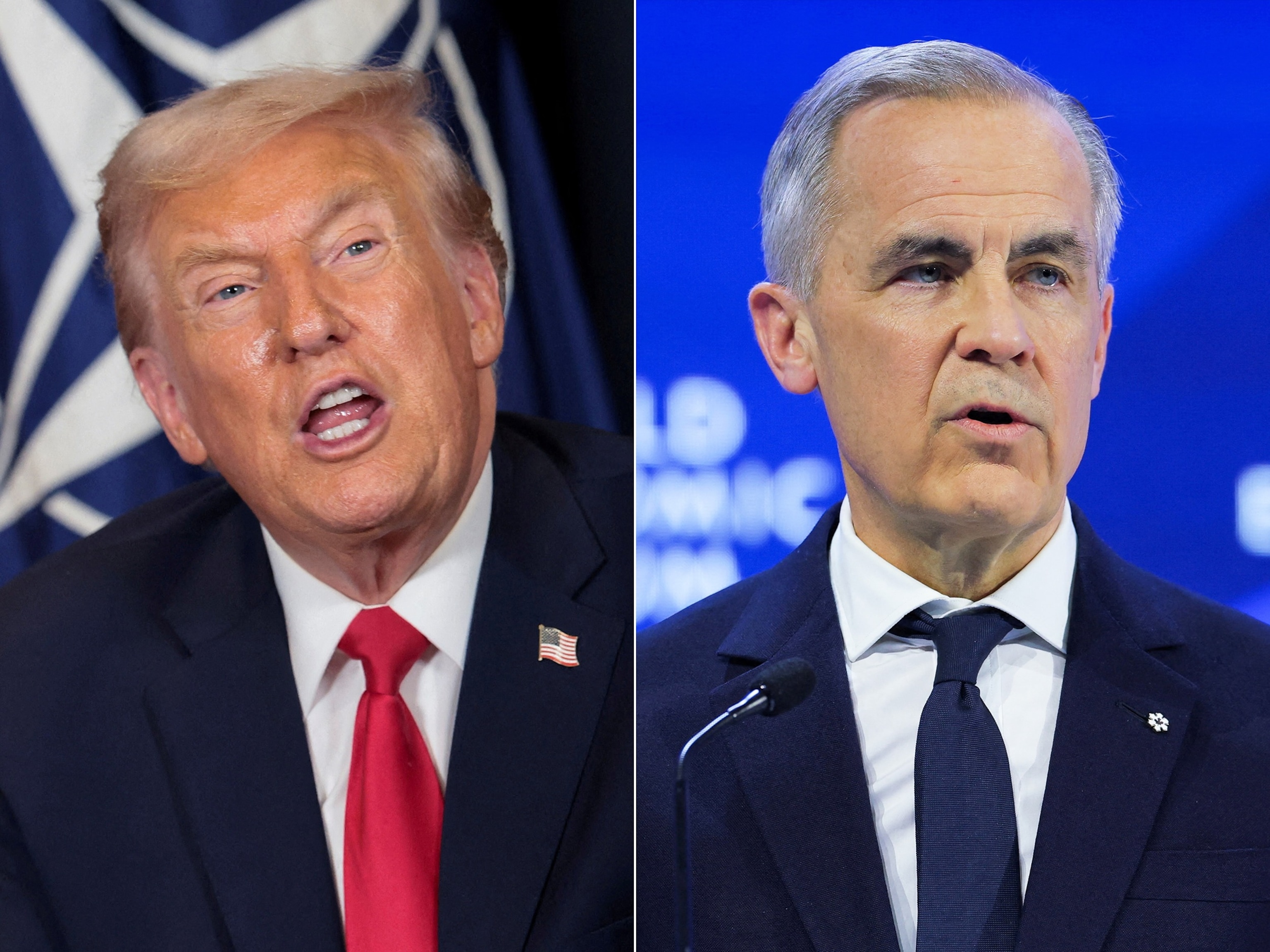
The political context driving this shift cannot be overstated. Relations between Ottawa and Washington have deteriorated sharply under the Trump administration, which has imposed tariffs on Canadian steel, aluminum, and automobiles, triggering retaliatory measures from Canada . The president has also repeatedly threatened to absorb Canada as the “51st state,” a comment that has poisoned bilateral trust at the highest levels .
“The old relationship we had with the United States, based on deepening integration of our economies and tight security and military cooperation, is over,” Carney said in March 2025 . More than a year later, that assessment appears to be driving concrete policy.
Riho Terras, an Estonian member of the European Parliament leading a defense committee delegation to Canada, noted that Canada’s defense ecosystem has long been structurally intertwined with the United States . “Most of the companies working here are the companies of the U.S. and joint ventures between Canada and the U.S.,” Terras said.
But the SAFE agreement offers a path out of that dependency. “What they can gain from SAFE is working together with European companies to increase their own defense capability procurement and to diversify it,” he explained .
Not everyone believes the shift will be rapid or complete. Carleton University professor Stephen Saideman, director of the Canadian Defence and Security Network, cautioned that “the kind of things that would really lead to delinking would take time” . The Canadian military, he noted, is deeply accustomed to operating with the United States.
“They think what is going on with the U.S. is temporary, and so they think it’s a matter of waiting,” Saideman said. “They don’t want to disrupt the way they have been operating for so many years. That’s going to be a challenge” .
Former Liberal MP John McKay, a past chair of the Canadian section of the PJBD, offered a darker assessment of what the U.S. suspension of the board signifies. “Like the politics are diverging — and the military ultimately reflects politics — this is more divergence,” McKay said. “We clearly don’t see the world the same way the Americans do” .

The Pentagon’s worst nightmare is not a single lost contract. It is a cascade. And with Canada’s entry into the SAFE program, the first domino has fallen.
As one Canadian defense official, speaking anonymously, told this newspaper: “We are not leaving NORAD. We are not abandoning the United States. But we are building our own capacity and diversifying our partnerships because we have learned that we cannot assume America will always be there. That is not anti-American. It is simply prudent.”
Whether Washington sees it that way will determine the future of the North American defense relationship for decades to come. For now, the panic is real, the contracts are shifting, and the era of automatic American dominance in Canada’s defense market is facing its most serious challenge in a century.
Did Canada just take the biggest strategic step away from American military dependence in modern history? The answer, increasingly, appears to be yes. And the reverberations have only just begun.






