‘I Don’t Understand Why There Are Still People Who Accept These Women’: Natalie Barr’s Latest Outburst Ignites New Firestorm Over ISIS Brides
For the second time in as many weeks, Natalie Barr has sent shockwaves through Australian television.
The veteran Sunrise anchor, whose previous on-air outburst over the repatriation of ISIS brides forced an abrupt commercial break, returned to the fray with a new and even more pointed attack.
This time, her target was not the government, nor the returning women themselves, but the ordinary Australians who have chosen to help them.
“I don’t understand why there are still people who accept these women who abandoned their own country and harmed the people where they lived when they return to Australia,” Barr said, her voice rising above the usual morning television cadence.
The segment had begun as a routine update on the ongoing controversy surrounding the repatriation of Australian women and children from Syrian camps. But when the discussion turned to reports that several of the returning women had secured private rental housing with the assistance of local citizens, Barr’s composure fractured.
The program’s producers, still recovering from the backlash and internal fallout of her previous comments, watched in horror as Barr continued.
“These are not refugees,” she said, gesturing toward a monitor displaying images of the Syrian camps. “These are people who made a conscious choice to abandon this country and ally themselves with an organization that beheaded journalists and enslaved entire communities.”

Her co-host, Matt Doran, attempted to interject with a prepared question about the legal complexities of the cases. Barr waved him off.
“And now,” she continued, “there are Australians — our neighbors, our fellow citizens — who are renting them houses. Who are helping them settle in. Who are, essentially, profiting from the return of people who wished this country harm.”
The reference to profit was not incidental. Reports had emerged that some landlords in Sydney’s western suburbs were charging above-market rents to government agencies tasked with housing the repatriated women, raising questions about whether compassion or commerce was driving the assistance.
Barr turned directly to the camera, her eyes narrowing.
“If you don’t put national pride first, at least care about your own safety.”
The studio fell into a heavy silence. Then, as the director shouted through the intercom, Barr delivered the line that would dominate headlines for the next 48 hours.
Ten words, spoken with a calm that was somehow more devastating than anger:
“Why are we helping those who once celebrated our destruction?”
The broadcast cut immediately to a previously recorded segment about gardening. But the damage — or the revelation, depending on one’s perspective — was already complete.
Within minutes, the clip had been uploaded to every major social media platform. Within hours, it had been viewed more than five million times. By the following morning, it had sparked a formal complaint to the broadcasting regulator and an emergency meeting of the Seven Network’s senior leadership.
The reaction was instantaneous and sharply polarized.
Supporters hailed Barr as a voice of common sense in a political culture too afraid to speak uncomfortable truths. “Finally, someone saying what the rest of us are thinking around the dinner table,” posted one user on X (formerly Twitter), a sentiment echoed by thousands.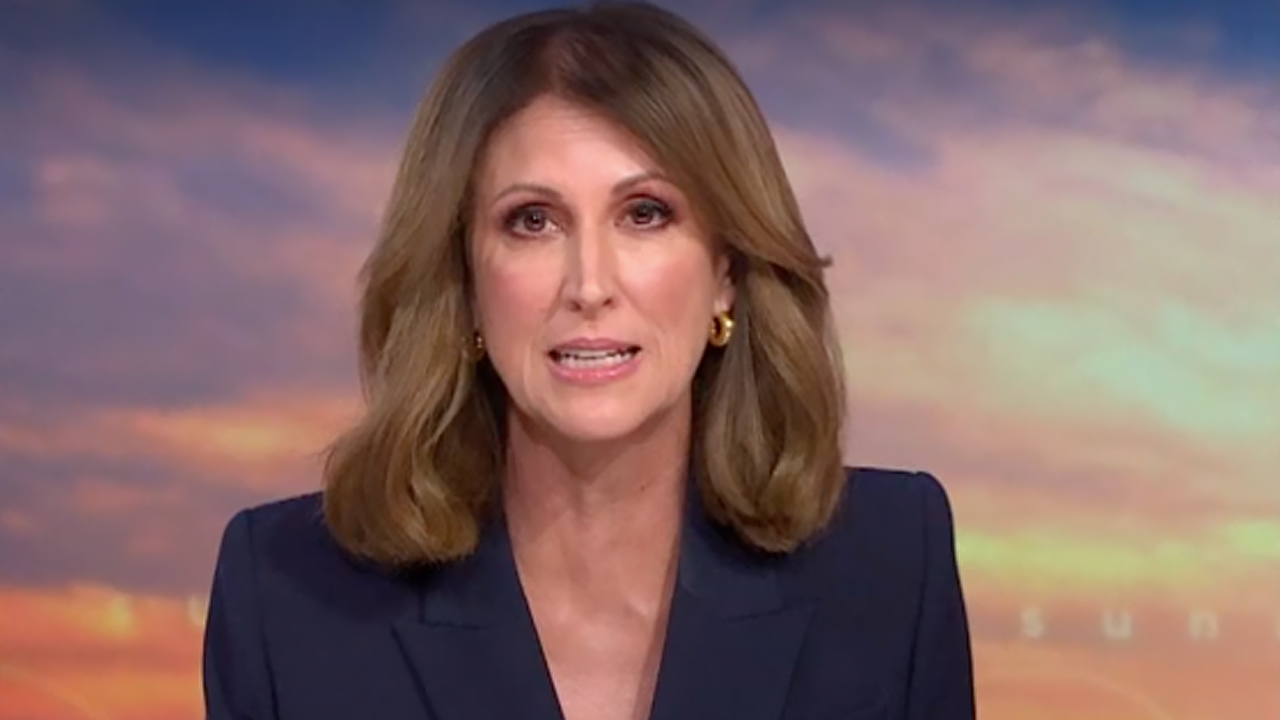
But critics accused Barr of inciting hatred against vulnerable women and children, many of whom were trafficked or married as teenagers before they ever set foot in Syria. “This is not journalism,” wrote human rights lawyer Rawan Arraf. “This is a televised dog whistle, and it endangers real people.”
The controversy cuts to the heart of a question Australia has never fully answered: What does a nation owe to those who renounced it? And what does it owe to those who stayed?
The women at the center of the storm are among approximately 65 Australian citizens — mostly women and children — who remain in camps in northeastern Syria, according to the Syrian Observatory for Human Rights. The Australian government has repatriated roughly two dozen since 2022, each case subject to individual security assessment by ASIO and the Australian Federal Police.
But public trust in those assessments has eroded. A poll conducted by YouGov earlier this week found that 71% of Australians believe the government is not being transparent about the security risks posed by returning ISIS affiliates.
That same poll found that 58% of respondents believe landlords who rent to repatriated women should face legal consequences, though no current law prohibits such arrangements.
The rental issue has become a particular flashpoint. Under the government’s reintegration program, returning women are provided with housing assistance for up to twelve months. In some cases, that assistance has flowed to private landlords willing to accept tenants with no rental history and significant security restrictions.
Barr’s accusation that some landlords are motivated by profit rather than principle has resonated with a public already skeptical of what they perceive as a “rehabilitation industry” profiting from national security anxieties.
The Real Estate Institute of Australia declined to comment on specific cases but issued a general statement reminding members of their “legal obligations to provide housing without discrimination.”
The government’s response to Barr’s latest outburst was characteristically cautious. Prime Minister Anthony Albanese, speaking from a community event in Tasmania, said he “understands the strong emotions” surrounding the issue but reiterated that “every returnee is assessed on a case-by-case basis by our security agencies.”
That response, measured as it was, satisfied no one. The opposition accused the government of weakness, while civil liberties groups accused it of fueling xenophobia by failing to clearly defend the rule of law.
The Seven Network, for its part, has stood by Barr. In a carefully worded statement, a spokesperson said: “Natalie Barr is a respected journalist who raises important questions on behalf of viewers. Sunrise remains committed to robust and balanced discussion of complex issues.”

But insiders describe a network in turmoil. Barr’s previous outburst led to an internal review and a reported “talking-to” from senior management. This time, the fallout appears more serious.
One producer, speaking on condition of anonymity, said that “the control room was in absolute chaos” after Barr’s comments. “People were screaming at each other. Some wanted to cut to break immediately. Others thought we should let her keep going because it was compelling television. No one knew what to do.”
The debate over the ISIS brides has become a proxy for a larger cultural war in Australia. On one side are those who believe the nation’s security must come before all other considerations. On the other are those who argue that punishing women who were themselves victims — and their Australian-born children — is cruel and counterproductive.
Barr has positioned herself firmly in the first camp. Her reference to “national pride” was deliberate, tapping into a sentiment that many Australians feel but few public figures articulate in such unvarnished terms.
“I love this country,” Barr said in a brief statement released through the network after the broadcast. “And I believe that loving your country means telling the truth about the dangers it faces. That is all I have ever done.”
Her critics see it differently. “This is not patriotism,” said Dr. Lise Waldek, a counter-terrorism expert at Charles Sturt University. “This is populism dressed in a flag. And it is dangerous because it simplifies a complex legal and moral problem into a soundbite.”
The ten words that have defined this latest chapter — “Why are we helping those who once celebrated our destruction?” — do not have an easy answer.
Legal scholars point out that Australia is bound by international law to accept the return of its citizens, including those who committed crimes abroad. Security experts note that keeping the women in Syrian camps, where they are vulnerable to radicalization, poses a greater long-term threat than repatriation.
But moral philosophers might offer a different perspective: that a nation’s character is measured not by how it treats the loyal, but by how it treats the disloyal when they return, broken and despised, to seek shelter.
Australia has not yet decided which answer it prefers. And Natalie Barr, whether one admires her or abhors her, has ensured that the question will not be ignored.
As the sun set over Sydney, Barr left the studio without speaking to reporters. A network security guard escorted her to a waiting car. She did not wave. She did not smile.
But her ten words will linger long after the evening news cycle has turned. And somewhere in a nondescript rental house in western Sydney, a woman who once made a terrible choice is watching television, wondering if she will ever be allowed to stop paying for it.






