For decades, the economic relationship between Canada and the United States followed a familiar pattern.
Canada sold resources.
America bought them.
Canadian businesses relied heavily on American consumers, American supply chains, and American investment.
Many analysts assumed that reality would never truly change.

But something unusual has been unfolding over the past year.
It did not begin with a dramatic speech.
It did not begin with sanctions.
And it did not begin with a formal government decree.
Instead, it started with ordinary consumers.
Across Canada, a growing wave of frustration over trade disputes, tariffs, and political tensions sparked a powerful grassroots movement encouraging people to buy Canadian and avoid American products whenever possible.
At first, many observers dismissed the campaign as symbolic.
They believed it would fade within weeks.
Instead, it grew stronger.
And now the numbers are becoming impossible to ignore.
New trade data shows American wine exports to Canada have suffered one of the most dramatic collapses in recent North American trade history.
According to industry figures and U.S. trade data, exports of American wine to Canada fell by roughly 78 percent in 2025, wiping out hundreds of millions of dollars in sales and shocking producers across the United States. Canada had long been the single largest foreign market for American wine.
What makes the situation especially alarming for American producers is that the decline cannot simply be blamed on changing tastes or market conditions.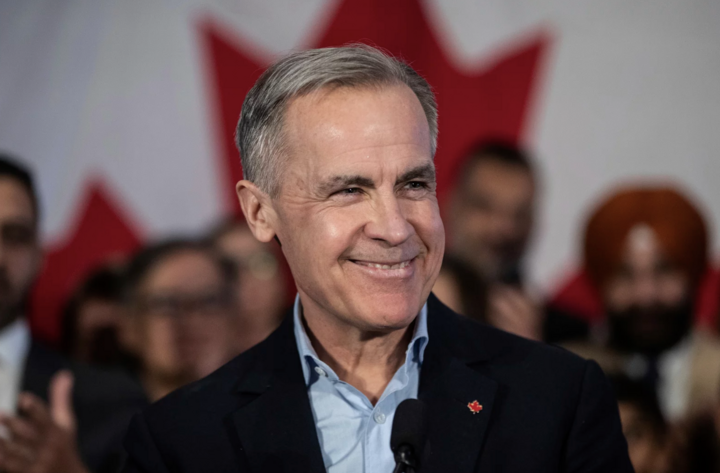
The collapse came after multiple Canadian provinces removed or restricted American alcohol products from government-controlled retail systems while consumers increasingly embraced domestic alternatives.
Industry organizations described the damage as catastrophic.
One report estimated that the U.S. wine sector lost approximately $357 million in export value within a single year because of the Canadian restrictions and consumer backlash.
The pain did not stop with wine.
American spirits producers have also watched a major export market evaporate.
Trade data released earlier this year showed exports of U.S. spirits to Canada dropped by roughly 70 percent after many provinces removed American liquor products from shelves.
For many businesses, Canada was never just another foreign customer.
It was the customer.
The geographic proximity, shared language, established distribution networks, and decades of stable trade made Canada one of the easiest international markets for American producers to reach.
Losing that market has forced wineries, distilleries, distributors, and exporters to rethink their strategies.
Some industry groups have openly warned that even if political tensions ease, rebuilding consumer loyalty could take years.
Shelf space lost today may never fully return.
Meanwhile, something even bigger is happening behind the scenes.
While headlines focus on alcohol exports, Canadian leaders are increasingly looking at a much broader goal.
Reducing dependence on the United States altogether.
That ambition has become especially visible in the energy sector.
For decades, Canadian oil producers depended heavily on the American market.
The United States purchased enormous volumes of Canadian crude oil, often benefiting from discounted prices due to Canada’s limited export options.
Many energy experts argued that this dependency gave Washington significant leverage.
Now Ottawa appears determined to change that equation.
Prime Minister Mark Carney and Alberta Premier Danielle Smith recently reached agreements supporting the development of a major new pipeline strategy designed to move at least one million barrels of oil per day toward Pacific export routes and Asian markets.
If completed, the project could fundamentally reshape Canadian energy exports.
Instead of sending the overwhelming majority of crude south into the United States, Canada would gain greater access to buyers in Japan, South Korea, India, China, and other Asian economies.
Supporters argue the move is about national resilience.
They say Canada has spent too many years relying on a single customer and exposing itself to political uncertainty beyond its control.
Critics, however, warn that large-scale pipeline expansion could reignite environmental battles that have divided Canada for years.
Regardless of where the debate ends, one fact remains clear.
The conversation has changed.
The goal is no longer simply selling more oil.
The goal is gaining more options.
Major energy companies have already begun discussing additional pipeline capacity and new export infrastructure to support future growth.
At the same time, Canada is aggressively pursuing new energy relationships outside North America.
Recent agreements involving the proposed Ksi Lisims LNG project have opened discussions with European utilities and Germany’s state-owned energy company SEFE, signaling that Ottawa is increasingly positioning itself as a global supplier rather than a regional one.
The broader message is difficult to miss.
Canada is diversifying.
And diversification changes power dynamics.
In Washington, some officials have reportedly grown frustrated by Canada’s unwillingness to simply return to business as usual.
But Canadian leaders appear focused on long-term leverage rather than short-term concessions.
The political atmosphere has become increasingly tense.
What once looked like a temporary trade disagreement now resembles a deeper strategic realignment.
Even online discussions reflect that shift.
Across social media, Canadian consumers continue promoting local products, celebrating domestic alternatives, and encouraging others to reduce dependence on American brands.
Whether that momentum lasts another year or another decade remains unclear.
But its impact is already visible.
American exporters are losing sales.
Canadian producers are gaining visibility.
And governments on both sides of the border are being forced to rethink old assumptions.
For generations, many believed economic gravity would always pull Canada toward the United States.
Now, for the first time in a very long time, Canada appears determined to test what happens when it starts looking elsewhere.
And that may be the development that worries Washington most of all.






